MLB
Sale Gets Championship Prep While Braves Navigate Rotation Chaos
Atlanta's comfortable division cushion lets them trade near-term pitching depth for Sale's postseason sharpness, but the casualty list is growing.
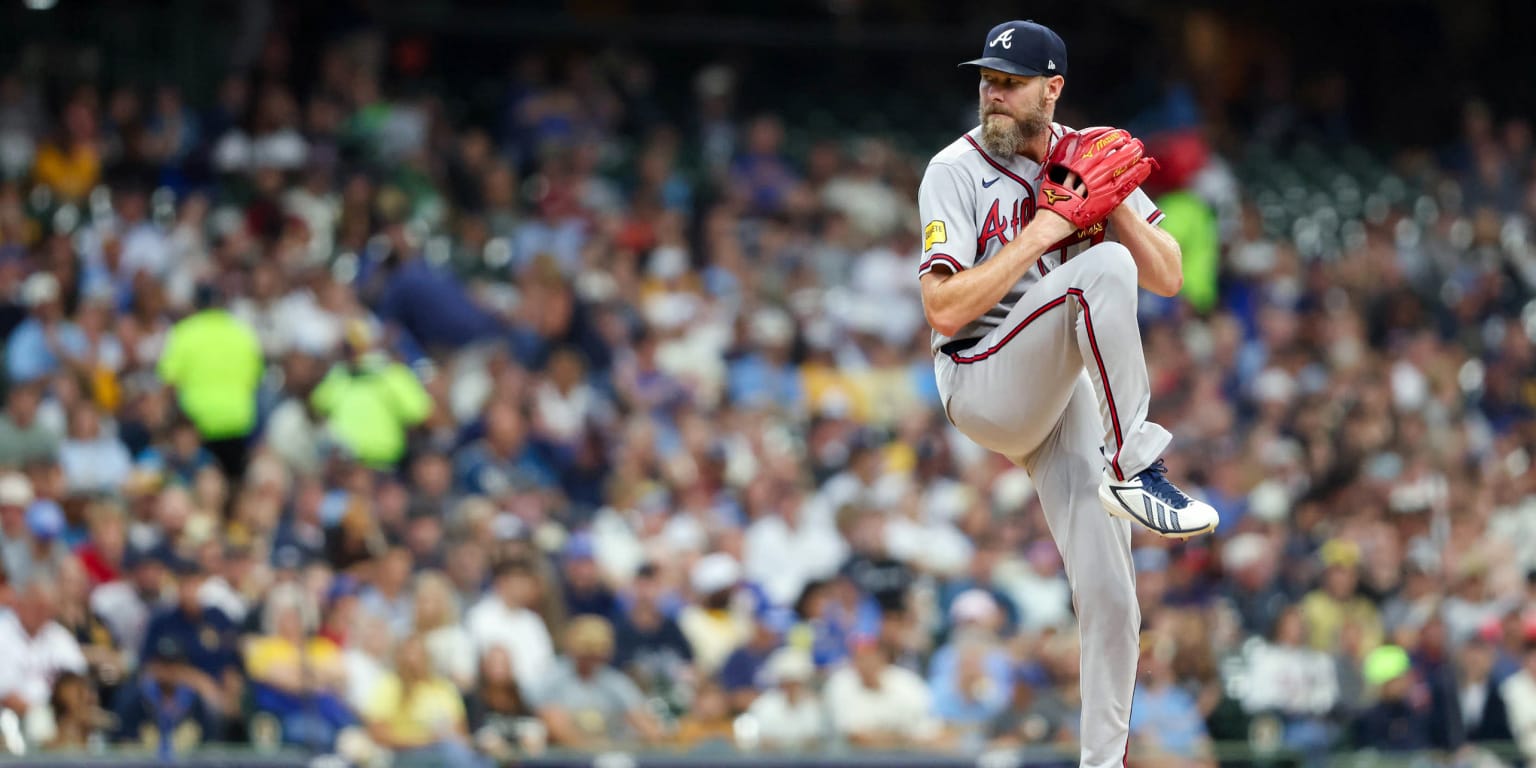
The Braves skipped Chris Sale in this weekend's series against Houston, gifting the 37-year-old an extra six days of rest before his final regular-season start on September 24 against Cincinnati. Manager Walt Weiss made the move explicit: with a 4.5-game lead over Philadelphia and nine games remaining in the regular season, Atlanta can afford to sacrifice short-term rotation depth for Sale's playoff conditioning. The calculation reveals how much the Braves value Sale as a postseason anchor—and how thin that cushion really is once you remove the names they need healthy come October.
Sale's track record with extended rest is the operative justification. He ranks third in the majors with a 2.18 ERA, but the granular splits tell a different story: in 13 starts with one extra day of rest, he posted a 1.67 ERA; in 11 starts with more than one extra day, he sat at 2.17. Those numbers matter because Sale has made just two starts on regular rest all season (the most recent in April), meaning Atlanta is treating him as a pitcher who demands recovery time to function. The trade is explicit: win three games without him now, secure a sharp Sale for Game 1 of the Wild Card Series with one extra day of rest.
The problem is what Atlanta sacrificed to make room. Bryce Elder's arthroscopic knee surgery forced the Braves to deploy Reynaldo López and J.R. Ritchie as spot starters against Chicago. López lasted three innings and allowed five runs before landing on the injured list with right shoulder issues he'd apparently carried all season. Ritchie made his first start since August 2 and surrendered six runs across 4.2 innings to a Cubs offense built around Pete Crow-Armstrong, who reached four times (walk, two homers, triple) in a single game. These weren't fluke collapses; both pitchers were never projected to be October contributors, and Wednesday's three-game loss at Wrigley exposed why.
For betting purposes, the immediate angle centers on Braves team totals and spread expectations over the final nine games. Atlanta's rotation stabilizes this weekend with Tyler Mahle, Grant Holmes, and Martín Pérez—all penciled in for postseason duty. That lineup is dramatically more reliable than what they just deployed, which should narrow the variance on their offensive output. The Astros are not a poor matchup; Houston ranks 11th in team ERA (3.92) and allows 4.1 runs per game on average. Atlanta has already played Houston once this season, posting an 8-4 win, and the Braves own a +28 run differential for the year. The market may still be digesting the rotation uncertainty from the Cubs series, but Mahle–Holmes–Pérez is a material upgrade. Back Atlanta's spread against Houston if it opens at -120 or worse; the Braves should be slight favorites, not pick-'em.
Sale's postseason positioning also carries implications for moneyline and game-total props in October. A well-rested Sale makes the Braves' Game 1 edge sharper and their implied run-scoring more predictable; Wild Card totals often inflate because relief arms are thin and hitters haven't seen wild-card pitching in a calendar year. Sale's presence in control of a start—especially one with bonus rest—typically suppresses those totals by 0.5–1.0 run. If you're building a playoff card, the Sale decision today is worth flagging: Atlanta is explicitly forfeiting near-term margin to sharpen their ace, which is a statement about where they see October risk concentrated.