MLB
Holmes Faces Rehab Limbo as Mets Dangle Him at Deadline
Clay Holmes won't pitch for New York on Sunday; instead he's throwing a minor-league rehab assignment with his future in flux ahead of Monday's trade deadline.
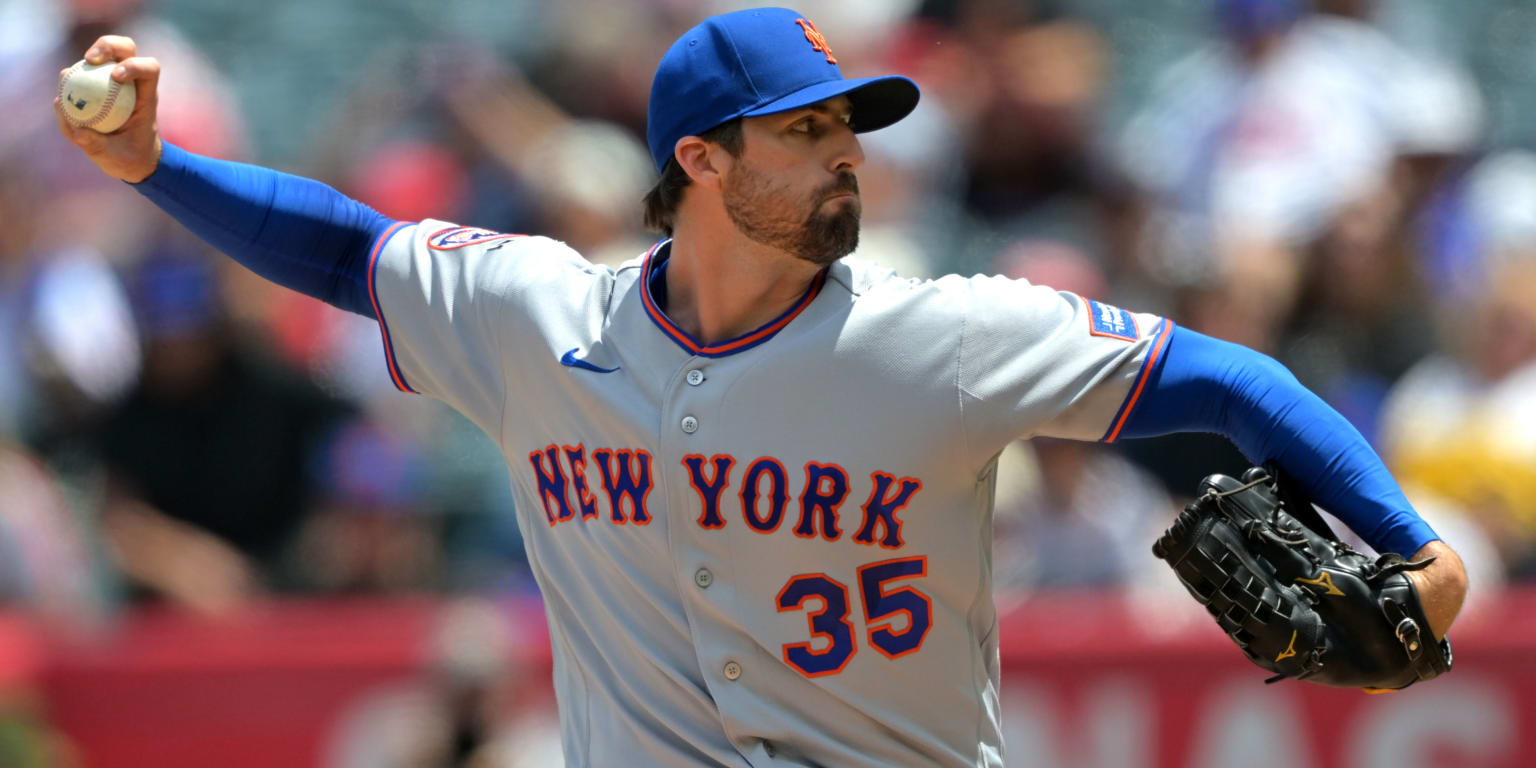
Clay Holmes will make a rehab start for High-A Brooklyn on Saturday, throwing 70-75 pitches, but he won't take the mound for the Mets against Miami on Sunday as he'd hoped. The right-hander hasn't pitched in a major-league game since May 15, when a fractured right fibula ended his season after just nine starts. That timing—barely two months from deadline day—leaves the Mets and Holmes in limbo: does New York use him as trade bait, or does he return to the rotation he was excelling in before injury?
Before the injury, Holmes was one of the Mets' most durable arms. In nine starts he'd compiled a 4-4 record with a 2.39 ERA and posted 2.0 bWAR, the fifth-best mark on the roster. He wasn't a first-round acquisition or a marquee free-agent signing, but his consistency made him valuable—exactly the type of mid-rotation arm contenders target at the deadline. The fracture severed his season mid-stride, but the injury itself wasn't catastrophic; fibular fractures don't typically require extended rehabilitation if the bone has healed cleanly. A rehab assignment is a procedural checkpoint, not evidence of damage control.
What matters for the trade market is whether Holmes pitches in New York or elsewhere. His arbitration situation—he can become a free agent after 2026 if he doesn't exercise a player option for 2027—adds leverage to his position. No contract extension talks have occurred, which means the Mets have signaled they view him as expendable. Holmes himself acknowledged the situation with candor: "It's pretty likely [I'll be traded]," he said, noting that front office communication has been transparent but that his immediate future is uncertain. At deadline, that translates to a player whose next outing may determine his uniform color for the stretch run.
For bettors, the implications are straightforward but timing-sensitive. If Holmes clears his rehab assignment without incident and returns to MLB before Monday's 6 p.m. ET deadline, the Mets would have 24-48 hours to either trade him or deploy him. A clean rehab outing removes medical risk from his value, which actually increases his trade appeal—teams will bid harder on a healthy arm than a question mark. If he pitches well in the minors, any acquiring team will trust the health profile and the recent sub-2.40 ERA. Conversely, if the rehab assignment exposes stiffness or command issues, his market dries up and he becomes a Mets returner by default. The betting angle hinges on market efficiency: is Holmes' strikeout prop (if he does return to pitch) properly discounted for the variance between "fresh arm coming off injury" and "proven sub-2.40 guy in the system", or have books already baked in the health uncertainty?
One layer deeper: if Holmes is traded, sportsbooks will scramble to adjust any existing props involving him mid-game or mid-day, creating brief windows where old numbers reflect Mets context but new ones haven't loaded yet. That's a microsecond edge. For the next 48 hours, the smartest bet is to avoid Holmes props entirely until the market settles around his destination. Once the trade market closes, his numbers reset—either as a Met or as his new team's arm—and a clear picture emerges. The rehab assignment is the mechanism; the deadline is the catalyst.
MLB Intelligence — Baseball intelligence beyond the box score. Open MLB Intelligence →