Clay Holmes Pitching Trade Tilts Cubs Rotation Leverage—But Activation Timeline Clouds Early Impact
By Erik Schwartz ·
The Cubs added a legitimate starting pitcher mid-August, but Holmes's injury recovery window means his playoff-run value hinges on health, not just talent.
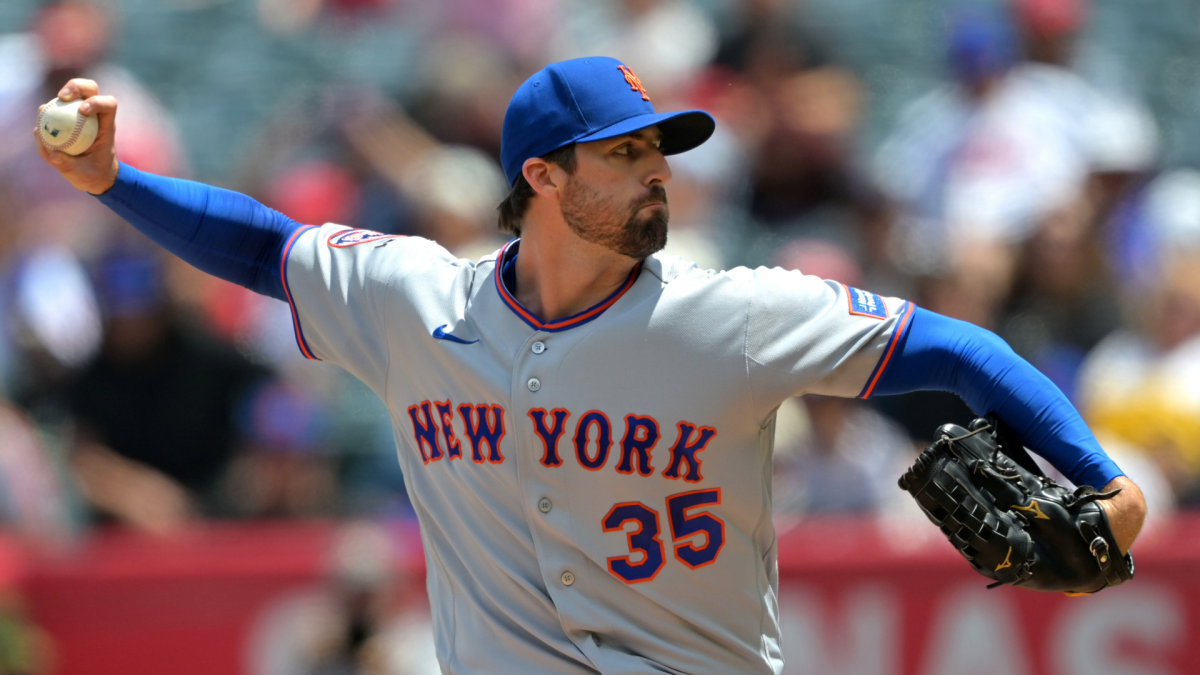
The Cubs acquired reliever-turned-starter Clay Holmes and outfielder Tyrone Taylor from the Mets on the trade deadline, shipping back No. 2 prospect Jefferson Rojas in the process. Holmes, sidelined since mid-May with a fibula fracture from a comebacker, is already three starts into his minor-league rehab and expected to rejoin the active roster within days. The move plugs a critical gap in a rotation decimated by injuries, but it also introduces a high-variance ingredient into Chicago's postseason calculus: a pitcher who hasn't thrown at major-league intensity in over two and a half months.
Before the injury, Holmes had been excellent for the Mets this season, posting a 2.39 ERA across 52.2 innings with 45 strikeouts and only 18 walks. His 3.26 ERA over 40 starts and two relief appearances in 2026 represents a seamless continuation of his first year as a full-time starter in 2025—a career transition that has proven far more durable than skeptics predicted. The Cubs are essentially acquiring a mid-rotation option with proven health history: across his dual campaigns, Holmes has posted a 3.26 ERA/127 ERA+ with a 3.89 FIP, numbers that slot squarely into playoff-starter territory if the rehab sticks. The contract structure also favors Chicago: he's owed $13 million through October, then has a $12 million player option for 2027 that he's highly likely to decline, making him a temporary addition rather than a long-term obligation.
Yet the timing creates real uncertainty. Holmes threw his last inning on May 12—nearly three months before activation. Rehab assignments are not a perfect proxy for in-game readiness, and fibula injuries, while not as structurally catastrophic as other lower-leg damage, often carry elevated risk of re-injury during the explosive plant phase of a pitcher's delivery. The Cubs are gambling that three minor-league starts plus a few weeks of bullpen work will bridge the gap, but that's an aggressive assumption with a starting pitcher and a playoff rotation that cannot afford sudden depth erosion. If Holmes returns and immediately logs three quality starts, the narrative is vindication; if he blows up in his first or second outing, or worse, suffers a setback, the Rojas trade becomes significantly more painful.
For betting purposes, this creates a classic bifurcated scenario. In the near term—his next two or three starts upon return—Holmes is a high-variance proposition. Markets will likely price him with a modest discount to his pre-injury skill level, but the true risk is binary: either he's fine, or he isn't. That makes him a poor target for traditional over/under strikeout or ERA props until he logs at least one clean start. However, for bettors with a longer view, the strategic implication is subtler. The Cubs now have genuine depth in their rotation (Gausman, Holmes, Boyd, Imanaga, Cabrera, Rea, Assad, Brown), which means they can rest arms and deploy a bullpen-heavy playoff strategy without sacrificing their starting pitcher quality index. That depth-driven flexibility typically manifests in lower team totals and tighter series outcomes—the team stops leaning on any single starter too hard. If Holmes stays healthy and logs 15-20 playoff innings, the Cubs' win probability in each game increases measurably, but markets haven't fully repriced that scenario because the injury history is still so fresh. The edge, then, is not on Holmes himself but on Cubs moneyline and series-win bets once he records his first clean start. Early action on those lines will over-penalize for the injury uncertainty.
Taylor's acquisition as a fourth outfielder and potential left-field starter is a lower-stakes addition, though his recent performance—described as a "major heater over the last several weeks"—suggests the Mets may have traded away an option when his value peaked. For the Mets, it's the latest in a fire-sale pattern that includes Luke Weaver, A.J. Minter, and Huascar Brazoban, signaling that David Stearns has fully pivoted to rebuild mode after two consecutive years of contention.