MLB · injury
Brewers' Middle Infield Collapse Gutting an Already Misfiring Offense
With Brice Turang sidelined by a left knee injury and Cooper Pratt out with a hamstring strain, Milwaukee's plate-discipline-based attack loses its engine at the worst possible moment.
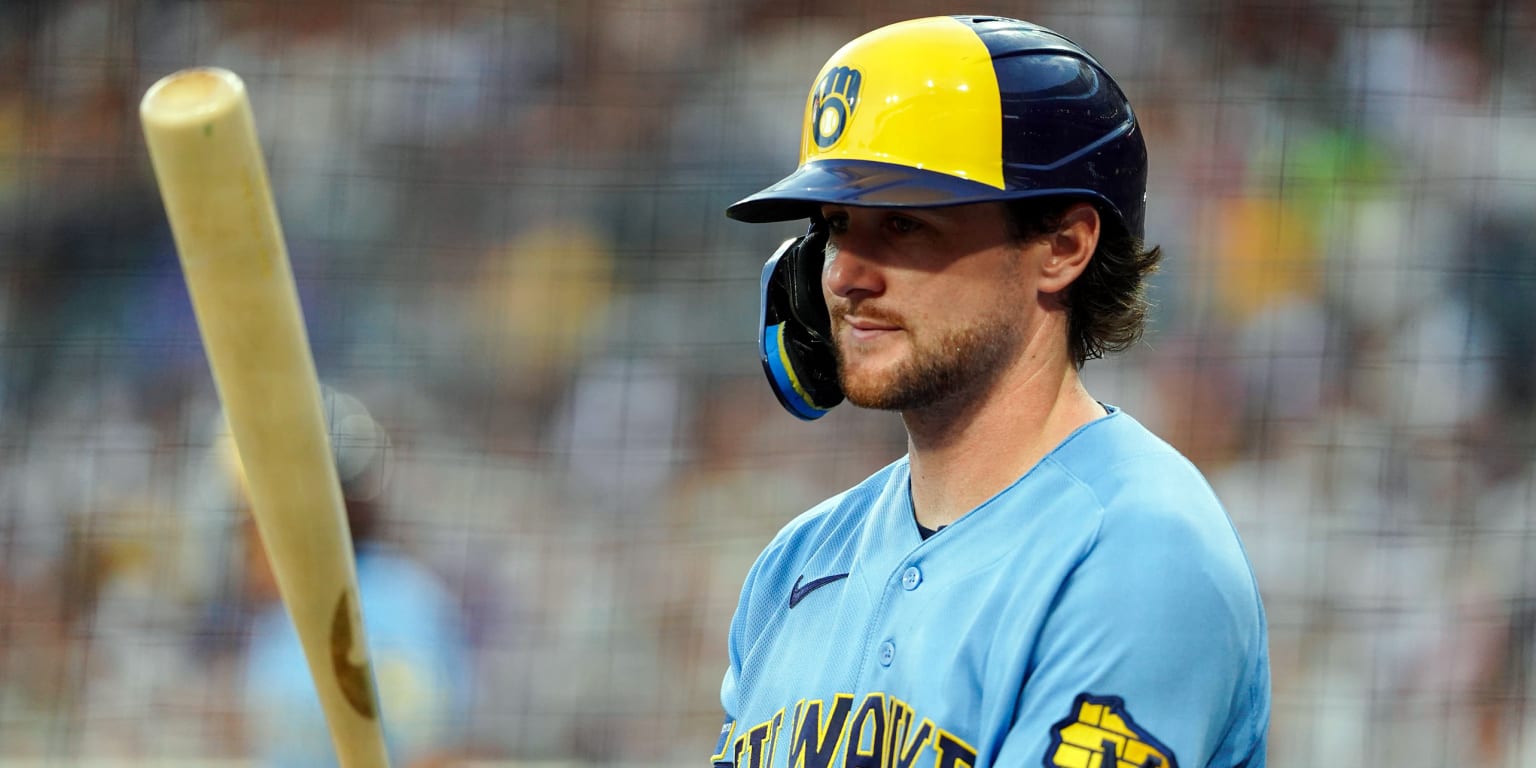
The Brewers' Thursday lineup against the Dodgers looked like a scrambled roster card, not a postseason contender. Second baseman Brice Turang was ruled out after undergoing an MRI for a left knee injury that manager Pat Murphy described as day-to-day, following pain that had accumulated over time. The initial MRI read offered some relief—no structural damage—but the timing hammers a team already hemorrhaging runs. Add in rookie shortstop Cooper Pratt's 15-day absence with a strained hamstring, and Milwaukee's defensive foundation in the middle infield simply vanished.
Turang's absence cuts deeper than a typical backup at second. He's the team's most versatile offensive engine: .810 OPS across 523 plate appearances, 5.3 bWAR (team-high), 16 stolen bases, and the catalyst for a Brewers offense built on speed and plate discipline, not power. That formula has cratered. Over the previous 16 games entering Thursday, Milwaukee batted .221 with 3.56 runs per game—a catastrophic fall from a .310 run rate earlier in the season that ranked fifth in baseball. The Padres swept the Brewers to start this West Coast trip; Milwaukee went 3-for-28 with runners in scoring position, a 12-strikeout disaster that exposed how little margin for error this team has without its top-of-lineup hitters clicking.
Murphy's lineup improvisation—Gary Sánchez at first base, Andrew Vaughn shifted to third, Christian Yelich buried in the order—amounts to damage control. The manager acknowledged the inelegance but doubled down on insertion of live bats over defensive alignment, a calculus that works only if the bats actually produce. Defensively, losing both middle infielders to injury is, as Murphy said, "not ideal." For a team predicated on run prevention and turning double plays, this is structural damage.
For proposition markets, Brewers team totals face immediate headwind compression. The 16-game sample of 3.56 runs per game already suggested regression from their 5.10-run-per-game pace, but now it's not just offensive underperformance—it's roster depletion at the most impactful position. Turang's 523 plate appearances and 5.3 bWAR mean his absence removes roughly 15 percent of team WAR; replacement-level shortstop/second base play costs an additional run or more per game in the field. Expect Brewers team totals to move lower as the market processes both the injury timeline and the offensive drought that preceded it. Any team total set above 4.0 runs warrants scrutiny given the compounding factors.
Turang's day-to-day status creates real uncertainty on duration, but the underlying offensive malfunction predates his injury. Even if Turang returns within a week, the Brewers will need to first prove they can manufacture runs without him—and the evidence from San Diego suggests that's not happening. The knee injury is the headline; the offensive collapse is the actual problem.
MLB Intelligence — Baseball intelligence beyond the box score. Open MLB Intelligence →