Milwaukee's Contact-First Offense Is Hitting at Exactly the Right Moments
By PropBetEdge Editorial Team ·
The Brewers rank fifth in runs scored with the fewest home runs in baseball, a paradox built on patience, baserunning speed, and clutch power timing that should reshape how you bet their run-production props.
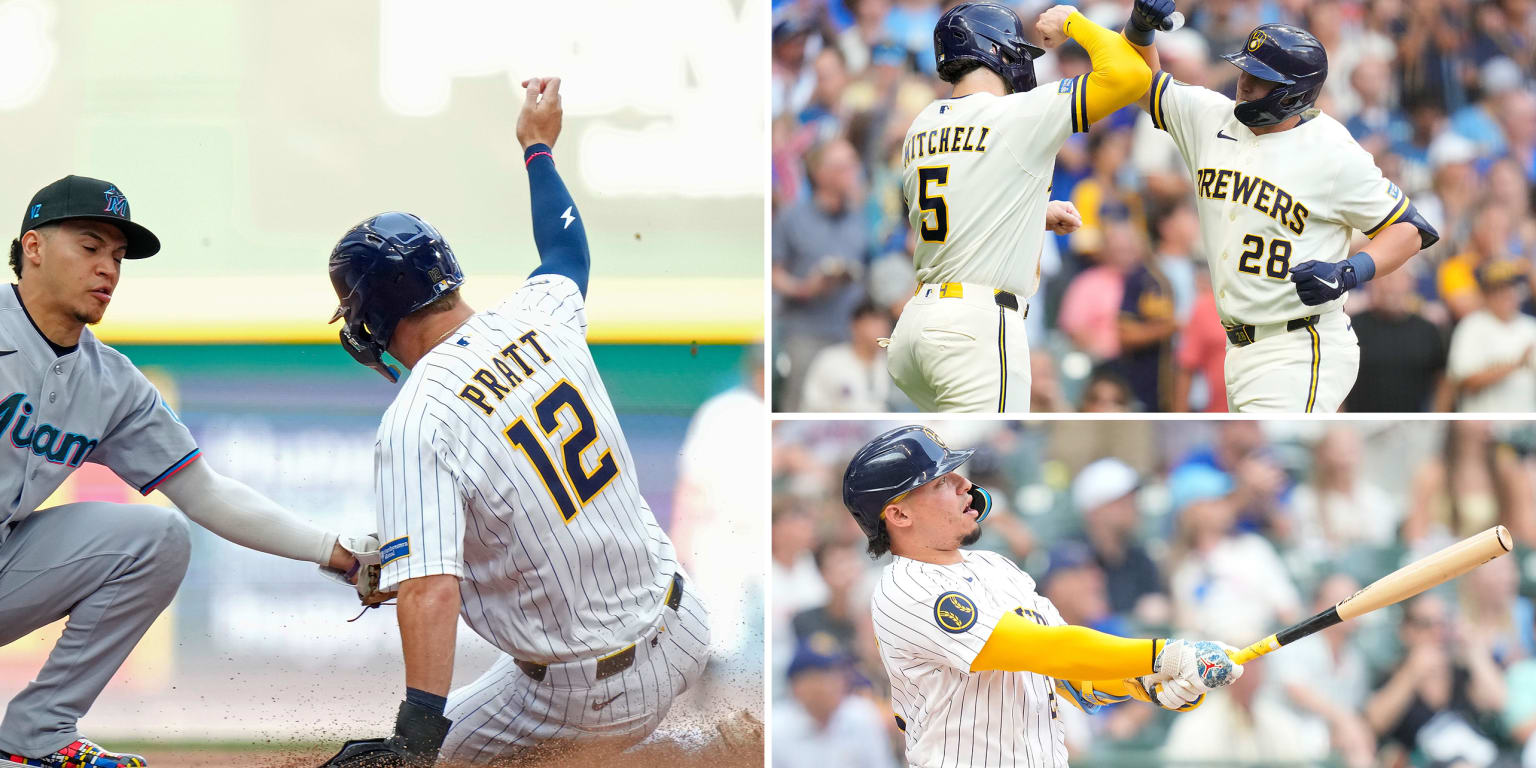
Milwaukee's offense operates on a principle that runs counter to modern baseball theology: they're scoring runs at an elite clip without elite power. The Brewers have generated 514 runs (fifth in the majors) while launching just 94 home runs (fewest). That gap isn't a flaw waiting to be exposed—it's the foundation of their approach, and Wednesday's Joey Ortiz performance (3-for-3, walk, stolen base) epitomizes how systematically they've built it.
The mechanics are precise and interconnected. The Brewers swing at just 27.3% of first pitches—second-lowest in baseball—yet when they do attack the opening pitch, they bat .377 with a .631 slugging percentage (both elite in their respective buckets). That selective aggression pairs with a league-low 43.7% overall swing rate, a patience profile that allows them to exploit pitches later in counts where their contact-oriented approach has already established contact quality. Complementing this hitter's discipline is a baserunning infrastructure that ranks second in sprint speed (27.9 feet per second) with nine players among the league's 79 fastest runners. A league-high 10 Brewers have stolen at least five bases this season, creating run-scoring opportunities without relying on the home run.
But the real edge resides in timing. More than half of Milwaukee's 94 homers (53.2%) have come with runners on base—the highest rate in baseball. Jake Bauers, the 30-year-old breakout, leads the majors with seven three-run homers, while William Contreras has eight of his 10 homers in runners-on situations, including Sunday's walk-off. The Brewers have transformed their power deficit into a precision instrument: they don't hit for volume, but they hit for consequence.
For prop bettors, this efficiency structure creates a durable edge on team totals and run-line plays when the Brewers face mediocre or vulnerable relief corps. Their offense doesn't depend on late-inning solo shots—it manufactures base runners through discipline and speed, then converts those runners with situational power. A below-average power team that generates the most runners-on power in baseball will sustain elevated run-scoring rates against pitching that can't strand runners or suppress baserunning. Look for inflated unders on Brewers team totals (4.5–5.5 range) against bullpens ranking below average in strand rate or explosive fastball velocity; those numbers likely undervalue Milwaukee's ability to turn patient at-bats and stolen bases into crooked-number innings.
The lineup's aversion to challenging balls (2.8% on challengeable pitches, lowest in baseball) and their calculated usage of replay review—Brice Turang has challenged just twice all season while generating the 12th-most expected overturns—signals an organization operating with discipline at every level. That culture doesn't yield to variance. Brewers totals should trade at a premium relative to their raw power output because their run-generation machine has eliminated most of the leakage points that sink underfunded offenses.