MLB · injury
Brewers' Left-Side Infield Collapse Forces Defensive Chaos in NL Central Race
Joey Ortiz and Cooper Pratt both hit the injury list within 24 hours, forcing Milwaukee to deploy position-displaced reserves in a pennant stretch.
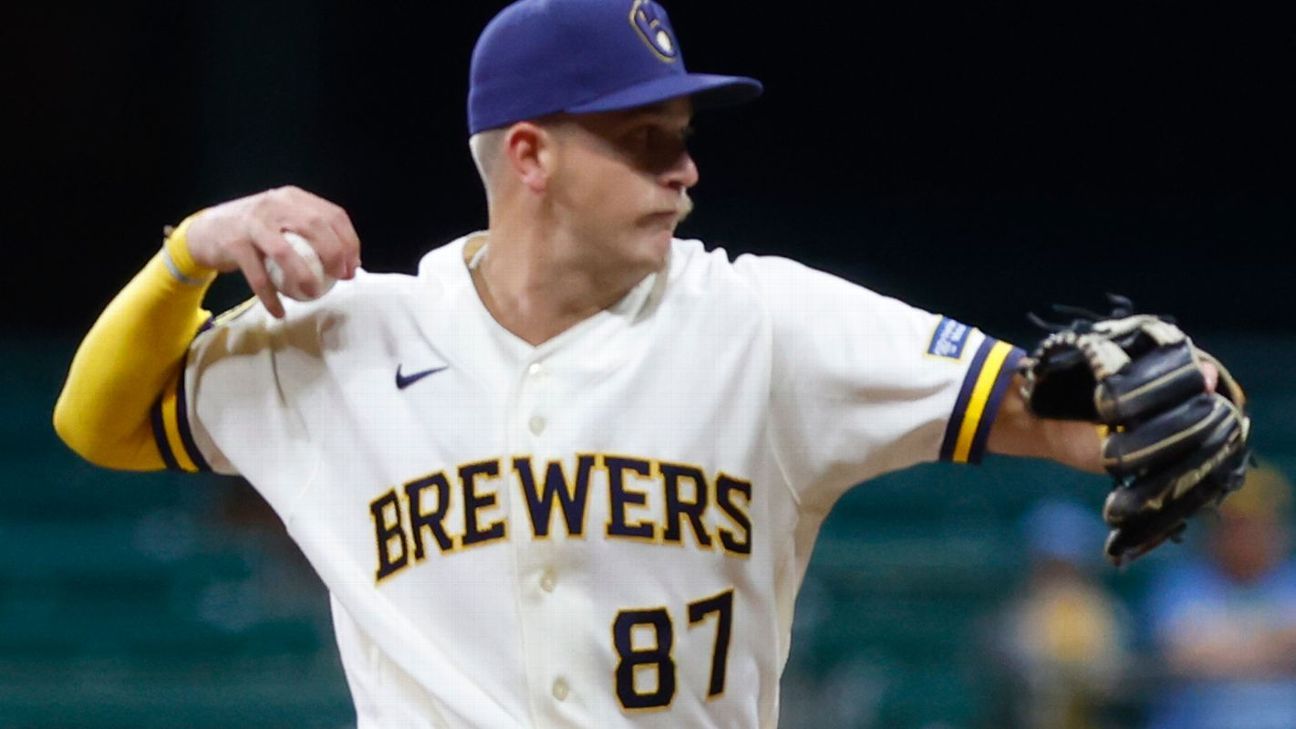
The Milwaukee Brewers' infield depth took a one-two punch Saturday that threatens their division lead. Third baseman Joey Ortiz aggravated scapular muscle damage while swinging in the second inning and exited two innings later, while shortstop Cooper Pratt developed hamstring soreness in the same game. Both were ruled day-to-day entering Sunday's contest against Minnesota, but the timing—two days after the trade deadline, with 48 games remaining—exposed a thin bench on the left side of the diamond.
Manager Pat Murphy's response was necessity masquerading as strategy. Andrew Vaughn, a first baseman by trade, started at third base for only the second time in his career and first since 2021. David Hamilton, who had been splitting time between third and short earlier in the season before pivoting to short-term third-base depth work, drew his first start at shortstop since June 9. Neither move signals organizational confidence in sustained performance at these positions. The Brewers compounded the problem by losing infield prospect Jett Williams—their seventh-ranked prospect—to wrist issues severe enough to warrant a specialist consultation in Arizona. Williams arrived via the Freddy Peralta trade to the Mets in January and was earmarked as future infield cover. The organization then scrambled to sign Jihwan Bae, a veteran journeyman with 163 games across Pittsburgh's system from 2022–25, on a minor league contract.
What matters for on-field performance is how long Ortiz and Pratt actually stay unavailable. Scapular injuries in the upper back carry genuine risk—they affect swing mechanics and can linger if not managed carefully during a compressed pennant race. Pratt's hamstring testing will determine availability within days, but hamstring soreness that surfaces mid-game often precedes multi-week absences, particularly in position players who require explosive lateral movement. Milwaukee entered Sunday with a 1.5-game cushion in the Central, a lead that evaporates fast with defensive liabilities and reduced offensive flexibility.
For betting purposes, the cascade matters more than any single game. Vaughn moving to third introduces execution variance; a slugger asked to play an unfamiliar position mid-season typically sees his contact rates and exit velos compress slightly due to cognitive load. Hamilton at short, meanwhile, is a utilitarian veteran who won't produce offensive uplift—his season line sits at .243 with a 70 wRC+. Neither player elevates the Brewers' run-scoring profile. If Ortiz's scapular issue forces him to miss two weeks or longer—a realistic scenario given the mechanism and the timing in a pennant chase—the Brewers' ability to manufacture runs from the corner infield positions drops noticeably. Monitor Ortiz's status reports carefully over the next 48–72 hours; if he moves to the injured list rather than staying day-to-day, Milwaukee's run total in the next week of games contracts, and unders on the Brewers team total become more reliable than the opening market prices suggest.
The Brewers are still division favorites, but infield depth is no longer a strength. It is now a liability that will accumulate small drains on offensive efficiency every game the top two infielders miss. The market may not yet price in the full multi-week absence scenario if Ortiz or Pratt require imaging that reveals structural damage. Early unders before the official status updates could represent value, particularly in any game where Milwaukee faces a quality starter and is forced to rely on secondary corner infielders for run production.
MLB Intelligence — Baseball intelligence beyond the box score. Open MLB Intelligence →