MLB · callup
Messick's Cy Young Trajectory Changes Guardians' Postseason Calculus
A 25-year-old left-hander earned his rotation spot in spring, then delivered a 2.57 ERA season that has Cleveland one game from clinching the AL Central—and that changes how to price their October ceiling.
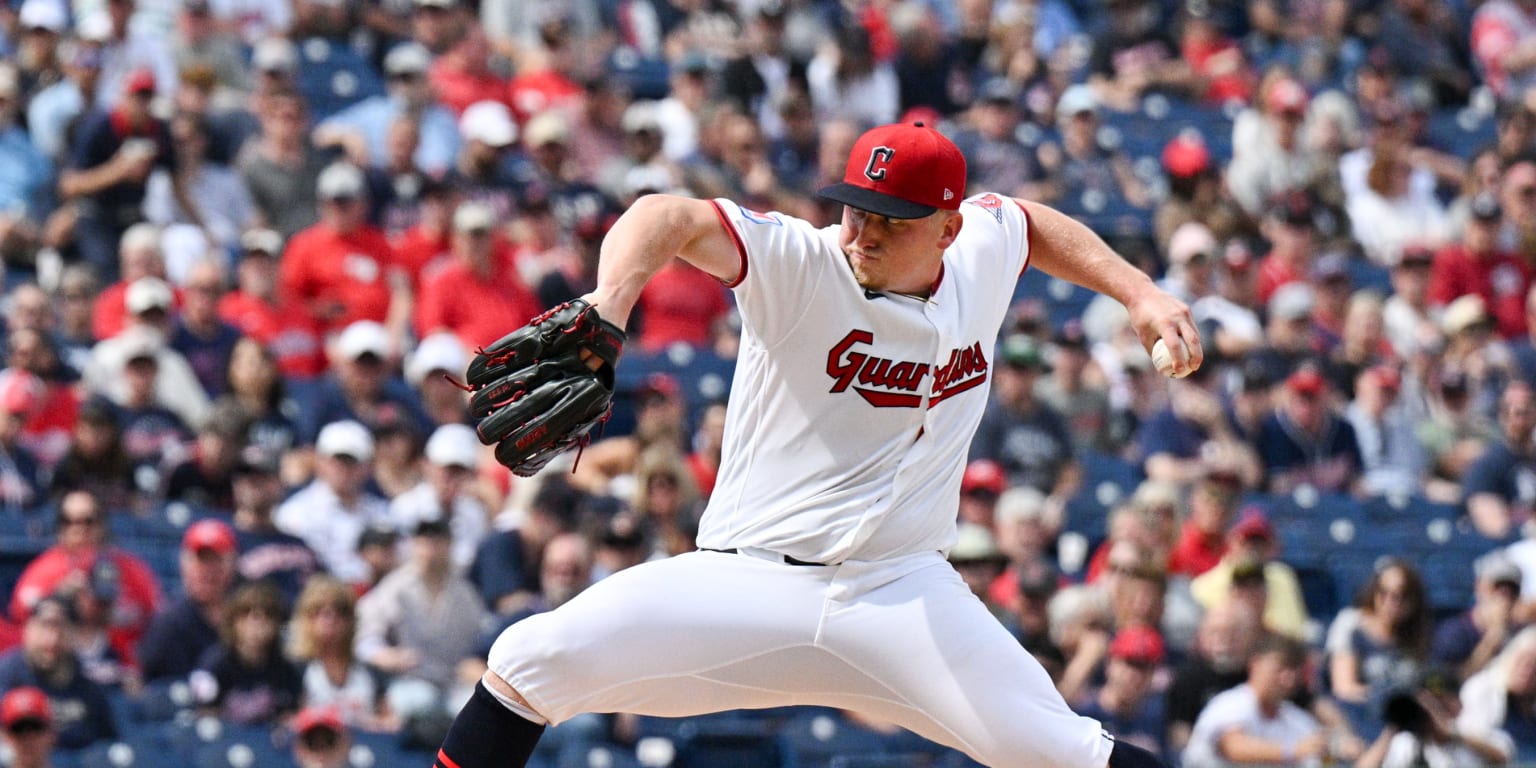
Parker Messick takes the mound at Fenway on Tuesday night in a three-game series that effectively determines whether the Guardians (81-75) win the AL Central outright or limp into October as a Wild Card team. The rookie left-hander has been the single most important variable in Cleveland's final-week positioning: his last start—a six-inning, eight-strikeout effort yielding three runs in a 6-3 victory over the White Sox—is currently the only game separating the two division rivals. That performance was no outlier. Messick enters this stretch ranked sixth in MLB ERA (2.57) among qualified starters, third in the AL behind Cy Young frontrunners Cam Schlittler (1.94) and Dylan Cease (2.40). His 1.04 WHIP and 186 strikeouts across 30 starts mark him as a legitimate candidate for both AL Cy Young and Rookie of the Year awards—a dual threat that management Chris Antonetti admitted the organization "knew something none of us did" when they were quietly building the spring roster.
What makes Messick's emergence particularly noteworthy is the trajectory. Six months ago he had to earn his Opening Day rotation slot. He did so partly through sheer work ethic—Vogt observed him pitching with postseason intensity even on backfield drills during spring training—but mainly through repeatable mechanics. In 27 of his 30 starts, Messick has allowed three runs or fewer. That's a 90% consistency rate that separates elite starters from the volatile middle tier. His strikeout-to-walk ratio (186:47) reveals a pitcher who commands the zone rather than merely throwing hard; he's not mining good fortune on borderline pitches. The foundational work came during a seven-game rotation stint last September (2.72 ERA), which Cleveland used as a blueprint for expansion confidence heading into 2026.
For betting purposes, the critical insight is that Messick's performance is sticky rather than fluky. This is not a rookie who surged for two months and will regress; he's posted a sub-2.60 ERA over a full 30-start sample against major-league competition. That durability matters for playoff rotation construction. The Guardians now have a legitimate ace-adjacent starter entering October, which functionally reduces the variance in their postseason ceiling. A team with a reliable sub-2.60 ERA guy holding down Game 1 or Game 2 of a series plays a different game than one relying on inconsistent mid-rotation arms.
From a prop lens, Messick's strikeout rate (6.2 per nine innings) and workload (178+ innings) make his K prop lines vulnerable to mispricing in the coming days. Market makers have been slow to fully adjust his Cy Young odds—he remains behind Schlittler and Cease despite comparable peripherals—which suggests sportsbooks are still treating him as a breakthrough story rather than an established performer. Watch his strikeout props against Boston: if the line hasn't moved up to reflect his third-in-the-AL ERA pedigree and his seven-strikeout baseline from last start, that's free money on the over. His next two starts (Boston, plus one more in the final week) will likely be the highest-leverage innings of his season; elite starters typically elevate their strikeout rates in high-pressure settings, and Messick has shown no evidence of shrinking. The Cy Young conversation is real—Vogt was explicit on that—but the betting implication is simpler: a 25-year-old left-hander with a 1.04 WHIP and 186 Ks over 178 innings should be priced like a Tier-1 strikeout generator, not a lottery ticket.