Messick's Fastball Climb Reshapes Guardians Rotation Value
By Ty Whitney ·
A 1-mph velocity gain and sharply improved whiff rates on his fastball are reframing how the young lefty works his arsenal—and what bettors should expect from his next starts.
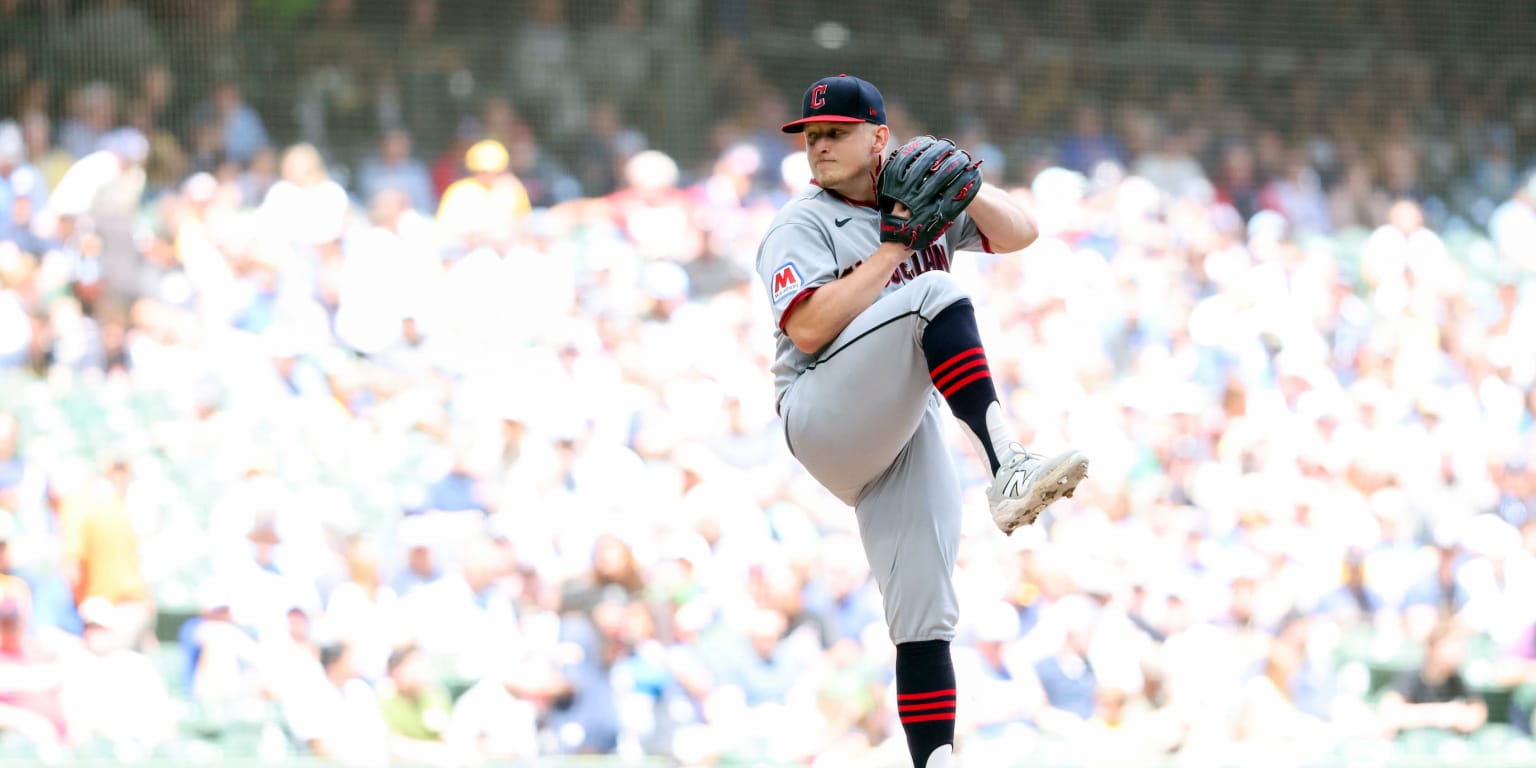
Parker Messick threw 97.5 mph on Thursday against Milwaukee, the hardest fastball of his professional career. The number itself is routine—dozens of pitchers touch that velocity on any given day—but the arc matters. Messick's four-seam fastball averaged 92.8 mph in seven starts last season; this year, across 15 starts heading into Tuesday's matchup with the White Sox, it's sitting at 93.8 mph. That full mile-per-hour gain is a live signal, not noise, because it correlates with a concrete performance shift: opponents are hitting .152 against his fastball in 2026 versus .302 last year.
The velocity isn't manufactured—Messick and Guardians pitching coach Carl Willis both frame it as a byproduct of refined delivery mechanics refined over multiple seasons. Messick was drafted in the second round in 2022; the organization has had time to build a developmental arc. Each offseason and bullpen session, Messick has isolated what sharpens his mechanics and what degrades them, then applied those micro-adjustments consistently. His changeup—the secondary pitch he's leaned on since high school—remains his whiff weapon at 40.1 percent. But the fastball's newfound velocity creates what Willis calls "urgency." Hitters can't simply wait on the secondary; they're forced to chase the heater, which bleeds into the rest of his arsenal. That's a textbook efficiency multiplier.
The most recent start in Milwaukee is instructive. After seven days of rest, Messick's fastball averaged 95.9 mph—nearly a full tick higher than his season average and consistent with the trajectory of his previous outing on June 10 against the Yankees (94.8 mph). Rest appears to unlock the upper range. The 2.70 ERA across 15 starts frames him as a legitimate mid-rotation asset; the velocity trend and fastball whiff rate suggest the ERA is sustainable, not a small-sample mirage. A pitcher who's hitting his spots harder and forcing weaker contact on his primary pitch is not due for regression in the traditional sense—he's executing a cleaner plan.
For prop bettors, the immediate angle lives in strikeout volume against weaker offenses and in games where Messick gets extended rest beforehand. His K-rate will correlate more tightly to fastball velocity than to ambient offense quality, because the velocity shift is reducing barrel contact, not just adding strikeouts. Against the White Sox on Tuesday and in subsequent starts where Messick has five or more days between appearances, strikeout lines priced at last year's baseline velocity assumptions are undervalued. The market hasn't fully integrated the 2026 velocity floor—it's pricing him as a 92-93 mph guy when he's operationally a 94-95 mph pitcher. That gap persists especially early in the betting week, before sharp action consolidates around the recent tape.
The long-term edge is more durable than the single-start bounce. Messick's fastball climb is rooted in mechanical consistency and organizational development, not a fluke hot streak. If the Guardians continue to manage his rest and workload rationally, his fastball will maintain the 93.8-94.5 mph range with occasional spikes toward 96 mph. That's a multi-month edge, not a 48-hour mirage.