Messick's Historic Start Reshapes Cleveland's Rotation Math
By PropBetEdge Editorial Team ·
A 25-year-old left-hander is posting ERA numbers that haven't been seen in Cleveland since 1913—and his strikeout rate stands alongside franchise legends, raising questions about how long the market will price him as a rookie.
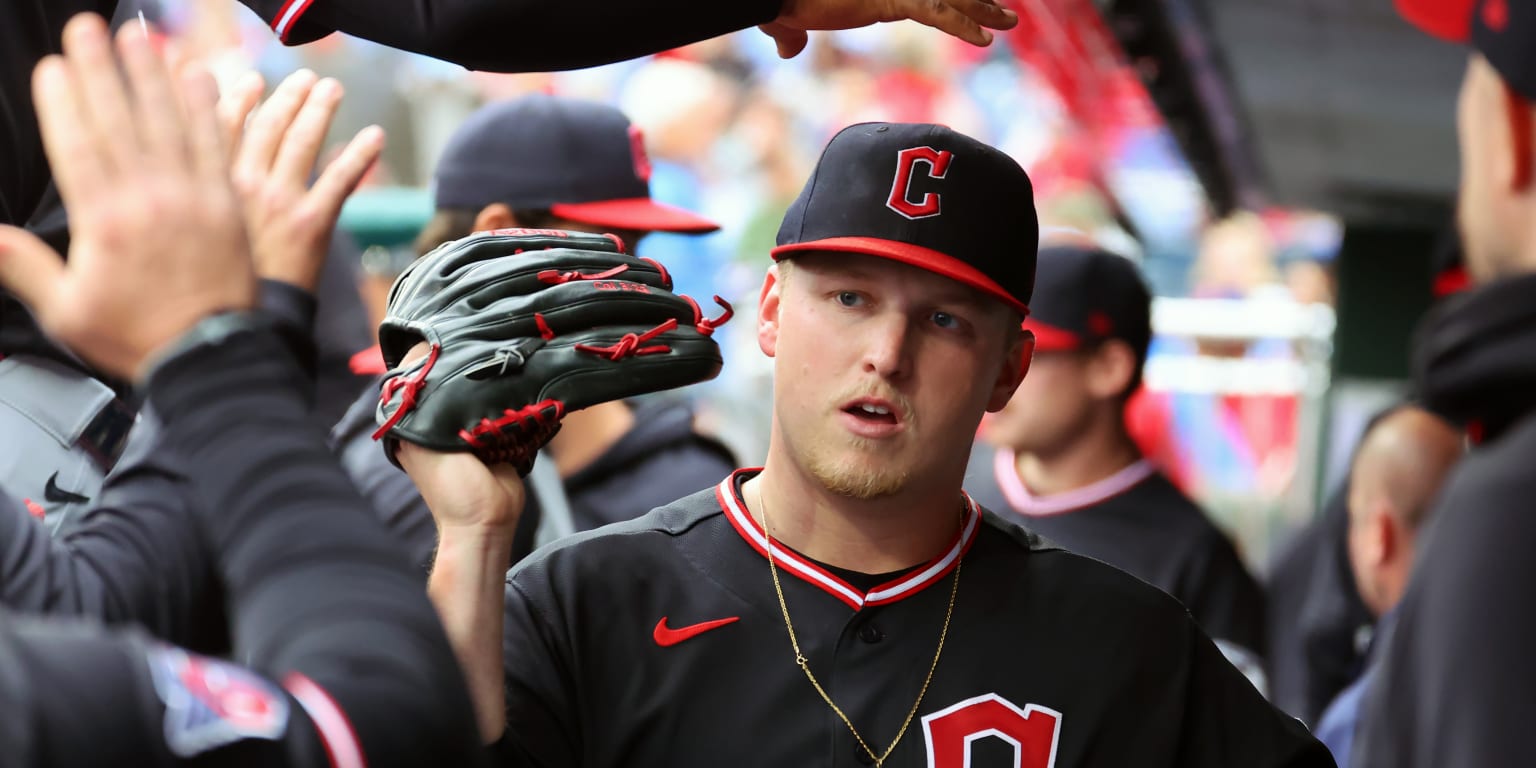
Parker Messick has 108 strikeouts and a 2.42 ERA through 18 career starts, placing him in franchise company reserved for Hall of Famers and generational talents. Since his August debut, the Cleveland left-hander has allowed three or fewer earned runs in 10 of 11 outings and walked fewer than four batters in every start—a rare convergence of command and stuff that typically takes years to develop. The Guardians have won nine of his last eleven decisions, a record that speaks to both his performance ceiling and the organizational confidence already invested in him.
The comparison points underscore just how unusual this trajectory is. Herb Score and Danny Salazar both had more strikeouts in their first 18 starts; so did Shane Bieber. But neither Salazar nor Bieber posted an ERA below 2.50 while also maintaining Messick's walk rate. Stephen Strasburg and Paul Skenes are the only two pitchers since 1913 to match Messick's combination—2.45 ERA or lower, 100-plus strikeouts, and fewer than 30 walks through the first 18 career starts. Messick's 2.42 ERA is the lowest in franchise history under those parameters. Manager Stephen Vogt compared him to Sonny Gray in terms of demeanor—a pitcher who attacks hitters regardless of the matchup, without hesitation. That aggression, combined with mechanical refinement (including a subtle delivery adjustment identified by the pitching staff before his scoreless outing against Philadelphia), has created a baseline of consistency that usually signals either a genuine talent inflection or a statistical artifact destined to regress.
The betting market has likely not yet fully internalized what these numbers represent. Messick's strikeout props and ERA lines are still pricing him as a high-ceiling rookie with elevated variance, even though his last 11 starts show almost no variance at all. His walk rate (2.16 per nine innings) is elite; his strikeout rate (9.35 K/9) sits in the 73rd percentile among qualified starters. Most importantly, the mechanism behind his consistency is identifiable: he pounds the zone, generates swings and misses on his fastball, and operates with poise in high-leverage situations. This is not a fluke streak born from schedule softness. The Guardians' pitching staff has documented adjustments he's made mid-season. His command data is tracking in a way that suggests the performance is reproducible.
For prop bettors, the immediate edge lies in strikeout props and ERA-based angles. Messick's K/9 rate of 9.35 is sustainable given the fastball velocity (95-96 mph) and spin rates in his arsenal; his next start against Boston, a team that strikes out at an above-average rate, should see over-K props underpriced relative to his recent output. His ERA, now at 2.42, will face some regression pressure as the sample size grows, but the market may be overestimating the magnitude. The walks per start line (now 2.27 per outing) is a sharper angle—his last four starts show a declining trend in walks, which correlates with the mechanical adjustment Vogt referenced. If that adjustment sticks, the walk prop for his next start deserves a closer look. The Guardians' 9-2 record when he starts also tells you that implied team total overs may be mispriced; a pitcher this polished and reliable in high-leverage spots is an organizational asset teams price into their win totals differently than they do for typical rookies.
The durable edge here is command-based, not strikeout-based. Command tends to be sticky because it reflects both talent (release point consistency) and learning (situational awareness). Strikeout variance is always higher in baseball, and Messick's elite K/9 will attract attention quickly. But the walk prop—and by extension, the innings-pitched and ERA props—should hold value longer because they're rooted in a mechanical fix the coaching staff has already implemented. The market prices rookies with historic strikeout rates as one-hit wonders until they prove otherwise over a full season. Messick's walk rate, paired with his team's confidence in his mechanical foundation, suggests the market is undervaluing his baseline reliability.