MLB
May's Milwaukee Debut: Inefficient But Effective, Brewers Rotation Now Complete
Dustin May's first start in a Brewers uniform delivered a quality-start foundation despite early command issues—and it reframes how Milwaukee's deadline acquisitions stack the postseason rotation.
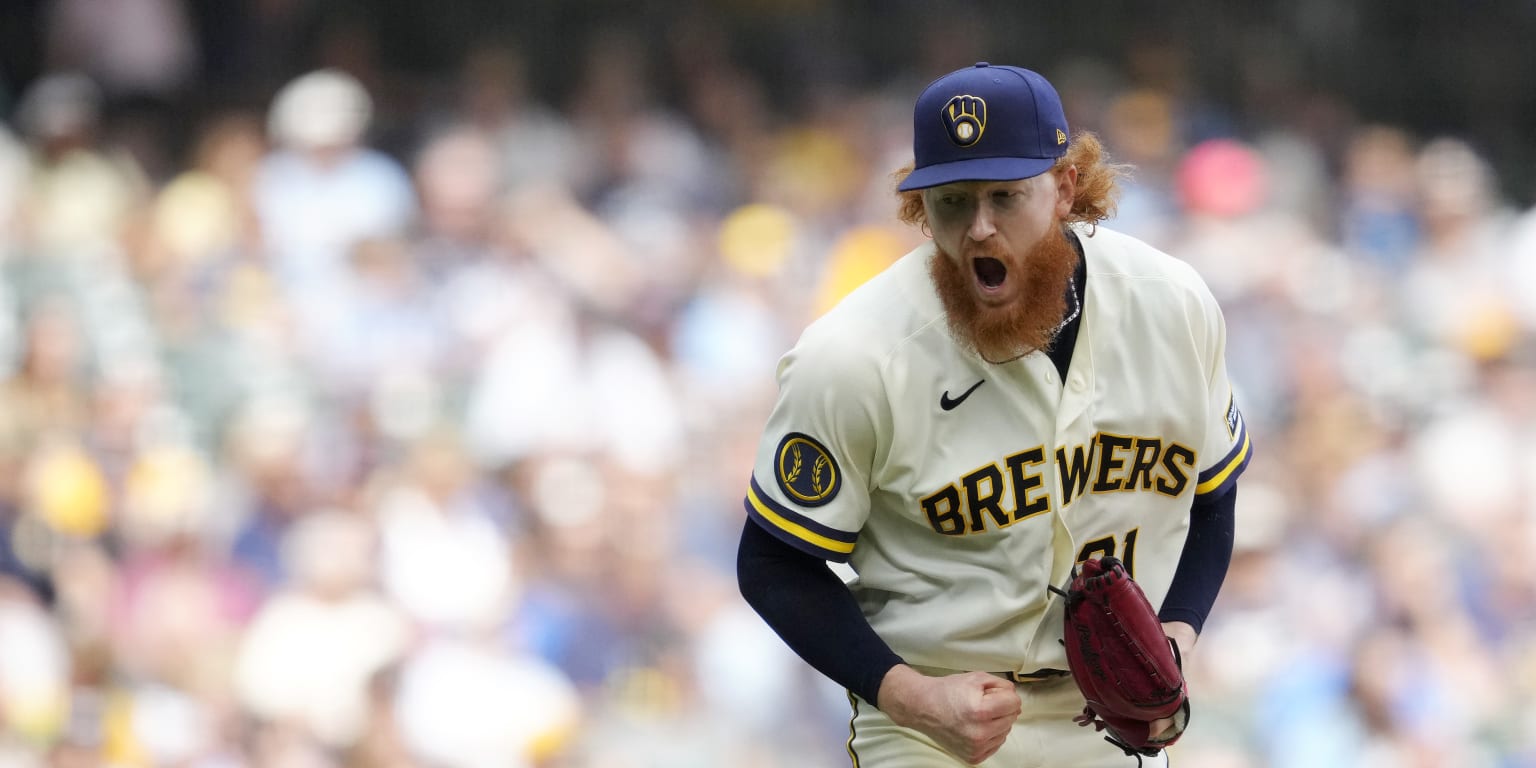
Dustin May made his Brewers debut Thursday against Pittsburgh, pitching six innings of two-run ball in Milwaukee's 5-2 win. Acquired from St. Louis at Monday's trade deadline, May worked around three walks, a balk, and a hit batter to strike out five on 97 pitches—the kind of outing that scores as a quality start in the box score but telegraphs internal inefficiency. He needed 23 pitches just to escape the first inning, and the Pirates tested him early.
What matters operationally is what May did with the adversity. Rather than rely on his traditional arsenal, he leaned heavily on his cutter—a pitch selection adjustment that suggests either preparation by Milwaukee's staff or a calculated in-game pivot to manage command. Six innings of two earned runs is the baseline expectation from a mid-rotation starter acquired weeks into August. The Brewers backed him with exactly the kind of support that should follow a deadline-trade pitcher: early run generation (Jackson Chourio's first-inning homer, Gary Sánchez's go-ahead solo shot in the fifth) and error-free defense. That combination—competent offense and clean fielding—inflates the win probability around a marginal pitcher performance, which is how you read this game.
Milwaukee's deadline strategy now has shape. The team targeted depth in a rotation that already carries the majors' best starters' ERA at 3.36, a paradox that suggests the front office believed the marginal starter quality was the postseason lever. May (quality start), Antonio Senzatela (already two relief appearances), and JoJo Romero (recovering from appendectomy, unavailable until later in August) represent coverage across innings and innings-availability. The Brewers won't hang their October hopes on any single deadline arm; they're buying breadth. That matters for proposition-betting setup because it changes the leverage profile of Milwaukee starters going forward.
For bettors, the immediate angle centers on May's strikeout prop and total innings pitched in his next outings. Thursday's five K's on 97 pitches landed at a 4.64 K/9 pace—below his career 8.9 K/9 average and well below the elite-tier strikeout velocity he displayed pre-trade. That dip is either noise from an adjustment inning or signal of a mechanical or command issue that will persist. Watch the second start; if he climbs back to 7+ strikeouts on similar pitch volume, the early inefficiency was acclimation. If he stays in the 4-5 range, it's a genuine downturn worth fading his K props for the remainder of August. The Brewers' run support Thursday inflated the win value of a below-standard strikeout outing, a luxury that won't always repeat.
Milwaukee's improved rotation depth also opens a path to fade team totals when May pitches next. A 97-pitch six-inning outing is respectable but not dominant; the Pirates managed three hits and only fell behind because of two solo home runs. Against stronger offensive teams, May's command profile (three walks in six innings) will expand the hit-and-run window and elevation opportunity. The quality-start label is deceptive when the pitcher required above-average run support to achieve it. Lock in the Milwaukee team total once the next matchup is set; if it's against a higher-wOBA lineup, lean unders in that specific game.
MLB Intelligence — Baseball intelligence beyond the box score. Open MLB Intelligence →