Brewers Trade for May and Romero: A Rotation Floor-Raiser With Limited Ceiling Impact
By Justin Erickson ·
Milwaukee pivots to the Cardinals after missing Skubal, acquiring two rentals that stabilize the back of the rotation but don't reshape postseason odds.
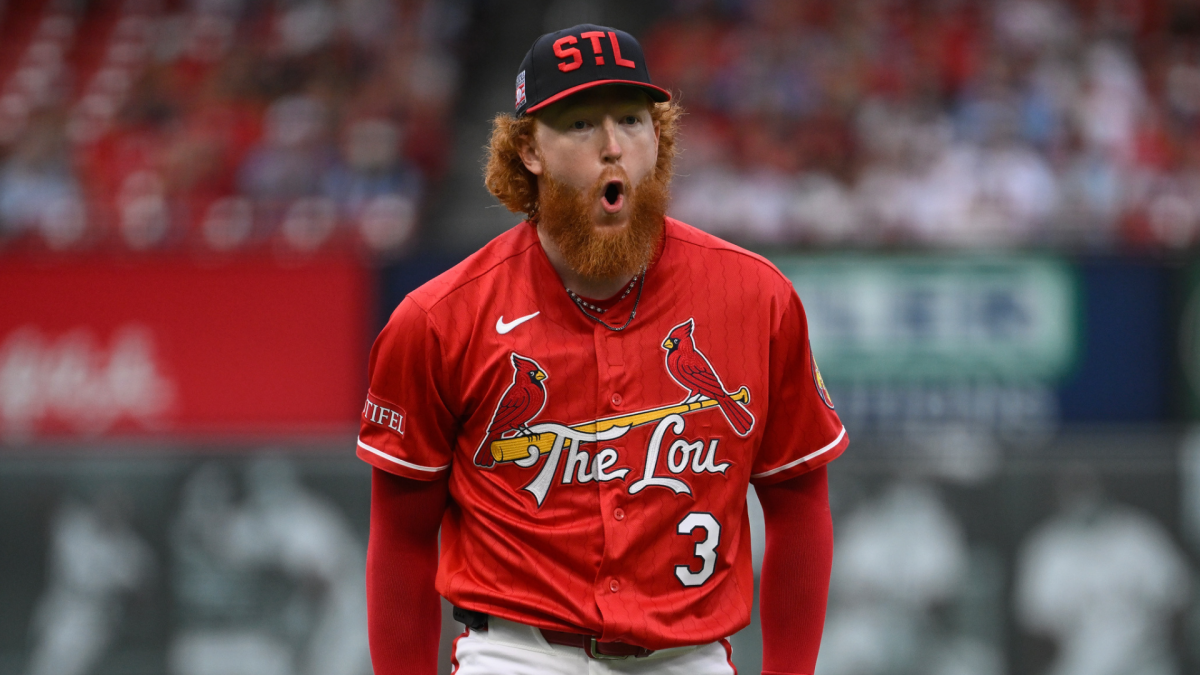
The Milwaukee Brewers have acquired right-hander Dustin May and left-hander JoJo Romero from the St. Louis Cardinals ahead of the August 4 trade deadline, per The Athletic. The full compensation hasn't been disclosed, but both are rentals heading into October—May in the rotation, Romero as a relief option. Romero, 29, is currently sidelined from an appendectomy performed earlier this month and remains a question mark for immediate availability.
May, 28, arrives on his third team in 13 months. After the Dodgers dealt him to Boston last summer, he inked a one-year, $12 million deal with St. Louis this offseason. His 2026 campaign has been streaky—he's delivered several excellent starts but lacks the consistency to be a cornerstone piece. He'll slot into Milwaukee's rotation alongside Jacob Misiorowski, Shane Drohan, Logan Henderson, Brandon Sproat, and eventually Kyle Harrison. The Brewers were forced to pivot after missing on Tarik Skubal, a more transformative arm, and May represents a safer but narrower upgrade. He stabilizes the bottom third of the rotation; he won't suddenly make Milwaukee a Cy Young-caliber staff.
Romero's arrival addresses a specific postseason vulnerability. The Brewers now have three left-handed relief options—Romero, Aaron Ashby, and DL Hall—a potential advantage if they face Freeman, Muncy, and Ohtani in Los Angeles, or Harper and Schwarber in Philadelphia, or Baldwin and Olson in Atlanta. But Romero's current IL stint and a mid-appendectomy recovery window mean his workload and reliability are unknowns through October. The Brewers are betting on his availability, not his dominance.
For bettors, this trade tightens the Brewers' rotation ERA and bullpen flexibility without materially shifting their postseason odds or their run-expectancy profile. May's ERA sits in the mid-3.00s, respectable for a backend starter. He'll likely carry a 4.0+ ERA projection in high-leverage spots and won't dramatically reduce volatility in Game 3 or 4 scenarios. The real edge here is marginal: if you were fading Brewers team totals due to rotation uncertainty, the needle moves slightly in favor of overs. May prevents a worst-case scenario (a call to a borderline minor-league arm), but doesn't create one.
Romero's return timeline and health status are the wild cards. His appendectomy was performed in late July; recovery to competitive availability typically spans 4–6 weeks, which slots his realistic return into early September. That's postseason-adjacent but not early-season critical. If Romero arrives and performs, the Brewers' leftie-heavy matchups improve. If he's still working his way back in October, the trade looks like a placeholder move. For prop purposes, this is a depth play that raises the floor of Milwaukee's pitching profile without widening their ceiling—a stabilizer, not a game-changer.