MLB · lineup
Holmes Shakes Off Rust in Cubs Debut, Signals Rotation Depth That Changes Late-Season Math
After 91 days away from a mound, Clay Holmes threw five perfect innings against St. Louis on Friday, proving the Cubs' midseason pitching trade war has real teeth.
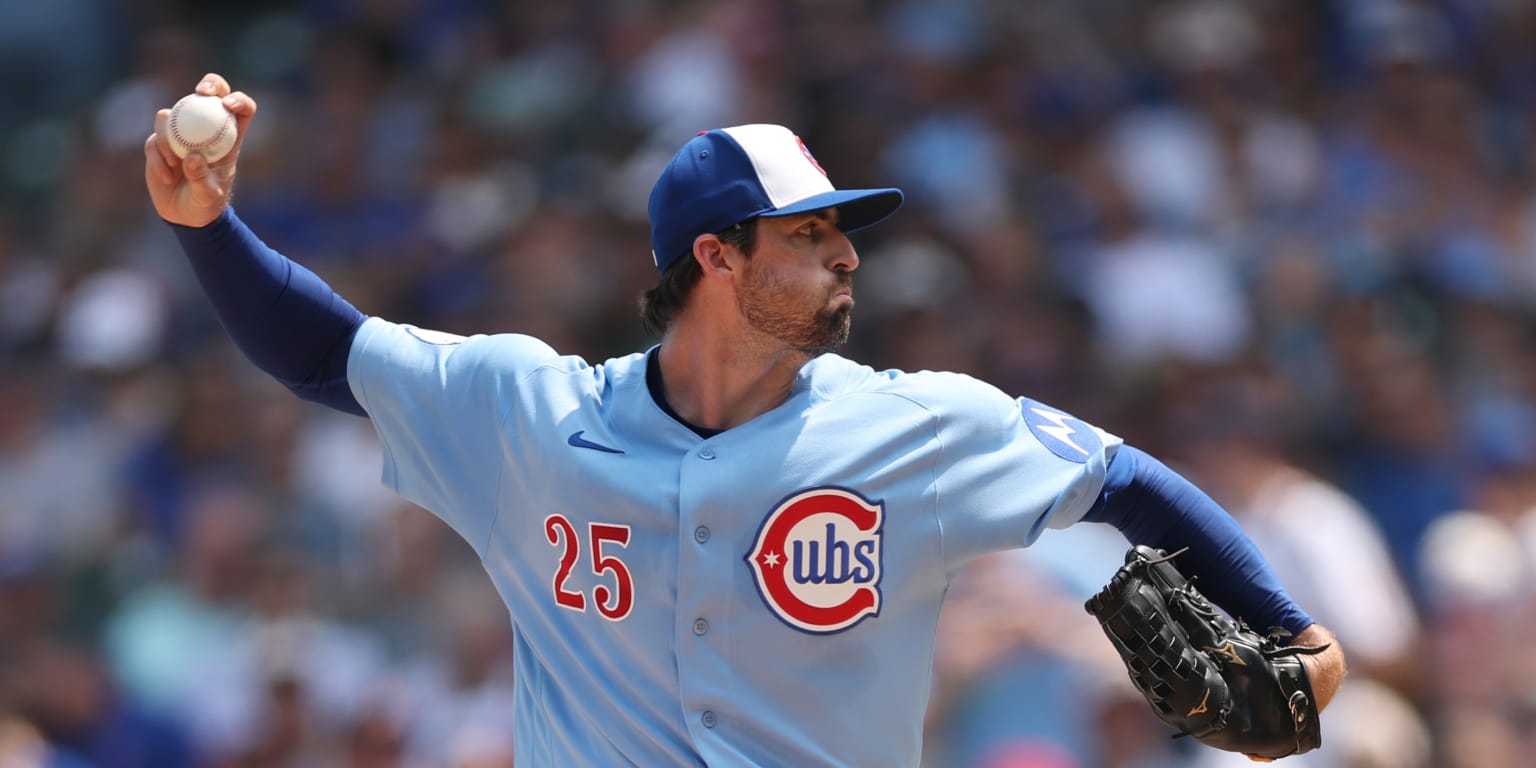
Clay Holmes pitched into the seventh inning against the Cardinals on Friday at Wrigley Field, posting 6⅔ scoreless innings on just one hit—a single by José Fermín in the sixth that snapped a perfect-game bid at 16 batters. The performance represented a stark improvement over his team debut a week earlier in Kansas City, when command issues and layoff rust produced four runs across four innings. The context matters: Holmes has been unavailable since May 15, when a comebacker fractured his right fibula. His return Friday marked only his fifth game back, Minors included, since beginning rehab games on July 23. That such a rusty outing translated into near-historic stuff Friday underscores both the challenge and opportunity embedded in his situation.
The Cubs front office engineered this moment deliberately. President of baseball operations Jed Hoyer traded for Holmes from the Mets, then bolstered the rotation further by acquiring October-tested Kevin Gausman from Toronto. Edward Cabrera—the hard-throwing righty—will slot in for Sunday's game against St. Louis after rehab time. Add past All-Stars Matthew Boyd, Shota Imanaga, and David Peterson, and the Cubs have constructed a rotation so thick that Colin Rea and Javier Assad migrated to the bullpen. It's intentional redundancy built for playoff leverage, where depth matters more than average regular-season workload management.
For Holmes specifically, the mechanics are straightforward. He lived on his sinker Friday—55% usage (44 of 80 pitches)—and generated 11 ground-ball outs against only three strikeouts and one walk. That's the profile of a pitcher regaining his feel after a long absence: high volume, high contact rate, minimal damage when balls are in play. Cubs manager Craig Counsell noted the adjustment speed was "impressive," suggesting the mechanical rust is already flaking off faster than a typical 91-day rehab suggests. By extension, his third or fourth game back (we're at game five now) should look markedly sharper than game two in Kansas City.
The betting angle threads through two lenses. First, Holmes' strikeout total in his next two starts will likely overcorrect downward based on Friday's 3-K performance and the general perception that injury comebacks produce lower volume outcomes. The market will price a start in the 5.5–6.5 K range, but if he continues the mechanical improvement trajectory Counsell described, he'll hit 7+ Ks before mid-September as command fully returns. That's an early-window edge; once the market watches one more solid outing, the line shifts upward and the angle closes. Second, the Cubs' team total for games Holmes starts will compress as books price the rotation depth and Friday's performance into the line. But the real leverage sits with under bets on opponent team totals when Holmes pitches—a sinker-dominant pitcher forcing 11 ground balls in six innings creates contact-based outs that limit opposing offense. If the line for Cardinal or opponent totals stays static over the weekend before Monday's adjustment, fade overs on teams facing Holmes over the next 10 days. That edge is more durable because it's rooted in pitch selection and ground-ball rates, not a single strong game.
MLB Intelligence — Baseball intelligence beyond the box score. Open MLB Intelligence →