MLB · injury
Drohan's Rookie Workload Becomes Liability as Brewers Sprint Into Trade Deadline
Milwaukee's young left-hander has eaten 101 innings in his first season while the team navigates a punishing stretch, creating both a rotation vulnerability and a pitching prop angle.
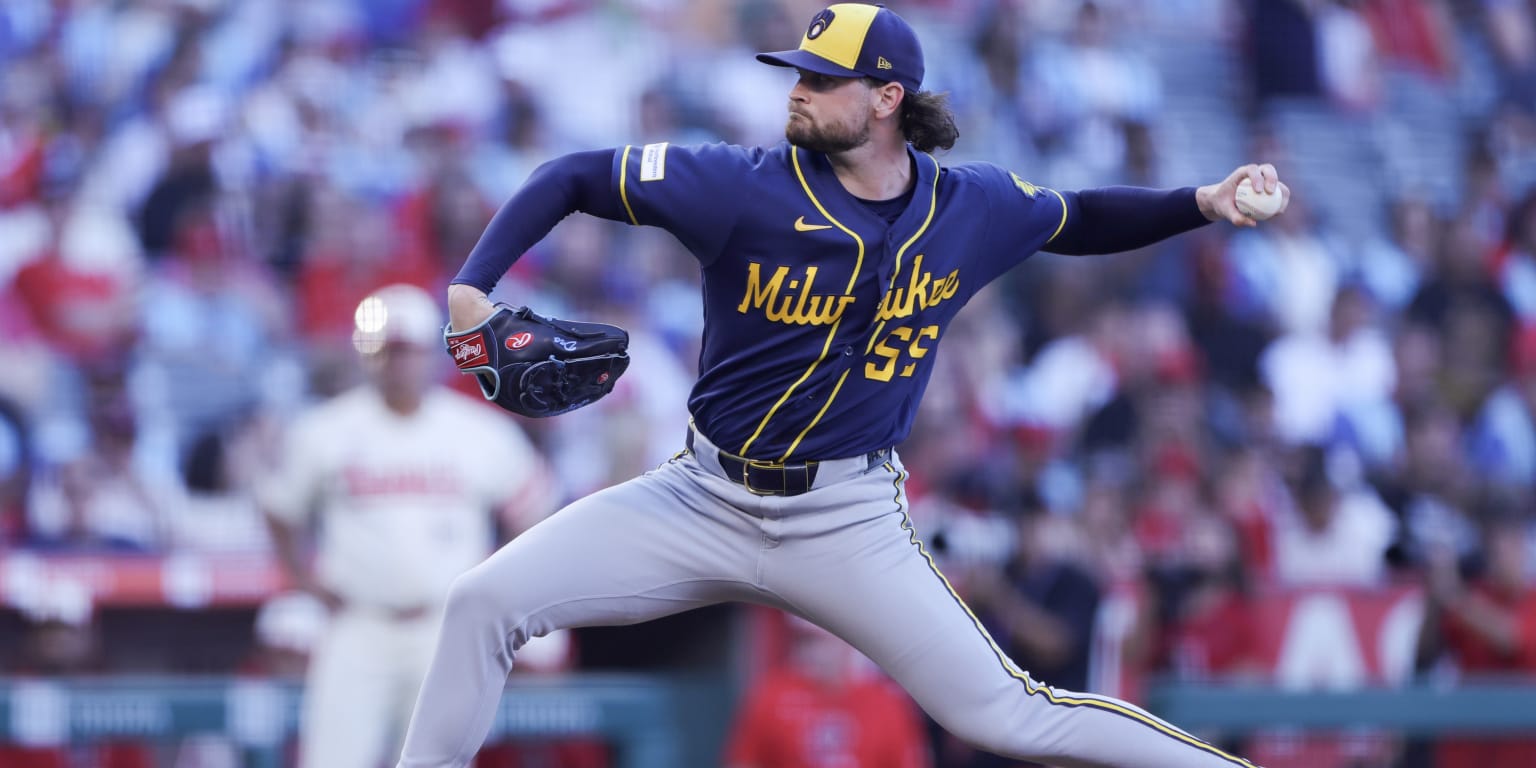
The Brewers beat the Angels 6-2 on Friday night, but the real headline was what didn't happen: Shane Drohan didn't blow up. The rookie left-hander delivered six innings of two-run ball—his fifth consecutive start clearing the sixth inning—as Milwaukee opened a brutal 17-day gauntlet that runs straight into the Trade Deadline on Monday. That the team chose to shuffle his schedule, postponing his Wednesday start in San Francisco to protect his workload, signals something the box score won't tell you: the Brewers are rationing their most dependable young arm because there's nothing left in the tank.
Drophan has thrown 101⅔ innings across the Majors and Minors this season, the heaviest workload of his career and already approaching the 123 innings he threw in Boston's system in 2023. July alone accounted for 36 innings, a team-high that outpaced Robert Gasser by nearly 15. Manager Pat Murphy openly credited Drohan in the same breath as any difference-maker in a 16-10 month, but the math doesn't lie: a 23-year-old making his first big-league rodeo, thrown into a rotation already stretched thin by injury (Kyle Harrison returning next week, DL Hall just reinstated from pectoral), is accumulating risk faster than a typical prospect should. The decision to absorb a loss to the Giants rather than push Drohan on normal rest isn't wisdom—it's triage.
What makes this burnout pattern relevant to the betting market is that Drohan's workload ceiling is now visible. The Brewers will not pitch him every fifth day. They will skip him. They will limit him. And when a rookie starting pitcher hits that usage wall, his effectiveness doesn't degrade linearly—it drops. Strikeout rates fall because arm fatigue creates location sloppiness. Walk rates climb. ERA balloons. Drohan's next three to four starts carry genuine fade potential because his workload hasn't been lightened by the Deadline additions yet; in fact, pulling reinforcements in the rotation would only increase his pressure.
For bettors, the angle splits two ways. First, Drohan's strikeout props—currently in the 7-to-8 range in his recent starts—are vulnerable to regression over the final month of July and into August once fatigue hits. Second, and more durable, Brewers team totals when Drohan starts will be soft targets if opposing offenses recognize that a tired young pitcher tends to cede extra base hits. The Brewers' aggressive front office posture at the Deadline suggests they know this too; they're shopping for a starter not to add depth, but to relieve Drohan from the spotlight he never should have occupied alone this deep into a rookie season.
MLB Intelligence — Baseball intelligence beyond the box score. Open MLB Intelligence →