Sugano's Profitability Mirage: Why Day-Game Records Mislead in the Rockies-Brewers Matinee
By Erik Schwartz ·
The Rockies' most profitable pitcher has fooled bettors with elite run support, not elite pitching—and Milwaukee's day-game edge is a statistical artifact, not a repeatable advantage.
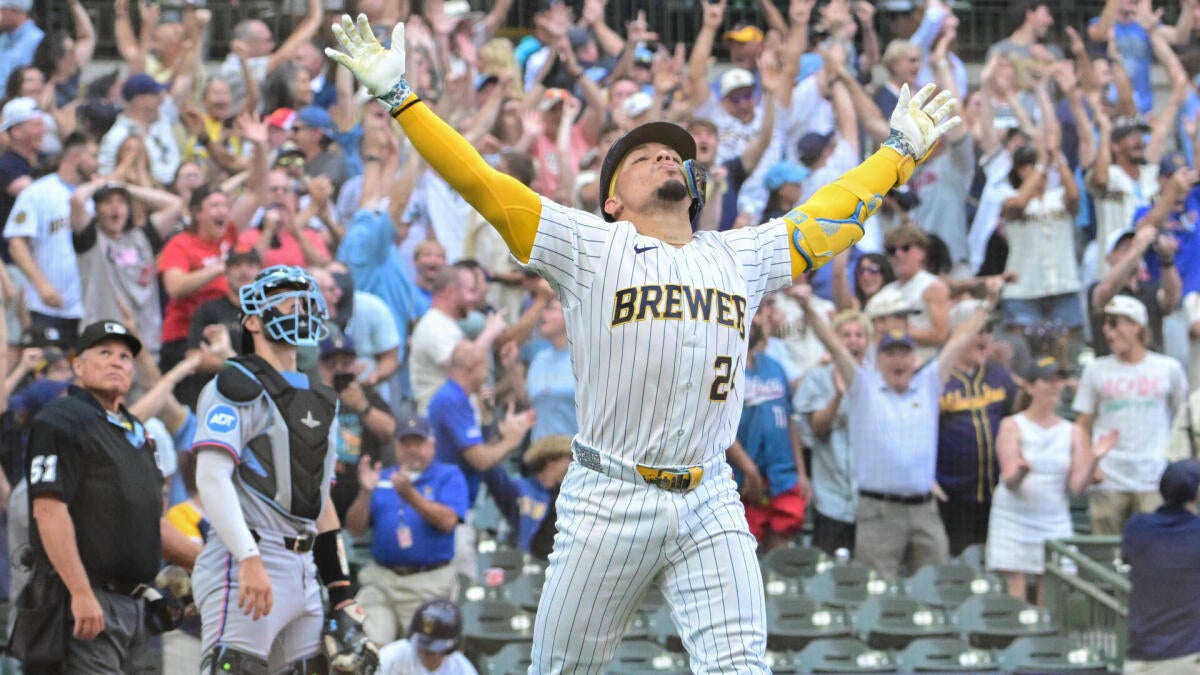
The Brewers and Rockies open a series Friday afternoon in Milwaukee with a 4:10 ET first pitch, a matinee slot carved out by the team's 25th-anniversary Alumni Legends Game. On paper, the matchup looks like a Milwaukee layup: the Brewers are 24-15 in day games while Colorado sits 12-22. That surface-level record advantage, paired with Milwaukee's 51-25 stretch since late April and a chase for the top NL seed alongside the Dodgers, frames this as a straightforward fade of a struggling seller. But the fixture carries a subtler edge—one that hinges on separating signal from noise in pitcher valuation.
Tomoyuki Sugano, the 36-year-old Rockies starter, has become the second-most profitable pitcher in baseball by moneyline. If you bet $100 on Colorado to win all 17 of his starts, you'd be up $1,050. The source of that profit isn't Sugano's arm—his 4.76 ERA and road splits (5.32 ERA away from Coors) expose the real story. Sugano averages 6.47 runs of support per game, a figure that would make a replacement-level pitcher look like a Cy Young candidate. He's benefited from run support inflation, not pitching excellence. He hasn't lost since May 27, but that unbeaten streak is a function of Colorado's offense carrying him, not his own dominance. Friday's market will likely honor his 2025 moneyline résumé without drilling into the machinery underneath it.
Brandon Drohan, Milwaukee's converted reliever, starts for the Brewers as the rotation scrambles with Brandon Woodruff and Kyle Harrison on the IL. The 27-year-old southpaw has posted three straight quality starts and has been miserly with home runs—just six allowed all season. He faced Sugano's Rockies at Coors Field on June 7 (roughly seven weeks ago) and allowed three runs over 6.1 innings in a thin-air victory. The SportsLine projection model slots Drohan at 5.0 innings, 5.4 strikeouts, 4.8 hits, and 2.2 earned runs. Sugano projects to 5.8 innings, 3.3 strikeouts, 5.4 hits, and 3.3 earned runs—similar workloads but a sharp differential in strikeout potential. Day-game performance records are largely context-dependent and survive only in specific ballparks (Wrigley functions differently than neutral sites). Milwaukee's 24-15 day mark is a real splits number, but it's built into the market's opening line already.
The prop angle emerges around Drohan's strikeout ceiling and pitch efficiency. His history against the Rockies, combined with Sugano's career-low strikeout rate (3.3 K/9 as a reliever-turned-starter, a full two rings below Drohan's projection), suggests that under-paced K props on the Rockies' lineup carry value when Drohan enters with a pitch limit and a defense behind him that's statistically second-best in the NL. Sugano's run support cushion also inflates the expectation for Colorado's offensive output, but that's baked into team-total numbers; the individual pitcher metrics are where the seam opens. Drohan is a control-first, limited-availability arm—precisely the profile to suppress strikeouts and force contact, especially in day baseball where hitters are often less sharp.
The moneyline itself is a fade of Sugano's illusion more than a direct endorsement of the Brewers' supremacy. Milwaukee will likely move to -170 or tighter as sharp action validates their day-game track record and near-top-seed positioning. Early lines on Rockies moneyline (likely +145 or wider) will overcorrect for Sugano's profitability without accounting for the truth: his profit margin was borrowed from Colorado's bats, and those bats travel poorly. By the time the public realizes Sugano's wins were synthetic, the line will have already compressed. Drohan's strikeout total and the under on first-inning runs become the more durable angles—they're built on mechanism (pitch limit, contact management, day-game fatigue), not on narrative.