MLB
Brewers' First-Pitch Aggression at Coors Exposes a Vulnerability in Tired Rockies Pitching
Milwaukee's 12-4 sweep-clincher in Denver hinged on early-count hitting that exposed relievers unable to locate; the pattern matters for future Coors matchups.
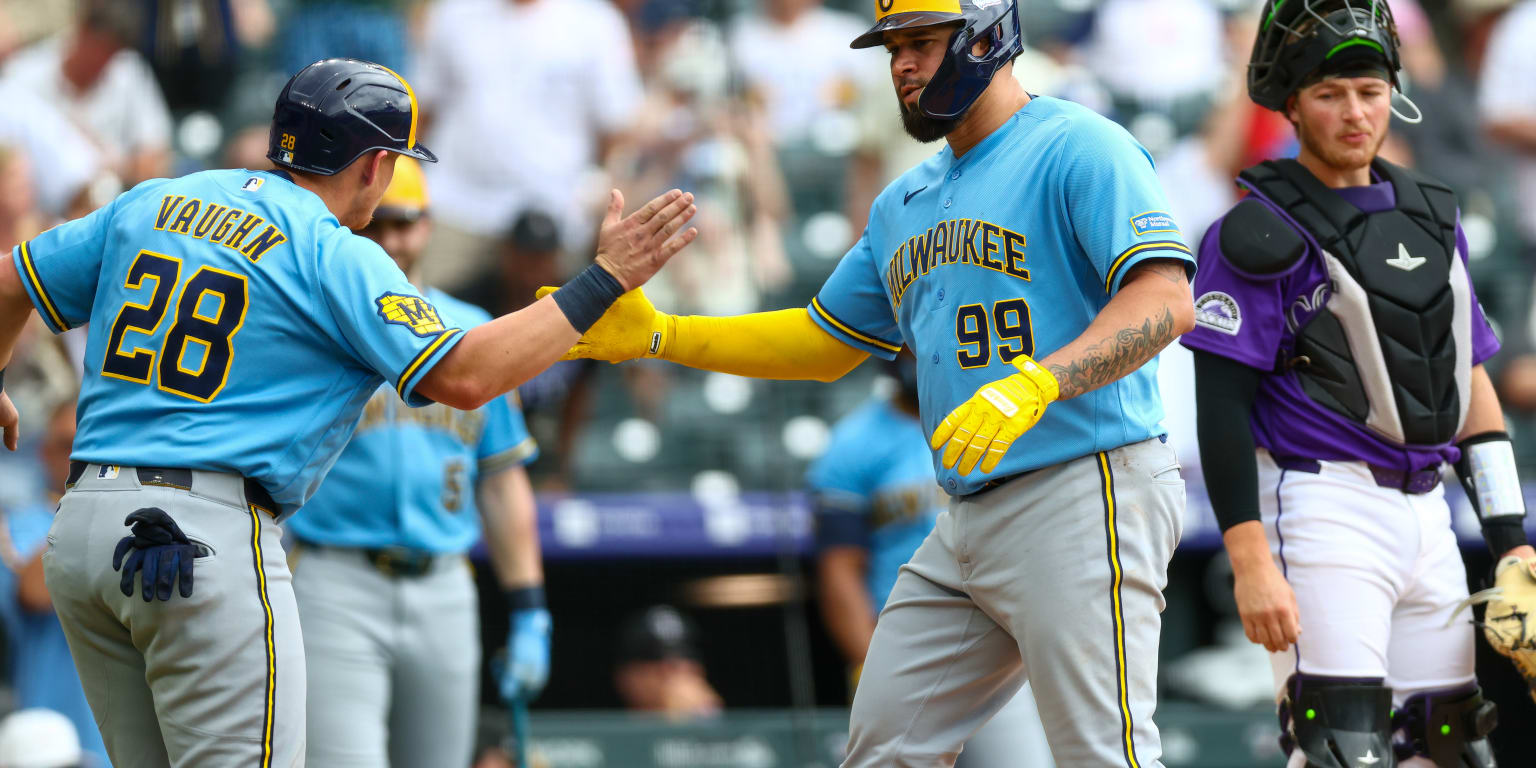
The Brewers completed their first sweep in Denver since 2014 with a 12-4 victory on Sunday, reaching 40 wins in 63 games—the fastest pace in franchise history. The margin came courtesy of a seven-run sixth inning powered almost entirely by hitters attacking on the first pitch: Jackson Chourio went 3-for-3 on first-pitch swings after starting the series 0-for-10, Gary Sánchez homered on pitch one (447 feet, the longest Brewers homer of 2026), and the lineup manufactured seven runs on what amounted to disciplined opportunism rather than a pre-planned scheme.
What looked spontaneous was actually situational awareness. The Brewers ranked 29th in MLB in first-pitch swing rate (25.6%) entering the series, meaning this wasn't a team culture built on early aggression. Instead, their hitters read that Colorado relievers—particularly Jaden Hill, who inherited runners in that sixth—were struggling to execute in the zone. When a pitcher is behind, elevated, or working out of the stretch with traffic on the bases, the margin between a meatball and a quality strike compresses. Milwaukee's lineup exploited that compressed margin. Sánchez himself noted he was "ready to get it going from pitch one" against Hill specifically because "he throws pretty hard." That's not patience breaking down; that's pattern recognition in real time.
Shane Drohan's 6 1/3 innings of three-run ball in his Coors Field debut also mattered. A rookie left-hander working at altitude typically bleeds runs; Drohan's 3.11 ERA over 13 major league appearances is competent-to-solid, and his willingness to throw a side session Friday to calibrate ball movement before Sunday's game suggests a pitcher operating with intention rather than hoping adjustments land mid-contest. The Brewers' injury-depleted rotation has no margin for error at Coors, where the thin air exaggerates velocity loss and movement decay. Drohan limiting damage while the offense seized opportunities is the exact formula Milwaukee needs to repeat if Denver hosts them again.
For prop bettors, the read is straightforward: Rockies relievers—particularly those entering games with inherited runners or early-inning trouble—carry elevated liability against Milwaukee hitters who are now demonstrating they'll attack aggressively when Colorado's arms can't command the strike zone. The Brewers' patience rank (29th in first-pitch swings) makes their late-inning aggression appear reactive rather than pre-wired, which means books may not have priced strikeout props tightly enough for Colorado's bullpen in future matchups. If Hill or similar arms pitch again in similar spots (late-inning jams, runners in scoring position), expect Brewers hitters to hunt early again. Strikeout volume for Rockies relievers in high-leverage spots against this lineup should trade at premiums that don't hold.
Milwaukee's 40-win pace also signals a team executing at a tempo that typically correlates with regular-season sustainability. The fastest 40-win clip in franchise history isn't noise; it reflects depth, health management, and the kind of situational baseball—reading matchups, attacking when conditions favor it—that compounds over 162 games. This sweep was the Brewers playing their game, not the Rockies' altitude advantage.
MLB Intelligence — Baseball intelligence beyond the box score. Open MLB Intelligence →