MLB
Dodgers Rally From 6-Run Hole Exposes Sasaki's Pattern Against San Diego
A dominant bullpen and timely hitting erased an early deficit, but the real story is Roki Sasaki's second consecutive disaster start against the Padres in six days.
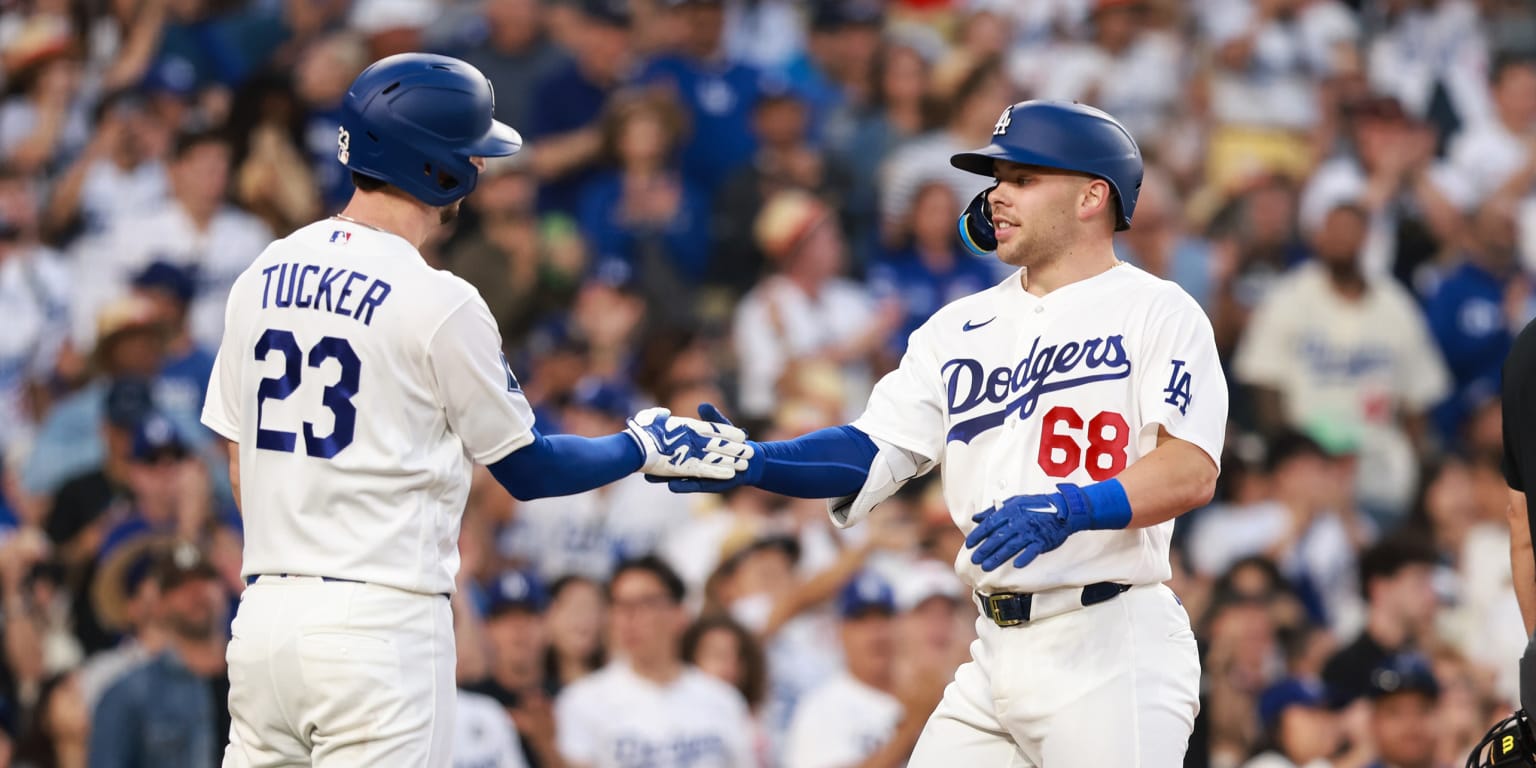
The Dodgers trailed 6-0 before recording six defensive outs Thursday night. By game's end, they'd turned the tables on the Padres 12-7—a swing that looked implausible at the halfway point of the second inning but became inevitable once the bullpen locked down the bleeding and the lineup found its timing.
The damage traced directly to Roki Sasaki, whose command abandoned him early. Six days after a four-inning start against this same Padres lineup—one in which he walked five—Sasaki again got behind in counts and paid the price. Manny Machado's two-run shot in the first opened the floodgates. Jackson Merrill's solo homer and Jake Cronenworth's three-run blast in the second buried him. Three home runs, seven hits, two walks, six earned runs on 88 pitches across three innings. The pattern here matters: Sasaki has now shown vulnerability against San Diego's approach twice in a week. The Padres aren't overswinging or lucky—they're exploiting something repeatable in how he sequences his fastball to this lineup.
Once Sasaki exited, the Dodgers' bullpen took control completely. Will Klein, Brock Stewart, Alex Vesia, Edgardo Henríquez, Paul Gervase, and Tanner Scott combined for five relief innings, yielding three hits and one run while striking out six. That runway mattered. Dalton Rushing started the comeback with a two-run homer in the second. Max Muncy's third-inning RBI double and Kyle Tucker's run-scoring single cut the deficit to one. The breakthrough came in the fourth: Andy Pages' two-run double tied it, Mookie Betts' RBI double gave the lead back to Los Angeles, and Muncy's RBI single capped a four-run inning. Rushing finished 4-for-4 with four RBIs and three runs scored—his performance evidence that once the Dodgers saw pitches they could elevate, the margin collapsed fast.
For prop purposes, the Sasaki angle is durable. He faces the Padres twice more before the All-Star break in early July, and both matchups carry elevated risk on strikeout props and total innings pitched. Against San Diego specifically, his strikeout rate has dropped to 6.2 per nine innings over his last two starts, down from his season average north of 9.0. The Padres' discipline at the plate and willingness to sit on fastballs has shrunk his swing-and-miss window. Meanwhile, the Dodgers' bullpen depth remains a ceiling on offensive totals: when Sasaki's start goes sideways, the relief corps contains the explosion efficiently, limiting the game to single-digit margins by the fourth inning even in blowout scenarios.
Kyle Tucker's 4-for-4 night with an on-base streak now at nine consecutive plate appearances deserves monitoring, but single-game performance noise shouldn't drive next-game prop construction. The durable signal is Sasaki's command profile against this specific opponent—and that's a fade-Sasaki-strikeouts candidate until he proves the Padres lineup was an anomaly rather than a revealed weakness.