MLB
Brewers' Ninth-Inning Surgery Against Dodgers Exposes a Clutch-Hitting Chasm
Milwaukee's comeback win preserves the NL's best record, but the manner of victory—five consecutive singles to flip a two-run hole—reveals both organizational strength and the fragility that could haunt them in October.
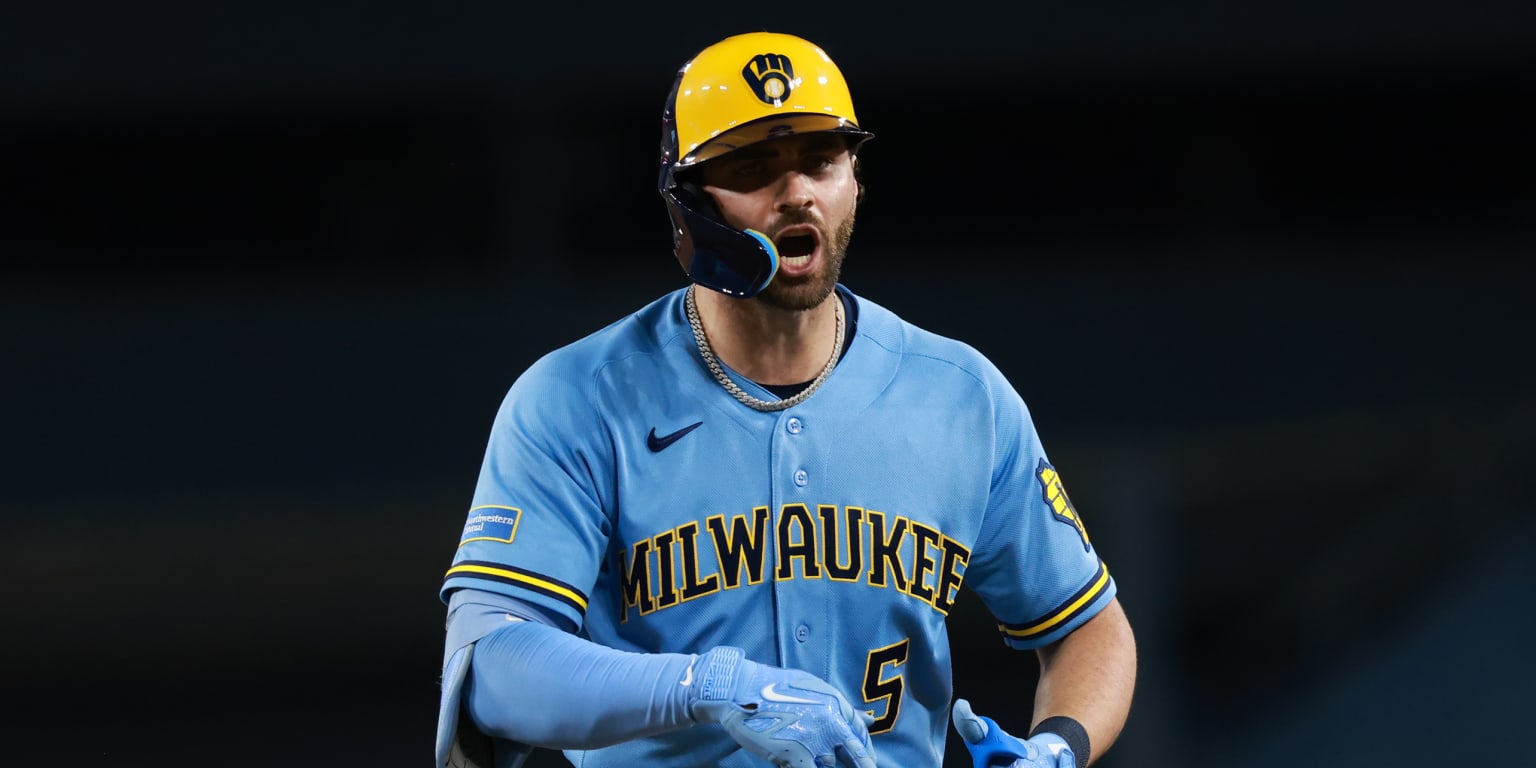
The Brewers engineered a two-run ninth-inning rally Thursday at Dodger Stadium, stringing together four straight singles before Jake Bauers delivered the go-ahead hit in a 5-4 victory that kept Milwaukee atop the National League at 75-47. The win mattered beyond the box score: a Dodgers triumph would have drawn Los Angeles even with the Brewers for the NL's best record, with Atlanta lurking half a game back. Instead, Milwaukee's capacity to construct runs without power—the through line of their 75-win season—held up when it counted most.
What's revealing is how they had to get there. Through eight innings, the Brewers' offense was functionally inert. They scored two runs on back-to-back walks with the bases loaded in the fourth, then watched Max Muncy club a three-run home run off Antonio Senzatela in the sixth to push the Dodgers ahead 4-2. The Brewers' lineup generated only four hits and one extra-base knock through nine frames against Roki Sasaki and a succession of Dodgers relievers. Sasaki himself was inefficient—54 of 101 pitches for strikes—but precise enough to suppress damage. The Brewers didn't bash their way to 75 wins; they manufactured them, one walk and contact at a time. Thursday's comeback was textbook: Ortiz, Hamilton, Chourio, and Mitchell strung together consecutive singles to tie the game, then Bauers broke the deadlock with another. Five singles in six batters. No home runs. No errors. Just relentless baseline pressure.
But here's the friction: that method works until it doesn't. The Brewers have built the NL's best record by punishing mediocrity in the regular season—teams that fail to execute, that miss their spots, that give up singles rather than strikeouts. Sasaki fit that profile Thursday. Edwin Díaz and Alex Vesia, the Dodgers' primary relievers, did not. Yet the Brewers still extracted their run. The vulnerability sits in the margins: this team's lack of explosive power means they need near-perfect contact efficiency to beat teams with plus-caliber pitching depth. In a best-of-three Wild Card Series—a format they're guaranteed by virtue of their record—one cold night at the plate against a steady rotation could end their season before October gets interesting.
For prop bettors, the angle traces directly to this blueprint. The Brewers' ninth-inning sequence reflects their season-long profile: a .303 team batting average that ranks in the top five nationally, paired with a sub-league-average .430 slugging percentage. When they face pitchers who induce weak contact or strikeouts—like Sasaki's five walks yesterday actually helped, since they prevented strikeouts—the Brewers' contact-rate advantage translates into baserunners. But against relievers with hard stuff and command, that same contact-first approach becomes a liability. Trevor Megill closed out the ninth for his 22nd save, and his strikeout rate (9.8 K/9) masks Milwaukee's broader relief construction: their bullpen has excelled in high-leverage spots because opponents haven't needed to chase much. The Brewers have been good enough that they haven't been tested hard. Thursday proved they can win without testing themselves at all—but the pattern suggests that won't hold up when the postseason asks for a different kind of execution.
MLB Intelligence — Baseball intelligence beyond the box score. Open MLB Intelligence →