Chourio's 20-20 Hat Trick Rewrites Early-Career Baseline—and Prop Markets Haven't Caught Up
By Ty Whitney ·
At 22, Jackson Chourio just became the first player ever to post three 20-20 seasons before his 23rd birthday, a milestone that places him in the company of Hall of Famers and future immortals—and exposes a gap between his stat line and his betting price.
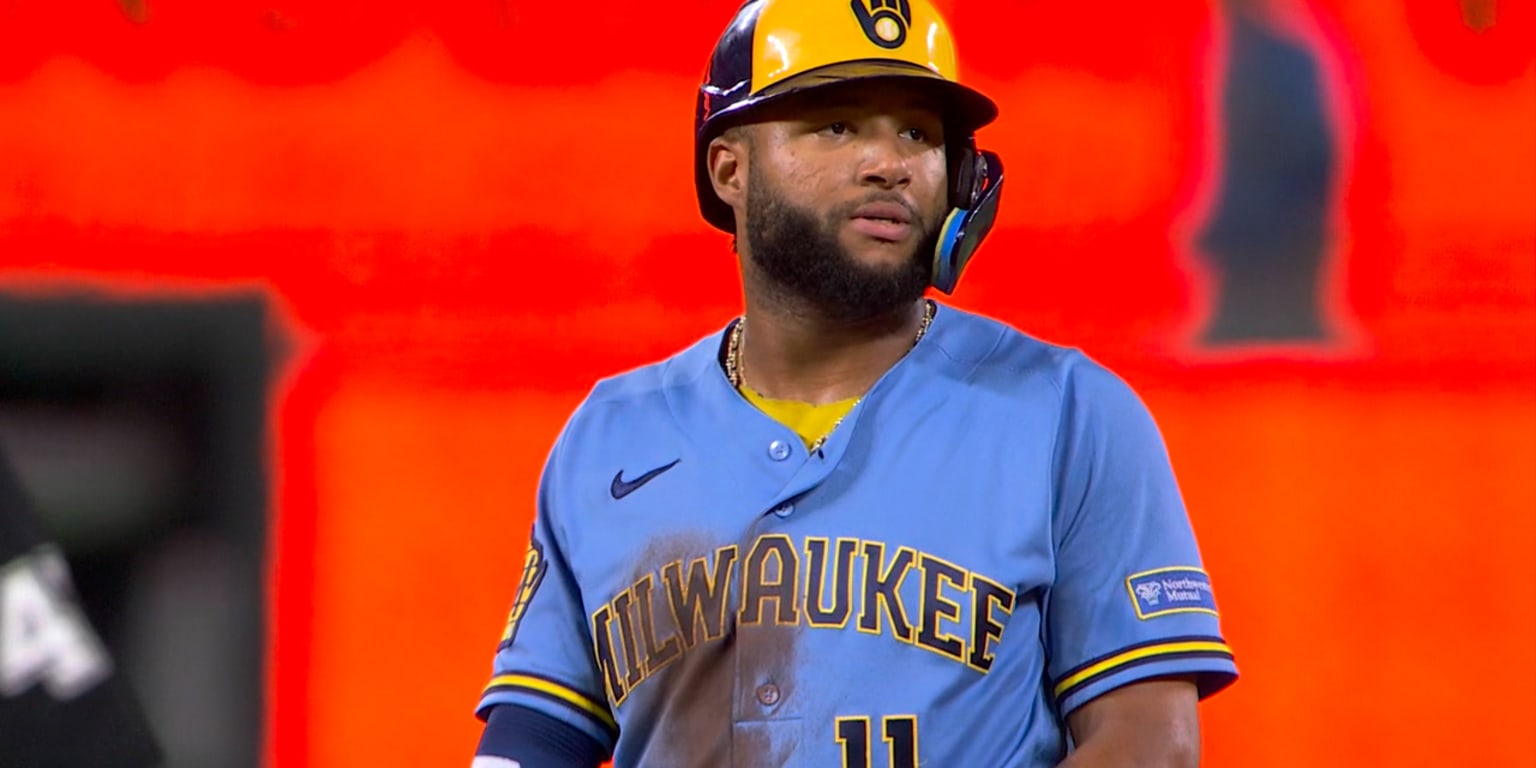
Jackson Chourio stole second base in the sixth inning Sunday against Baltimore, and that single act pushed him into uncharted territory. The Brewers outfielder now carries 20 stolen bases and 24 home runs through this season, marking his third consecutive 20-20 campaign to open his career. He is the first player in MLB history to accomplish that feat before turning 23 years old. Only Julio Rodríguez and Bobby Witt Jr. have matched the three-consecutive-20-20 opening to a career; Rodríguez has since extended that to five straight, and Witt sits two homers shy of a fourth. Chourio has joined an elite tier almost instantaneously, yet the market hasn't fully priced the statistical weight of what he's demonstrating.
The 20-20 club is a blunt instrument for identifying star power. Of the 17 players in MLB history to hit 20 home runs in three separate seasons by age 22, eight are enshrined in Cooperstown: Mel Ott, Ted Williams, Eddie Mathews, Mickey Mantle, Al Kaline, Frank Robinson, Orlando Cepeda, and Ken Griffey Jr. The remaining nine—Conigliaro, Horner, Rodriguez, Stanton, Trout, Harper, Correa, and Soto—span a spectrum of outcomes, but the majority are perennial All-Stars and franchise cornerstones. Chourio hasn't yet made an All-Star team, which Frelick and internal evaluators chalk up to injury gaps and inconsistent early-season paces rather than absence of talent. That lag between actual production and public recognition is the exact space where prop value lives.
Chourio's dual skill set—power paired with elite speed—creates a durable edge in stolen-base props across multiple timeframes. His 20 steals this season, on pace for a third straight 20+ season, cluster him with the sport's most aggressive base-runners. The speed is not a blip; Chourio has stolen at least 20 bases in each of his three full seasons, a consistency that eliminates single-year variance as an explanation. When books price his game-to-game steal props, they're often anchored to season rates (6.7 SB per 162 games) without adjusting for usage context—situations where he's on base, opponent arm strength, pitcher hold times, and run differential. Brewers games with deficits or tied games, where Milwaukee prioritizes aggressive baserunning, should carry higher steal expectations than blowout contexts. That contextual granularity rarely shows up in opening lines.
His power output tells a parallel story. Twenty-four home runs by late September places him on track for a fourth straight 30-homer season (assuming typical final-month pace). Home-run props for Chourio have historically underpriced his consistency; the market treats each season start as a variance reset rather than a continuation of a proven archetype. Over 162 games, a 30-homer pace translates to roughly 0.18 homers per game—call it a 15% chance of a home run in any given matchup. Brewers opponents with below-average fastball velocity or elevated home-run rates will typically see Chourio's HR prop shift upward, but not enough to fully reflect that he is now a documented three-year, high-frequency power hitter in a compact body still maturing. His comp tier has moved from "toolsy young player" to "proven multi-tool star," yet his individual-game pricing hasn't moved proportionally.
The Sunday double-play that ended his 20-20 celebration—Chourio strayed too far from second base on a Contreras grounder—is a reminder that youth and learning curves still apply. But that moment doesn't erase the statistical record. Chourio is no longer an emerging prospect; he's entered the rare class of players who combine power and speed at consistent, Hall-of-Fame-trajectory rates before their brain hemispheres have fully finished developing. For bettors, that means stolen-base totals in the 0.5 to 1.5 range and home-run props in the 15-25% zone carry edge when booked below recent historical averages. The market hasn't yet accepted that Chourio's baseline has reset upward.