MLB
Brewers Grind Past D-backs in 11-Inning Opener; Turang & Mitchell Deliver in Extended Battle
Milwaukee's fourth win in five games came via late-inning execution against a defense that unraveled when it mattered most, signaling offensive depth that can sustain runs in marathon contests.
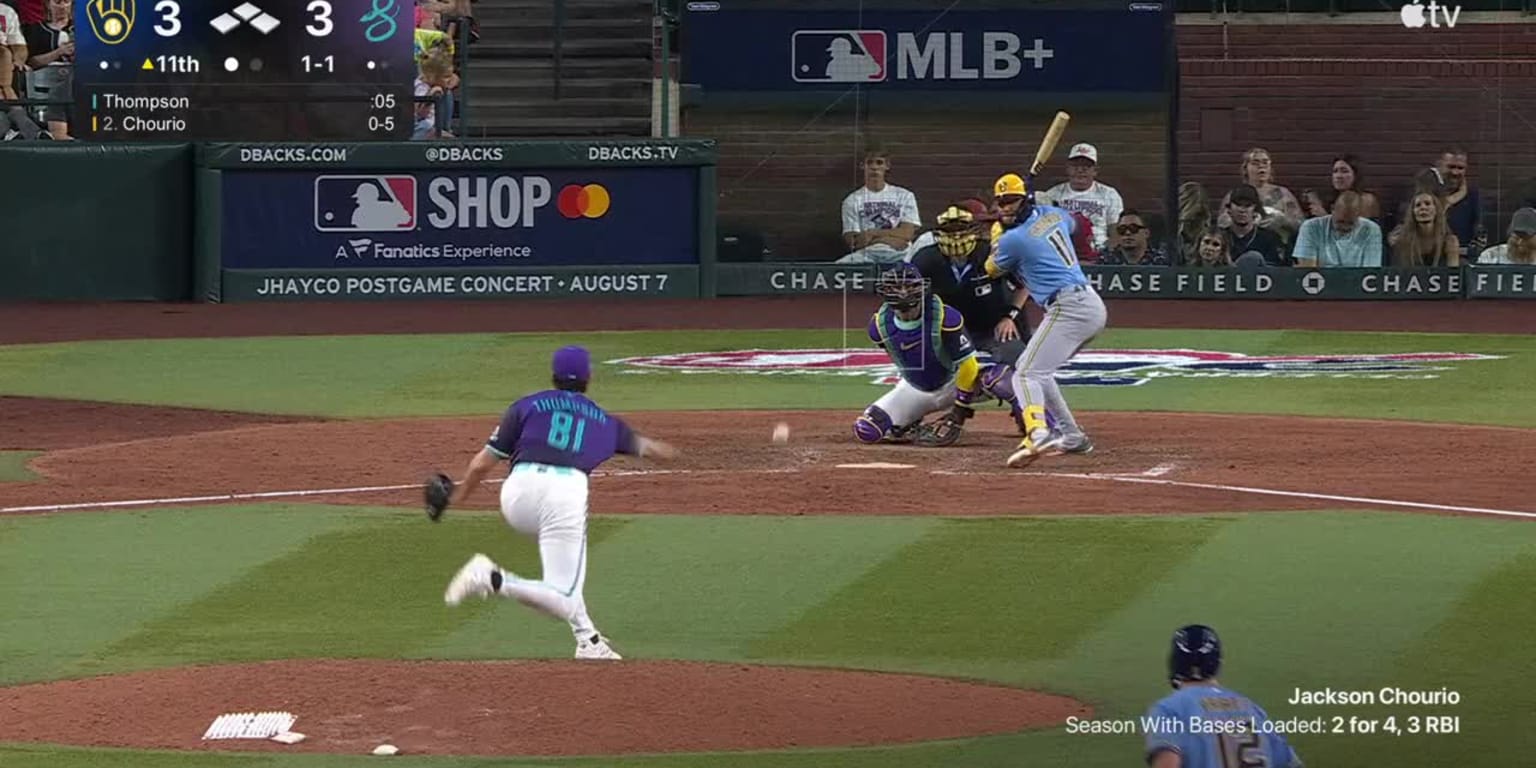
Jackson Chourio's infield single in the 11th inning broke a nine-inning deadlock Friday night at Chase Field, lifting the Brewers past the Diamondbacks 7-4 in a series opener that tested both bullpens before Milwaukee's bat finally overwhelmed Arizona's fragile late-game pitch sequencing. The Brewers scored all seven runs across the second and 11th innings—a 9-inning lull that undersells the structural offensive advantage: Garrett Mitchell extended his home run streak to consecutive games with a 435-foot two-run shot off first-pitch fastball execution in the second, while Brice Turang's 3-for-6 night with two RBIs provided the cleanup force that sealed the affair after Chourio's single and a throwing error by Ryan Thompson opened the floodgates.
Milwaukee's pitching infrastructure held firm despite Kyle Harrison's abbreviated outing. The 24-year-old left-hander managed just 2⅔ innings—victim to third-inning mechanical fatigue after breaching the batting order's top-tier hitters with relative ease through two frames—but reliever Chad Patrick absorbed the workload with surgical precision. Patrick's 3⅓-inning stretch, his longest appearance since June 21 at Atlanta, generated just one hit while fanning two on a 34-pitch foundation (68% strike rate). The Diamondbacks, meanwhile, generated no runs after the third inning, a complete offensive collapse that underscores how thin Arizona's depth sits when early leads evaporate.
The Brewers' fourth victory in five games now sits atop a brutal 18-game stretch compressed into 17 days—a schedule that punishes offensive inconsistency and rewards bullpen depth in exactly the way Milwaukee's 5-3 record over their last eight games suggests they can exploit. Garrett Mitchell's consecutive home run performances are a red flag for prop construction: back-to-back games with a dinger is a small-sample spike, not a persistent indicator. His 435-foot projection on a first-pitch swing is upper-percentile power execution, but first-pitch-fastball availability and pitcher error compound that result. Over the next three games, expect Arizona and subsequent opponents to reduce fastball diet and elevate out-of-zone offerings.
For prop betting purposes, the Brewers' offensive identity crystallizes around late-inning execution and contact quality against relievers. Turang's 3-for-6 finish reflects a patient approach—he's now hitting .267/.347/.389 over his last 40 plate appearances, a corridor that supports modest over-plays on his strikeout avoidance (currently 22% K-rate, well below league average at 23.1%). The D-backs' bullpen error (Thompson's wild throw) and offensive silence after the third inning suggest Arizona's relief corps may carry elevated vulnerability on team totals in coming contests. Watch the Brewers' team-total over/under movement in Game 2: if books price Milwaukee in the 4.0–4.5 range, the underlying mechanism—late-inning execution, contact-based hitting, and Arizona's late-game collapse—favors over lean, particularly if the Diamondbacks deploy the same relief architecture.