MLB · callup
Gausman's Debut Stability Play: What a 7-Inning Outing Signals in a Cubs Rotation Hunt
Kevin Gausman delivered 7 innings in his Cubs debut Friday night, proving the veteran can compartmentalize trade chaos and perform at the level that justified Chicago's deadline haul.
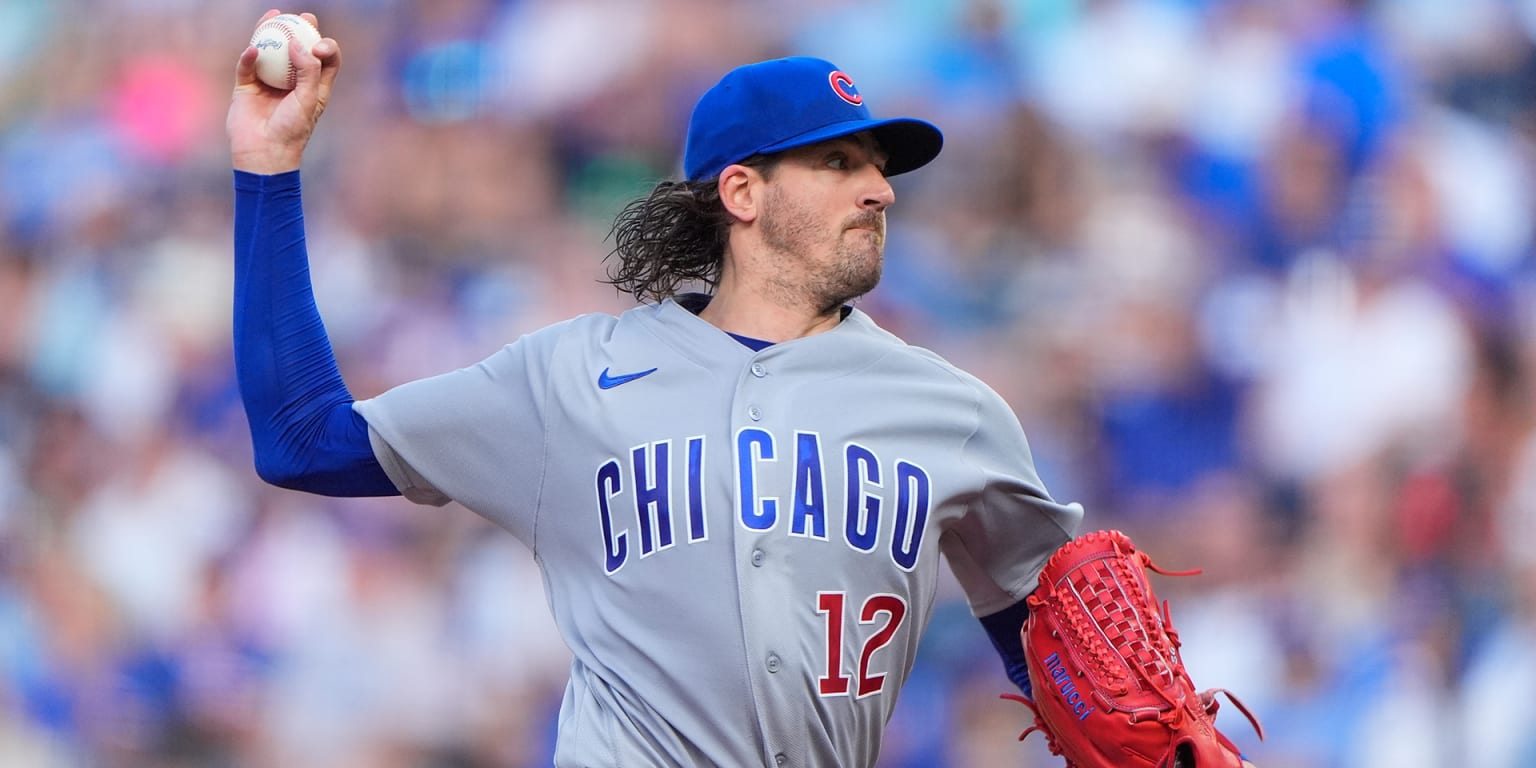
Kevin Gausman's Cubs debut against Kansas City on Friday night was a masterclass in emotional compartmentalization. Seven innings, one earned run, control intact—a 6-4 win that validated the Cubs' decision to ship two prospects to Toronto for the 38-year-old right-hander mid-week. This wasn't a prospect settling into a new clubhouse over a series. This was a veteran with a 3.34 ERA across five seasons and 925 2/3 innings recognizing the noise around him (the trade, the packing, the Blue Jays' makeup game at Wrigley Field just one day earlier, his daughter's birthday Thursday) and converting it into focus instead of friction.
The context matters for understanding what Gausman represents to the Cubs' postseason odds. He arrived with a 4.38 ERA in 2026, a step backward from his recent norm, but the underlying mechanics—127 strikeouts and 36 walks in 127 1/3 innings entering Friday—suggest environmental factors or variance, not a cliff. His track record is bulletproof: among starting pitchers from 2021–25, only Dylan Cease made more starts (162 to Gausman's 158). His strikeout volume ranks third in that window, his inning load averaged 185 per season. The Cubs didn't trade for a reclamation project; they traded for a pitcher whose floor is high because he's seen every situation, including his own trade deadline. One line drive off his ankle in the second inning didn't break his rhythm—he walked off the field, got cleared by the trainer, and pitched through the seventh.
For betting purposes, Gausman's debut data is a single-event sample with inherent noise. A seven-inning outing by a veteran is baseline competence, not a season-defining indicator. Where the edge lives is in understanding that Gausman's strikeout and walk rates suggest his 4.38 ERA is a reversion candidate upward (lower) over his next five to eight starts. His walk rate of 2.55 per nine innings tracks his career average. His K rate of 9.0 per nine is actually above his five-year mark of 9.07. That splits the difference: Gausman is not throwing differently or losing velocity; he's being unlucky or facing lineups that are catching up. The Cubs, having paid for him, will slot him into the rotation with high leverage—which means more scoring opportunities, better defense, and higher-quality run support than Toronto was providing.
The betting angle crystallizes when you overlay Gausman's strikeout prop against his next three to five starts. His K line is likely to assume regression toward his 4.38 ERA season average (roughly 8.5–9.2 Ks per nine, depending on innings). But his contact profile and opponent quality suggest a lean over on strikeout props in the 7.5–8.5 range for his next two weeks. This isn't a bet on variance mean-reversion; it's a bet on the Cubs' offense and run differential letting Gausman pitch deeper into games (as he did Friday), where volume and whiffs accumulate. His splitter—the pitch that got Starling Marte to look foolish in the seventh—is elite in strikeout generation and has not disappeared. The market may price in short-term overs off a seven-inning debut, then fade them when the next outing dips to five innings (low leverage, early exit). Gausman's true edge is in the 60–120 inning window with Chicago, not the next 48 hours.