Gausman to Cubs: The October Insurance Policy That Changes Playoff Math
By Ty Whitney ·
A deadline trade sends a World Series veteran into Chicago's rotation at precisely the moment the Cubs' pennant odds tightened—and his strikeout and ERA props move into profitable territory.
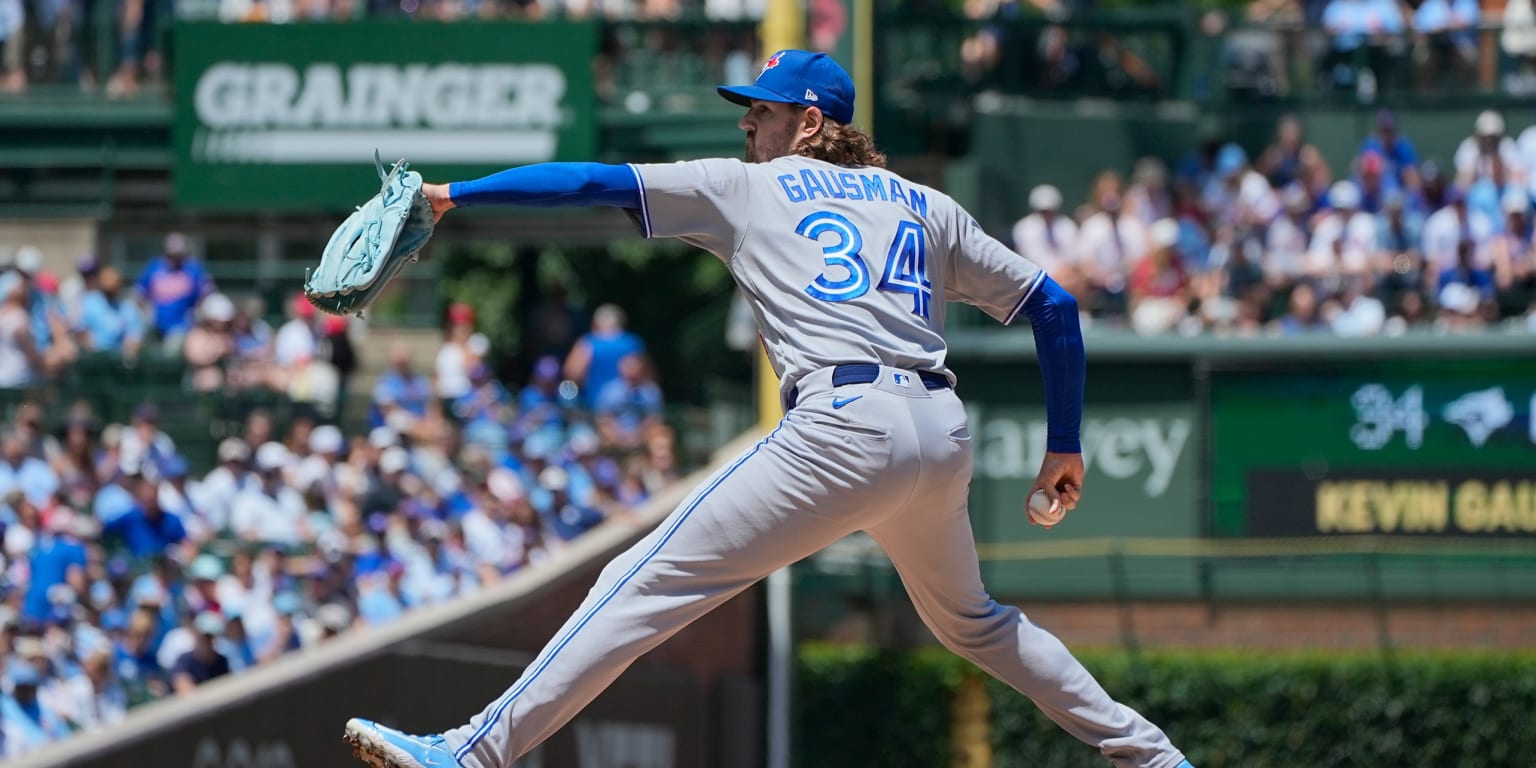
Kevin Gausman landed in Chicago on Sunday night via trade, stepping off the Blue Jays' team plane mid-flight to a new October mission. The 35-year-old righty signed with Toronto in December 2020 on a five-year, $110 million deal—one of the franchise's marquee free-agent commitments—but five years and three playoff runs later, the Cubs' front office decided the midseason acquisition of a tested postseason arm was worth the financial and prospect cost. Gausman was already in motion toward his Chicago debut Friday against Kansas City, with Cubs manager Craig Counsell slotting him into his normal rotation spot after a brief rest window following the trade.
Gausman's 2026 surface line reads unremarkable: 4.38 ERA across 23 starts. But the underlying picture—the one that prompted Jed Hoyer to pull the trigger—reveals a pitcher whose stuff remains elite. Between 2021 and 2025, Gausman averaged 204 strikeouts per season while posting a 3.34 ERA across 185 innings annually. His current strikeout rate sits just below his career norm, a function of a slightly elevated walk rate rather than diminished velocity or command. The Cubs' brain trust values what the season-long ERA obscures: a pitcher whose peripheral metrics suggest he's pitching better than his results, and one who has already won playoff series and pitched in a World Series.
The Cubs' roster construction—baseball's top-ranked defense, a lineup built for October leverage, and now a fortified rotation anchored by Gausman—creates a specific betting environment. Gausman's strikeout prop carries embedded edge because the market hasn't fully repriced his addition into a team that will face weaker offensive competition in October than Toronto did all season. His K rates against middle-of-the-order lineups in the AL East (2024–25) averaged 9.1 per nine innings; the NL Central and wild-card path opponents cluster significantly lower in walk-avoidance discipline. More concretely, Gausman's ERA should track closer to his three-year 3.34 standard than his 2026 4.38, especially once the Cubs' elite infield defense (built explicitly for postseason run prevention) takes full effect. Books are already beginning to adjust his lines upward, but the process lags the underlying value.
The mechanical edge here is duration-based: Gausman's improved strikeout and ERA profiles are not single-game anomalies but rather artifacts of his entire career arc. A pitcher who averaged 204 Ks per season for five straight years doesn't lose that capacity overnight. His addition also signals internal valuation—the Cubs paid real capital to bring him in mid-season, telegraphing that the organization believes October runs are both imminent and worth the cost. That conviction from a front office with World Series experience matters for prop construction.
The bet is not on Gausman to immediately pitch like 2021 Kevin Gausman. The bet is on the gap between his market-priced 4.38 ERA profile and the 3.5–3.65 range his peripherals and defensive upgrade suggest he'll actually post over his final nine weeks in Chicago.