NHL · transaction
Lightning's March 2025 All-In Bet Unraveled Fast—and the Cost Keeps Compounding
Tampa Bay's deadline trades for Bjorkstrand and Gourde cost them future draft capital they can't recover, as one piece flatlined, the other barely paid dividends, and their own picks ended up building a division rival.
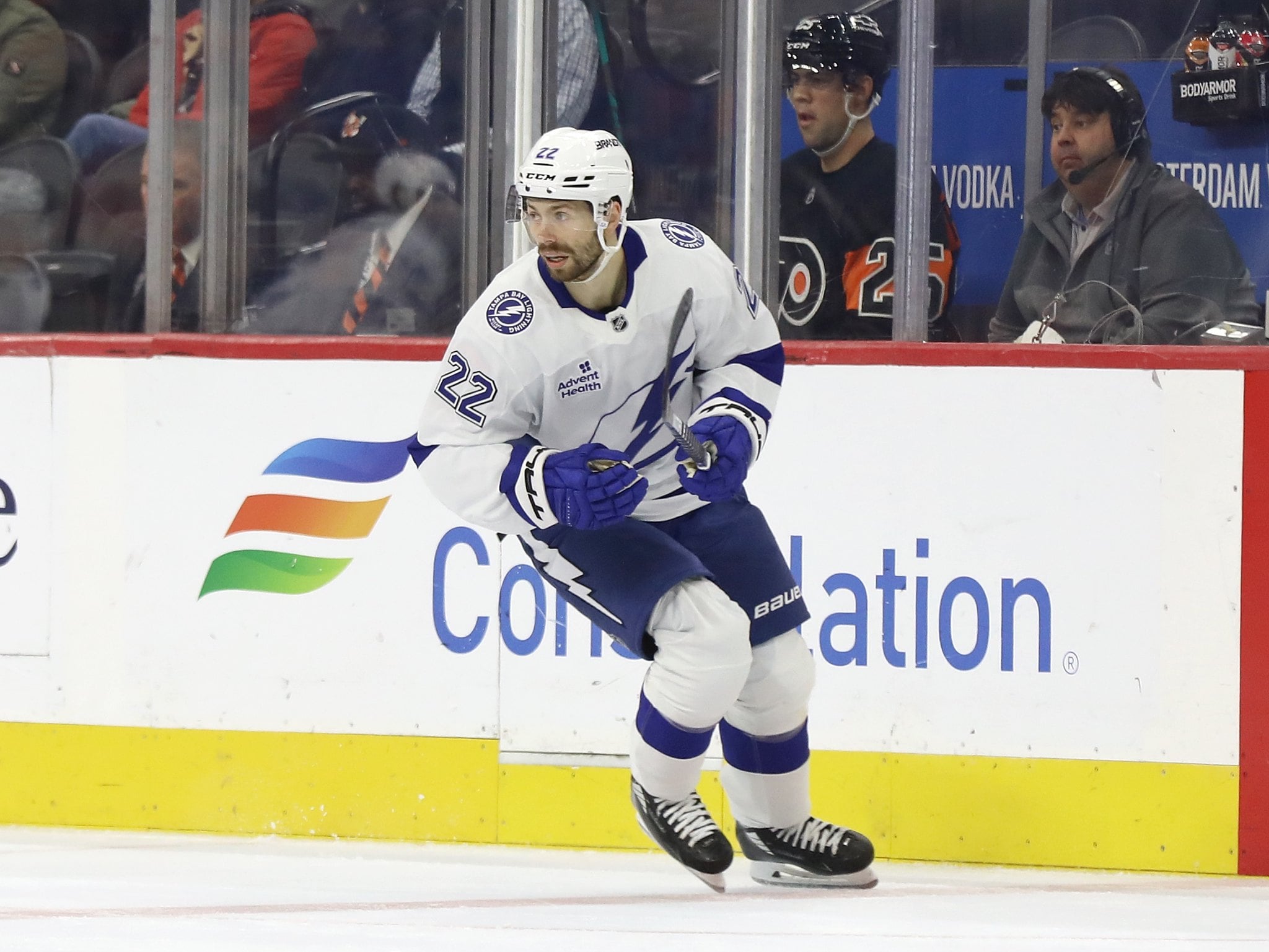
On March 5, 2025, the Tampa Bay Lightning executed a three-way trade with Seattle and Detroit that looked like the move of a confident contender: acquire Oliver Bjorkstrand and Yanni Gourde, add depth, and make one more run at the Cup. Sixteen months later, the deal reads like a masterclass in how to waste premium capital chasing an immediate payoff. Bjorkstrand is gone, Gourde is a defensive specialist on a team that finished well outside playoff position, and the Lightning's own first-round pick—the centerpiece they surrendered—ended up in Florida's hands as part of the Brady Tkachuk deal that made the Panthers a legitimate threat in their own division.
The trade structure itself was intricate. Seattle received Tampa's 2026 and 2027 first-rounders, a 2025 second-rounder (Toronto's asset), and forward Mickey Eyssimont. Detroit, managed by former Lightning GM Steve Yzerman, took a 2025 fourth-rounder in exchange for defenseman Kyle Aucoin and salary retention on Gourde. On the surface, the Lightning got two proven forwards—Gourde a returning piece from their back-to-back Cup runs—and positioned themselves as deadline players willing to bet big. What they actually did was mortgage future flexibility for pieces that couldn't coexist past that same season.
Bjorkstrand's arrival promised middle-six production. What followed was a nightmare. He suffered a compartment syndrome diagnosis before the playoffs, missed the postseason entirely, then returned to score just 12 goals and 32 points last season—a 40% collapse from his four-year average of 45-plus points. At a $5.4 million cap hit, he became a sunk cost. The Lightning let him walk on July 1, 2026, and he signed a one-year deal with New York at $4.5 million. For a rental that produced nothing when it mattered most, Tampa gave up two first-rounders and a second. Aucoin, the defensive piece, never materialized either—he played college hockey (Harvard, then Miami of Ohio) and turned pro in the ECHL, fading entirely from the Lightning's plans.
Gourde's trajectory is different but no less damning for the overall trade thesis. He signed a six-year, $2.3 million AAV extension in June 2025 and played all 82 games last season, posting nine goals and 28 points with Selke Trophy-caliber defense (10th in voting). He's a legitimate piece. But a fourth-line/penalty-kill forward, no matter how good defensively, doesn't justify surrendering a 2026 first-round pick that was later converted into Brady Tkachuk. The irony compounds: the Lightning's desperation to win now resulted in directly funding a division rival's blockbuster acquisition. The Kraken received the 2026 first, flipped it to Florida in the Tkachuk trade, and Tampa's own ammunition helped build a team that will make their playoff life harder for years.
For prop bettors, this history matters less as a referendum on Tampa's front office and more as a window into organizational constraint. The Lightning are cap-strapped, short on draft capital, and carrying the residual damage of a failed deadline push. Any forward in their lineup who was part of this deal—or who arrived as a byproduct of its failure—carries elevated uncertainty. Gourde's low salary and defensive reliability might look like a bargain on a team-total under, but the Lightning's overall depth and scoring upside remain suspect after squandering capital on Bjorkstrand. Watch for Tampa's offensive output to remain below-market expectations as the 2026-27 season unfolds; teams that trade away first-rounders for short-term payoffs and miss on the investment tend to operate lean for years afterward. The Lightning have the cap space but not the talent pipeline to build back quickly.