NHL
Ottawa's System Survives Tkachuk—But Shot Volume Takes a Hit
The Senators lose their captain and primary play-driver, but their underlying process wasn't built on one player—which means their offensive floor remains intact, even if their ceiling just dropped.
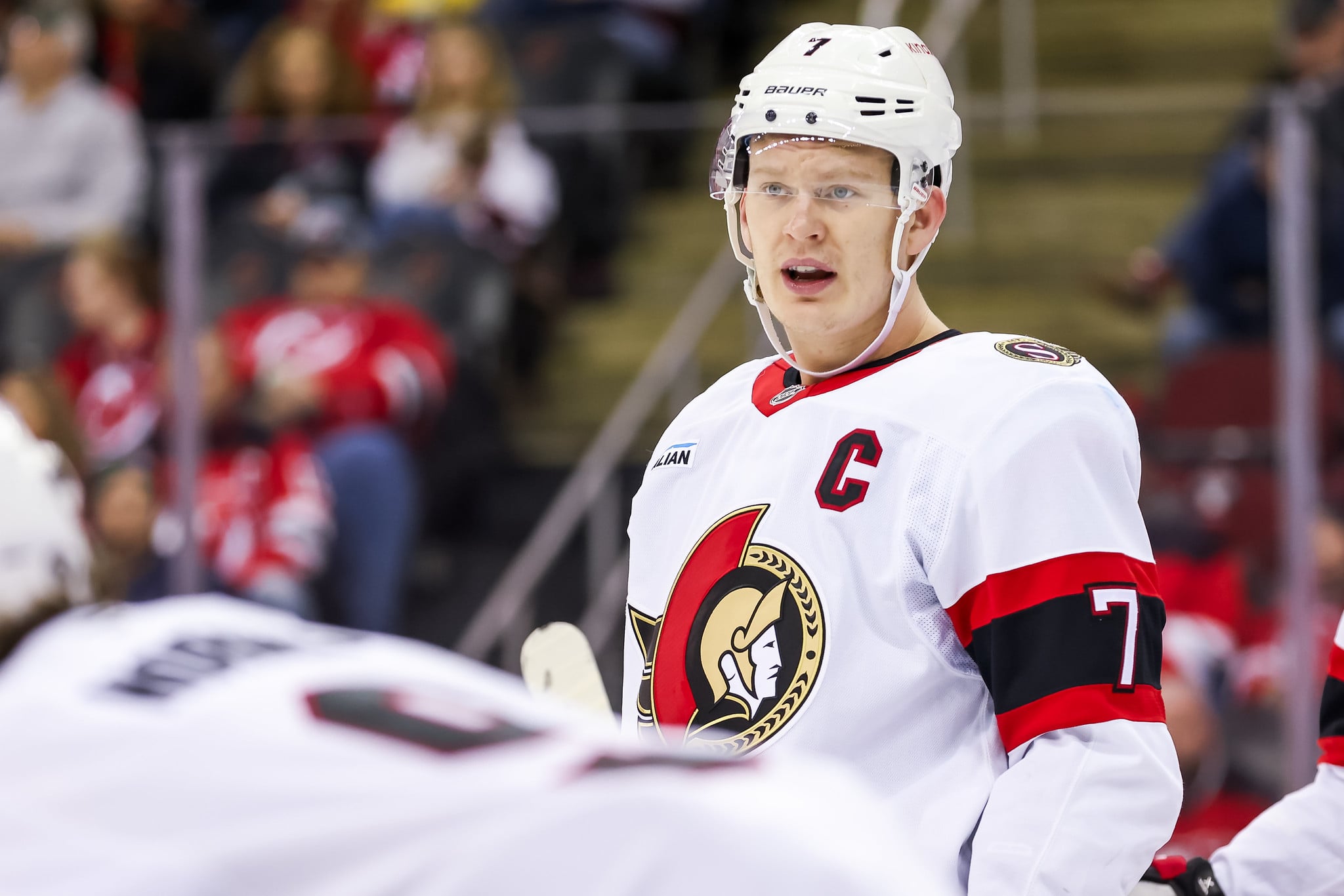
Brady Tkachuk requested out of Ottawa over the summer, and the Senators got paid in draft capital but not in immediate replacement talent. The departure stings. Tkachuk was a first-line force, a point-per-game threat, and more importantly, a play-driver whose line combinations posted expected-goals percentages above 60 percent. Losing that kind of offensive catalyst in the preseason resets expectations for 2026–27. But here's what matters for the season: the Senators' success last year wasn't a mirage built on Tkachuk alone.
Ottawa's underlying numbers paint a team built on a system, not a star. They finished third in expected goals, fifth in Corsi, and eighth in goals per game. Defensively, they ranked third-worst in high-danger scoring chances allowed—elite constraint. The Hurricanes won the Cup playing a high-shot-volume attack; the Senators ran a similar blueprint and proved they could generate both quantity and quality (12th in high-danger chances for despite leading in raw shot production). That process works even with roster turnover at the forward position. The goaltending was the real weakness last season (20th in goals against), and nothing in the offseason suggests that gulf closed. If anything, Tkachuk's exit opens ice for secondary production, which is how high-volume systems sustain themselves.
The betting angle surfaces immediately: Senators' team totals will likely be priced as a modest step back from last year's output. Market consensus will anchor on "lost their captain and best forward." But the underlying shot-generation machine remains intact. Travis Green's system doesn't require Tkachuk to function; it requires discipline in puck movement and positional spacing. The loss reduces peak offensive ceiling significantly—Tkachuk's 60 percent EG% lines won't be replaced one-for-one—but doesn't collapse the floor. If Ottawa's secondary forwards (Thomas Chabot, Drake Batherson, Claude Giroux if healthy) maintain position-neutral ice time, they'll still generate 32–35 shots per game at minimum.
The sharp read: fade team totals on the Senators if the line moves more than 10 percent lower than their per-game pace from 2025–26. Early-season unders will be seductive ("captain gone, chaos expected"), but that's narrative pricing, not structural analysis. Conversely, don't overload Senators' anytime goalscorer props for their secondary wingers in the first month—Tkachuk's absence means fewer high-percentage looks feeding role players. Wait for actual role stabilization before betting secondary scoring volume. The system is durable. The opportunity for secondary goal regression is real and immediate.