NHL · transaction
The Bargain-Bin Forward Class Heading Into Free Agency: Where Shooting Luck Masks Real Opportunity
NHL free agency opens tomorrow and several mid-tier forwards are about to be dramatically underpriced because of one-year shooting anomalies that obscure multi-year track records.
NHL free agency opens Wednesday, and the market is already fixated on the marquee names—Rasmus Andersson, Jacob Trouba, possibly John Carlson—who will command eight-figure deals. But the real edge for teams hunting value sits in a narrower tier: forwards whose production craters last year don't reflect talent collapse, but rather variance in shot conversion that historical precedent says will normalize. Two names stand out as particularly cheap entry points into teams seeking offensive depth without paying for a top-six anchor.
Eeli Tolvanen's 2025-26 campaign reads like a catastrophe on the surface. The Seattle Kraken winger fell from 23 goals in 2024-25 to 12 last season, his shooting percentage halving from 16.8% to 8.5%. But that number is the trap. A player whose career high sits at 16.8% doesn't suddenly spike upward; instead, he reverts to a sustainable 12-14% range. Tolvanen's underlying volume—his shot-generation rate, his positioning within the offensive structure—remained intact. Five of his 12 goals came on the power play, suggesting his playmaking and positioning in high-leverage situations stayed reliable. For a team investing in middle-six depth with power-play punch, Tolvanen becomes a calculation: absorb the perception of decline, and you acquire a 12-15 goal contributor at a third-line salary. The market hasn't fully adjusted because one-year outcome bias runs deep.
Oliver Bjorkstrand carries an even starker profile. The 31-year-old Tampa Bay forward played 80 games last season and scored 12 goals—a pace that screams washed-up veteran to casual observers. But zoom out: Bjorkstrand put up 28 goals in 2021-22, followed by consecutive 20-goal seasons, then 18 goals in 56 games two years back (a 26-goal pace). His 2025-26 decline reflects both a deliberate Tampa lineup decision (reduced ice time, lower shot volume) and regression in conversion—his shooting percentage, like Tolvanen's, compressed from prior norms. At 31, teams can reasonably trust him to handle 16-17 minutes of work across three forward lines. He's not aging off a cliff; he's a commodity whose one bad season will price him as damaged goods despite 700 games of proof he can produce at a mid-tier forward clip.
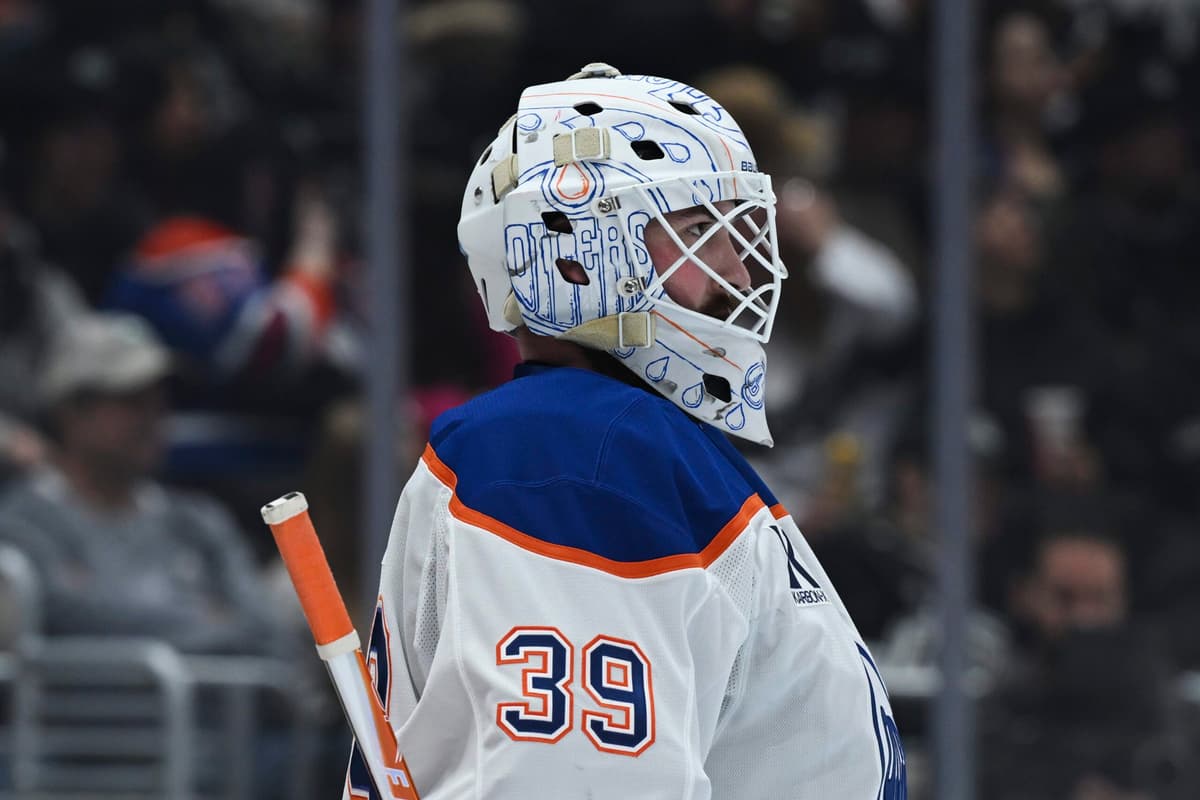
Between the pipes, goalie Connor Ingram at 29 years old represents a different kind of undervaluation. Ingram has never anchored a defensively elite team or played in a market where supporting cast coverage masks his weaknesses. Instead, he's been asked to perform with thin margins—fewer quality defensive assignments, less protection in front of the net. Last season's numbers, when broken down through expected goals against and high-danger chance conversion, suggest he was genuinely good; the damage was circumstantial, not skill-based. For a team seeking goalie depth or a potential starter with upside in a stronger defensive system, Ingram's price tag will be artificially suppressed because he hasn't been "protected" by a strong defensive infrastructure. Teams with better defensive alignments will get far more value from his actual capability than his prior usage suggests.
The prop-betting angle here is directional: all three players are likely to be signed at below-market caps relative to their 2025-26 outcomes. That creates a one-year mispricing that carries into performance props. Tolvanen's power-play goal totals will open lower than warranted because the total goal decline anchors perception. Bjorkstrand's game log should see depressed shot projection and goal-scoring lines for his first 10-15 games until his new team's linemates and ice allocation patterns establish a higher baseline. Ingram's save percentage and goals-against will initially be treated as reflection of his prior bad situation, but will likely improve materially once placed in a system with legitimate defensive support. The edge isn't in picking winners; it's in backing players whose prior-year metrics were suppressed by structural factors (team deployment, defensive coverage, variance in conversion) that are temporary, not terminal.