NHL
Babcock's Line Surgery in Edmonton: Why McDavid and Draisaitl Separate Could Sink Your Team Total Bets
The Oilers' head coach is openly testing whether his two superstars generate more value apart than together—a strategic question that flips the entire offensive architecture and changes how you should price Edmonton's output.
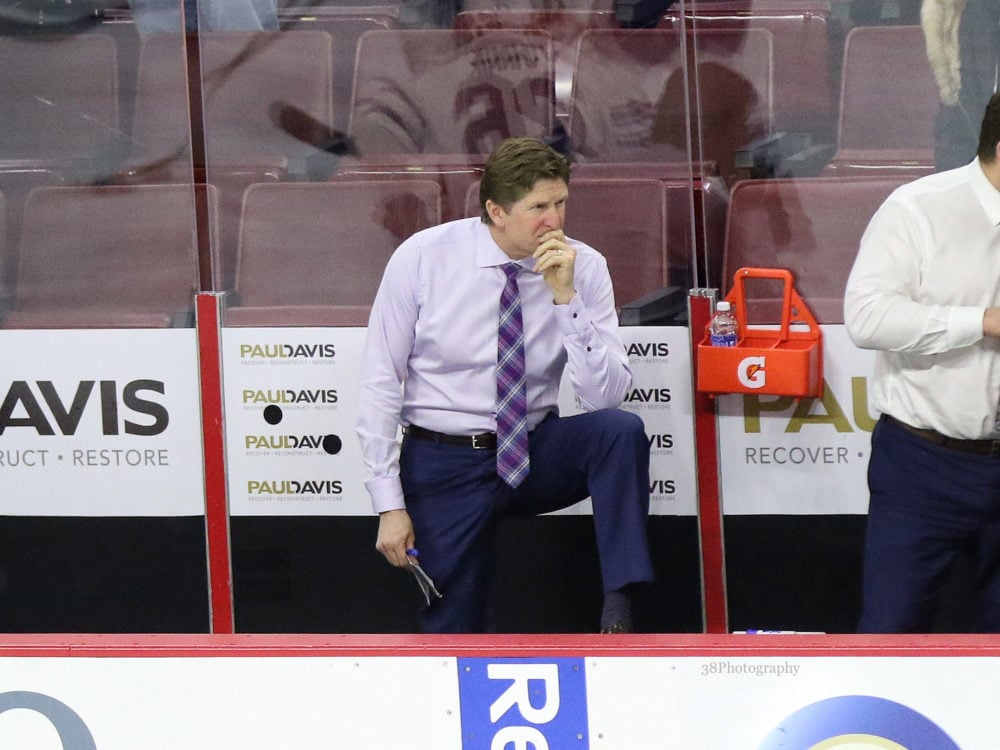
Mike Babcock walked into Edmonton's training camp with a deliberate puzzle: keep Connor McDavid and Leon Draisaitl on the same line, or split them to create two high-leverage scoring units. Early experiments paired the two with Vasily Podkolzin, while Ryan Nugent-Hopkins centred Isaac Howard and Zach Hyman on the second line. But Babcock's public statements—"I don't have a clue what I'm going to do. I'm going to watch."—signal that nothing is locked in, and the implications for Edmonton's offensive floor run deeper than a simple lineup card shuffle.
The case for keeping them together is superficially clean. McDavid and Draisaitl combined for two points each in a preseason win over Winnipeg, and Babcock frames the math as a resource play: compress your two best players into one shift, and you free up ice time for the third and fourth lines without guilt. If McDavid and Draisaitl eat 20-22 minutes together, the rest of the forward group operates without the guilt of starving depth. That philosophy mirrors Babcock's career—structure and depth production matter as much as star clustering. But the labour spreadsheet masks a harder truth: Edmonton's second line has to do the job of a second-ranked playoff opponent's top line when McDavid and Draisaitl draw the elite shutdown defenders.
Nugent-Hopkins represents the fulcrum. Last season, playing mostly wing, he posted 26 even-strength points across 72 games—a 23-point pace over 82 games. Shifting him back to centre and flanking him with Howard and Hyman is theoretically sound: Hyman provides net presence and forecheck intensity, Howard has the skill set, and Nugent-Hopkins can facilitate. But if that trio struggles to generate consistent play-driving opportunities or if opposing defences can limit Nugent-Hopkins' touches through positioning, Edmonton's overall attack becomes bottlenecked. McDavid and Draisaitl stop being a multiplier; they become a dependency. The early preseason signal—two points each in one game—is exactly the kind of noise that evaporates once team play accelerates.
For betting purposes, this uncertainty creates a structural headwind on Edmonton's team totals. Sportsbooks will open the Oilers' total somewhere in the 3.0-3.2 goal range to start the season, pricing in their historical offensive ceiling. But if Babcock's experiments settle into a split configuration—McDavid with Hyman and Podkolzin, Draisaitl with Nugent-Hopkins and Howard—the Oilers shift from a "two-man wrecking crew" offensive model to a "two balanced, slightly diluted attack lines" model. The math stays the same on paper. In practice, the dispersion of talent flattens Edmonton's ability to generate the 1.8-2.0 expected goals per game they produced in their deepest playoff runs. Opponents can no longer ignore a single line; they manage two parallel threats. That's better for 60-minute structure. It's worse for explosive scoring bursts.
The volatility here is baked into every team total and moneyline in Edmonton's October slate. If Babcock keeps McDavid and Draisaitl together and the depth lines find rhythm early, the Oilers punch through 3.5 goals per game on a consistent basis. If he splits them and the Nugent-Hopkins line doesn't calibrate fast, Edmonton's total drops toward 2.8-3.0. The market hasn't fully digested this binary yet. Most books are still pricing the Oilers as a unified high-octane machine. The first two weeks of games will determine which architecture Babcock chooses to build—and whether your team total bets age well or blow up on the line change.