Tarasenko to Edmonton Would Solve a Depth Problem—and Create Line-Matching Angles
By Erik Schwartz ·
The Oilers are close to cap-space utilization after a surgical offseason, but adding a 34-year-old finisher on a short deal would reshape their bottom-six scoring and power-play unit construction.
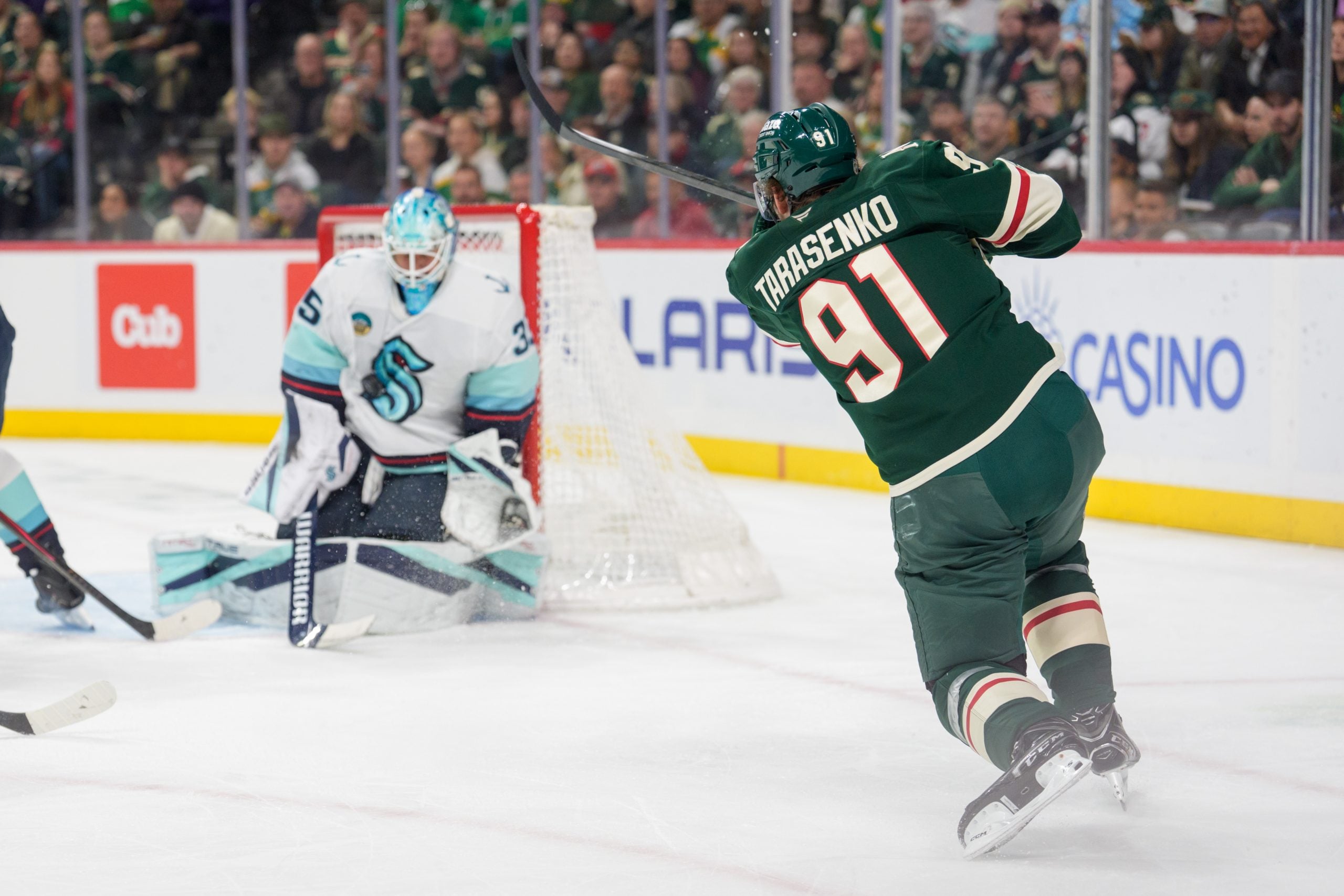
The Edmonton Oilers have orchestrated one of the tidier offseasons in recent memory: jettisoning Kris Knoblauch, shedding Darnell Nurse's $9.25 million cap charge, and retaining their core pending free agents. According to Elliotte Friedman, the front office may not be finished shopping. The insider floated Vladimir Tarasenko as a potential target—a 34-year-old who posted 47 points in 75 games with Minnesota last season and carries the offensive pedigree of a 709-point career.
Tarasenko's fit is surgical. The Oilers have assembled a lethal top six around Connor McDavid and Leon Draisaitl but have struggled to build reliable scoring depth below that tier. Tarasenko would slot into the third line alongside Jason Dickinson and Ryan Nugent-Hopkins, or flip into the middle-six if Isaac Howard underperforms. At $4.25 million per year on a two-year deal—the projected ask—he represents low-risk roster optionality. His defensive limitations are real, but flanking him with defensively responsible partners (Dickinson, RNH) mitigates exposure.
The secondary benefit is power-play architecture. Edmonton has leaned heavily on a single five-on-four unit anchored by McDavid. Tarasenko's creativity and finishing chops give them a legitimate second unit capable of holding the puck and generating sustained pressure. His 23-goal season in Minnesota demonstrates he hasn't fallen off a cliff; he remains a threat to walk the point and snap backhand shots. In the context of a deep Oilers roster facing a Cup window that demands maximum efficiency, that's legitimate upside.
From a wagering standpoint, Tarasenko's arrival changes two distinct prop angles. First, his presence compresses Isaac Howard's path to consistent top-six minutes. Howard enters 2026-27 as a prospect earmarked for a first-line look, but if Tarasenko produces at his average clip (50 points over a full season), Howard faces demotion to the third line. That shrinks his game-to-game shot volume and assist upside; bettors backing Howard over-unders on a nightly basis should factor in the increased floor for bench time. Second, Oilers power-play points distribution flattens. With McDavid handling the first unit solo, he accumulated inflated secondary-assist numbers. A functioning second unit that Tarasenko anchors reduces McDavid's shot and point leverage on the man advantage—a subtle but persistent edge for bettors fading his power-play props once the secondary unit forms chemistry.
Tarasenko himself becomes a bottom-six anchor play. His shot volume will land in the 2.2-2.4 per-game range (Minnesota pace), and his points (likely 1.5-2.0 per 60 minutes at even strength) should undercut his Vegas ceiling initially, because sportsbooks will price in his 23-goal season rather than his career 0.36 goals-per-game norm. The angle holds if Edmonton prices him as a third-liner (lower shot-generating role) rather than a pseudo-second-liner (the narrative the media will push). Cap constraints and roster composition point toward the former.