Kane's Market: Three Contention Paths Define a Late-Career Gamble
By PropBetEdge Editorial Team ·
At 37 with one year left in his prime, Patrick Kane faces a franchise choice that will reshape three teams' offensive math—and their season-total props.
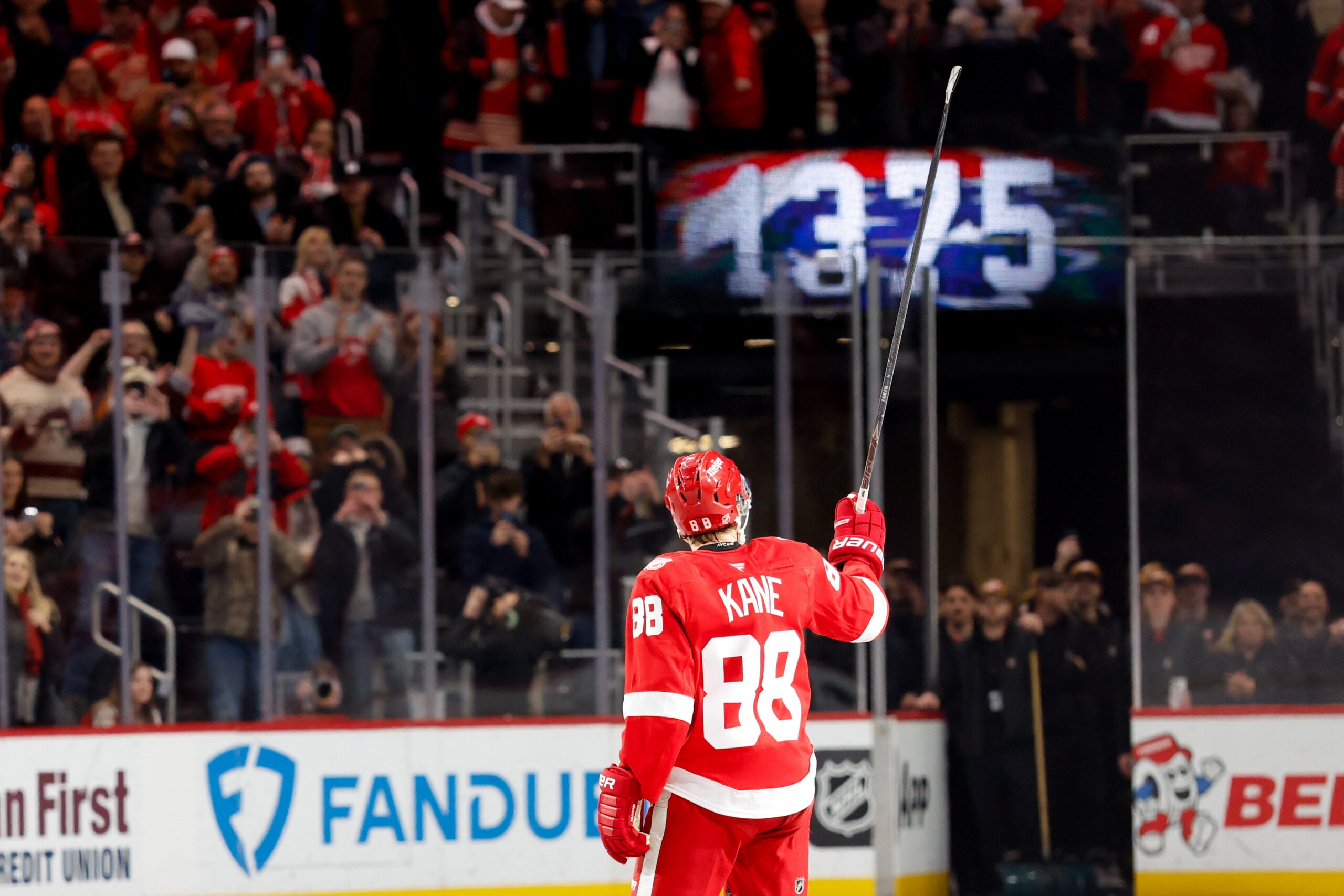
Patrick Kane remains unsigned as free agency drags into mid-July, with the Detroit Red Wings open to his departure after he logged 57 points (16 goals, 41 assists) across 67 games last season. At 37 years old and carrying a 1.4-point-per-game career average across 1,369 games, Kane is no longer a volume driver—his 16-goal pace last year was a step down from his peak—but he remains a movement player in competitive environments. The calculus for any suitor hinges on depth scoring and playoff leverage, not redemption arcs.
Buffalo emerges as the mechanical fit. The Sabres made the playoffs last season and lost Alex Tuch to Washington, opening a top-six vacancy that Kane could fill without requiring a cap-destroying long-term commitment. Kane thrives in secondary-playmaker roles, and pairing him with Tage Thompson's net-front work creates a second-line framework that doesn't demand elevated shooting volume. His veteran defense—a strength despite age—transfers directly to playoff hockey, where possession-based teams compress scoring opportunities. On a one- or two-year deal, Kane becomes a margin-of-victory asset in a compressed playoff sample. Edmonton presents the entertainment case. Adding Kane to Leon Draisaitl's wing transforms that line into creative shot generation, but the Oilers' real need is consistent even-strength depth, not another net-positive offensive player squeezed into a third-line role. Kane won't solve their structural forward depth; he'll ornament it. Chicago's reunion is a personal story masquerading as a roster move—the Blackhawks aren't ready to contend, and Kane wants a Cup run, not a three-year rehabilitation project.
For betting purposes, Kane's destination matters more than his statistical ceiling. Buffalo's line totals and playoff prop windows will shift materially if he signs there; Edmonton's additions dilute Isaac Howard's leverage (and any Howard prop plays), but don't fundamentally change the Oilers' team-total outlook because their offense already runs through McDavid and Draisaitl's touches. Buffalo, by contrast, lacks established second-line playmaking—Kane's 41 assists last year represent a 40-game ceiling for Thompson's secondary linemate. If Kane lands in Buffalo on a short-term deal, the Sabres' team total will rise measurably heading into 2026-27, and top-six forward prop lines (assists, points) for Thompson and Jeff Skinner will tighten due to increased net-front traffic and secondary creation.
The market hasn't yet priced in the Buffalo scenario because Kane's signing date remains fluid. Once he commits, books will adjust team totals, particularly if it's Buffalo—the Sabres were playoff-adjacent last season and now gain a secondary-line operator who doesn't cannibalize current scorers. Kane's assists floor in a Thompson partnership is higher than his solo-line output because he'll function as a facilitator, not a trigger. Watch for Sabres team total movement within 24 hours of a Kane signing; early numbers before that adjustment represent the cleanest edge.