NHL
Toronto's Matthews-Roslovic Reunion Adds Offensive Depth to Leafs' Redesigned Top Six
Jack Roslovic's arrival gives Toronto a proven secondary scorer to pair with Matthews, but the chemistry question remains whether junior-era familiarity translates to consistent NHL production.
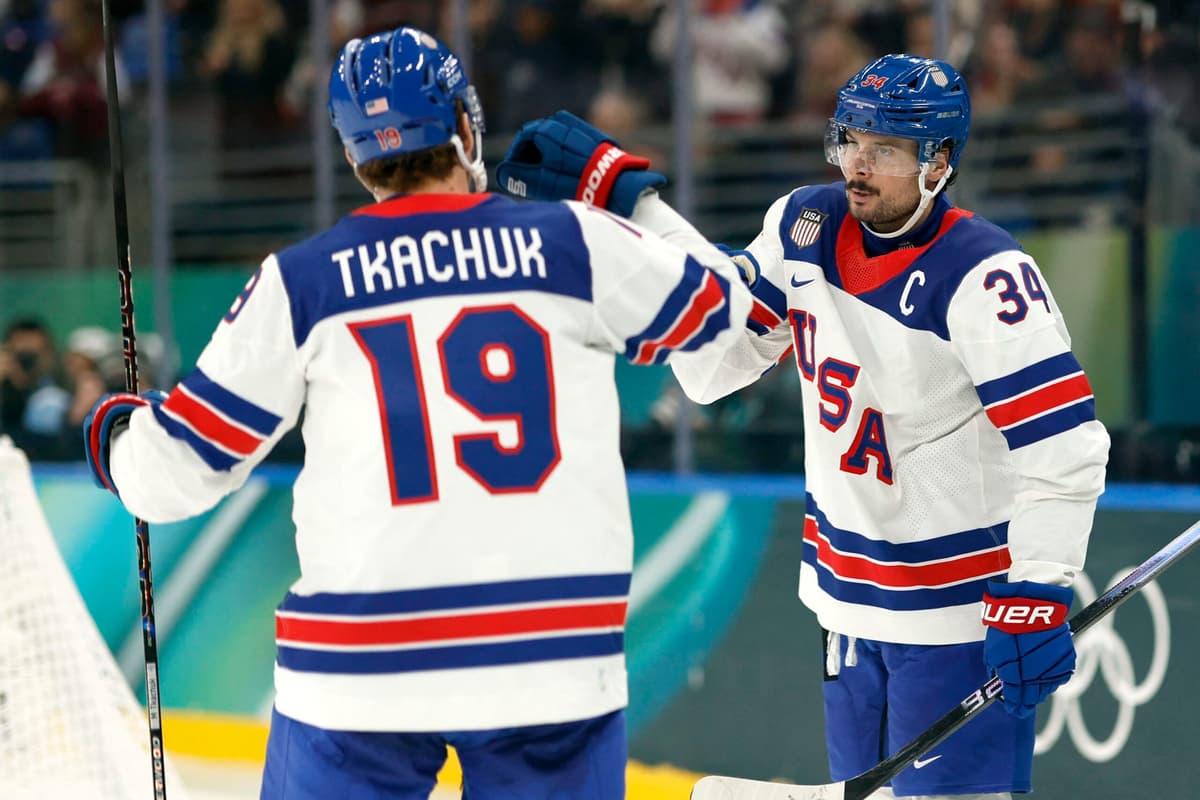
Toronto's first practice of the 2026-27 season revealed coach Jim Hiller's initial blueprint for a Maple Leafs roster that has undergone substantial overhaul under new general manager John Chayka. Auston Matthews skated on the top line alongside Matthew Knies and Jack Roslovic—a reunion that reconnects two veterans who last played together on the U.S. National Under-18 team, where they memorably dubbed themselves the "Superman line" as a nod to Cam Newton's iconic on-field celebration.
Roslovic, acquired in the offseason after posting 36 points in 69 games for Edmonton last season, doesn't carry star-caliber credentials on the surface. But his presence addresses a structural problem for Toronto: the lack of a complementary scorer who can operate effectively in Matthews' orbit without demanding top-line volume or cap burden. The 29-year-old's prior experience with Matthews reduces chemistry-building time that new lineups typically require, a real if underrated advantage in a compressed September ramp-up. Whether that junior familiarity translates to NHL-level execution is the open question—past connection doesn't guarantee present-day line chemistry, and Roslovic's 36-point season suggests he's a solid depth piece rather than a game-altering acquisition.
Hiller's decision to pair Matthews with Roslovic and retain Knies on the left wing indicates the coaching staff believes in a balanced, movement-oriented top unit rather than stacking elite talent. Knies, who has proven himself as a consistent finisher alongside Matthews over the past two seasons, remains the production anchor. Roslovic becomes the variable—his work ethic and hockey IQ are non-negotiable, but his shot volume and assist creation will determine whether this trio generates the shot and scoring-chance density Toronto needs from its primary unit.
From a betting lens, the early-season composition of Toronto's top line directly impacts several prop categories. Matthews' assist total will fluctuate based on whether Roslovic and Knies can generate high-danger chances at a sustainable rate; if the three-man unit establishes itself as a strong puck-movement group, assists often follow. Roslovic's own shots and points carry modest year-long projection (his 36-point pace from Edmonton suggests 55-62 points over a full season), but early-season variance around his integration could create line-specific opportunity. Knies, the steadiest of the three, benefits from increased ice time and touches, which typically boosts both shot and assist opportunities. The real edge lies in recognizing that a freshly assembled first line carries higher volatility in the opening 10-15 games; if this trio clicks quickly, shot and point props compress. If the chemistry lags, they'll be shuffled within two weeks.
Matthews' seasonal output remains Toronto's anchor, but Roslovic and Knies' supporting performance will determine ceiling vs. floor outcomes. Early preseason and opening-week games provide the clearest window to evaluate whether this reunion genuinely accelerates cohesion or remains a narrative comfort story with limited predictive value.