Matthews' Linemate Search Reshapes Toronto's Goal-Scoring Architecture
By Justin Erickson ·
The Maple Leafs' offseason bet on Jack Roslovic over Patrick Kane signals a shift away from complementary star power and toward pace-based efficiency—a calculation that will ripple through Matthews' shot volume and assist distribution all season.
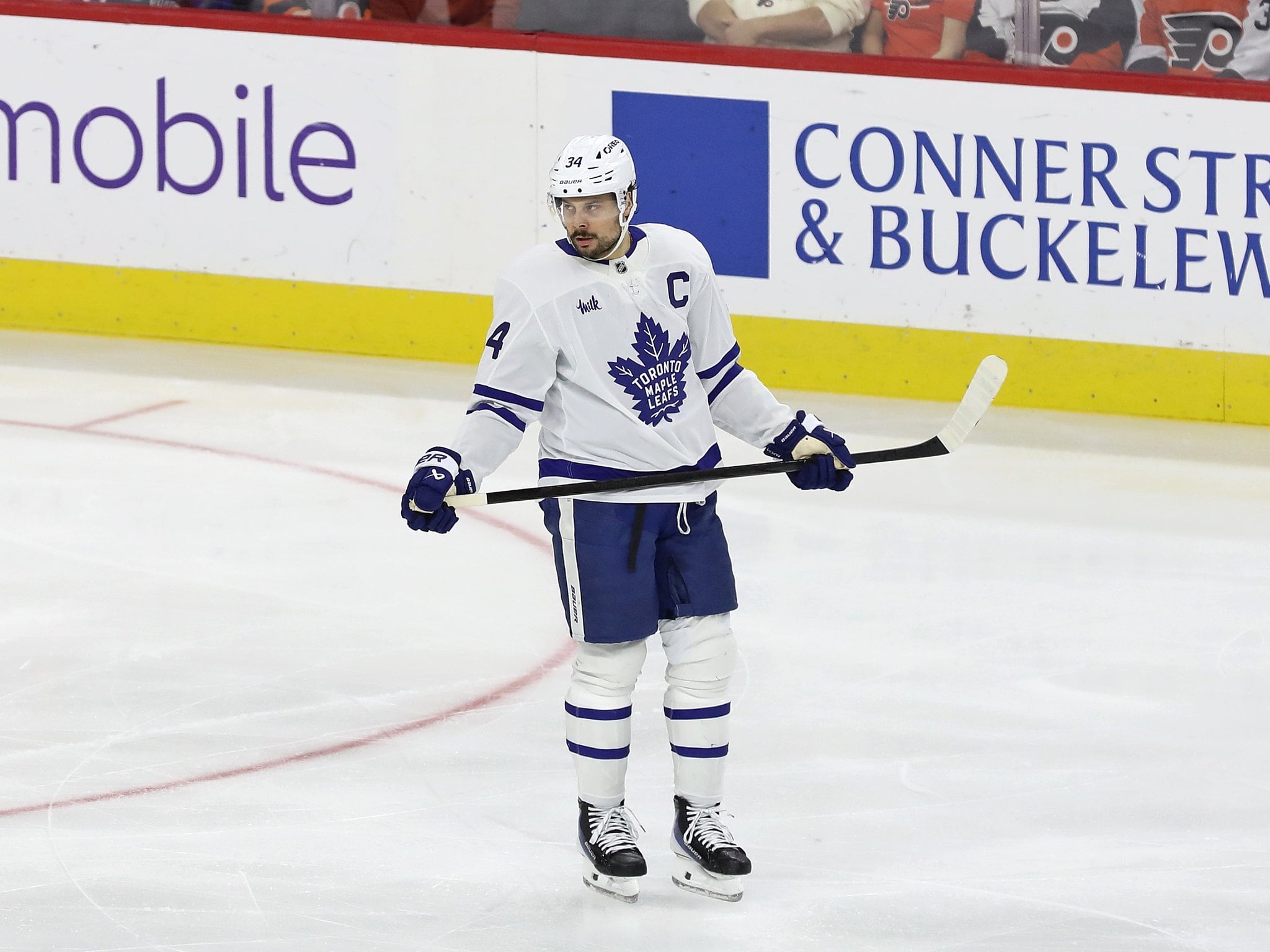
The Toronto Maple Leafs have effectively chosen to build around role-based compatibility rather than star pedigree on their top line, and that decision carries measurable prop implications as the 2026–27 season approaches. With Mitch Marner's departure now finalized, the organization has narrowed its focus to Jack Roslovic as the primary candidate to flank Auston Matthews on the wing—a far less flashy option than Patrick Kane, but one that reflects a calculated trade-off between pace and experience. The debate itself reveals something important: the Leafs aren't trying to replicate what Marner did. They're trying to engineer a different kind of top-line system.
Marner's role on Matthews' wing extended well beyond the scoresheet. He orchestrated neutral-zone entries, managed puck movement in transitions, and positioned himself as a secondary playmaker in structured offensive sets. Roslovic, by contrast, operates from a narrower skill set: he has speed, willingness to shoot, and the ability to generate chances off the rush. He won't carry the offensive load the way Marner did, but he also won't be asked to. That's the structural insight the Leafs appear to have landed on. If Roslovic can complement Matthews' shooting-first approach rather than match his playmaking range, the duo can function without needing a third star to balance the workload.
The Kane alternative remained tantalizing—a Hall of Famer at age 37 with elite hands and generational hockey sense would, on paper, create one of the league's most dangerous top lines. But Kane's inclusion would have required the Leafs to bank on his ability to survive an 82-game grind and post-season depth, something the organization has moved away from betting on. More fundamentally, adding Kane wouldn't solve the Leafs' stated objective of becoming a more complete, defensively responsible team. The organization has spent recent years emphasizing that shift; adding a 37-year-old offensive specialist works against that messaging.
For prop bettors, the Roslovic path implies a recalibration of Matthews' shot volume and assist distribution. With a linemate focused on driving the rush rather than creating space from the half-boards, Matthews will see a higher percentage of his chances come from direct-entry situations and breakouts. His shots on goal may actually rise—less playmaking structure, more direct looks—but his assist numbers could compress slightly if Roslovic becomes the primary finisher on their line rather than a secondary scorer. Early pricing on Matthews' point props should factor in continued output (he remains an elite talent), but the composition of those points shifts. Expect shots and goals to carry more weight relative to assists than they did under Marner's tenure. The Leafs' bet is that Roslovic's speed and shooting will keep pace with Matthews' elite finishing rate; if that thesis holds, the offensive output remains consistent, but the mechanism changes—and that's where early-season lines often misprice.