NHL · injury
Larkin Goes to IR Hours Before Red Wings Home Opener as Trade Standoff Deepens
Detroit shelves its former captain on non-roster injured reserve just before facing the Rangers, signaling the organization's willingness to absorb cap pain rather than capitulate to his demands.
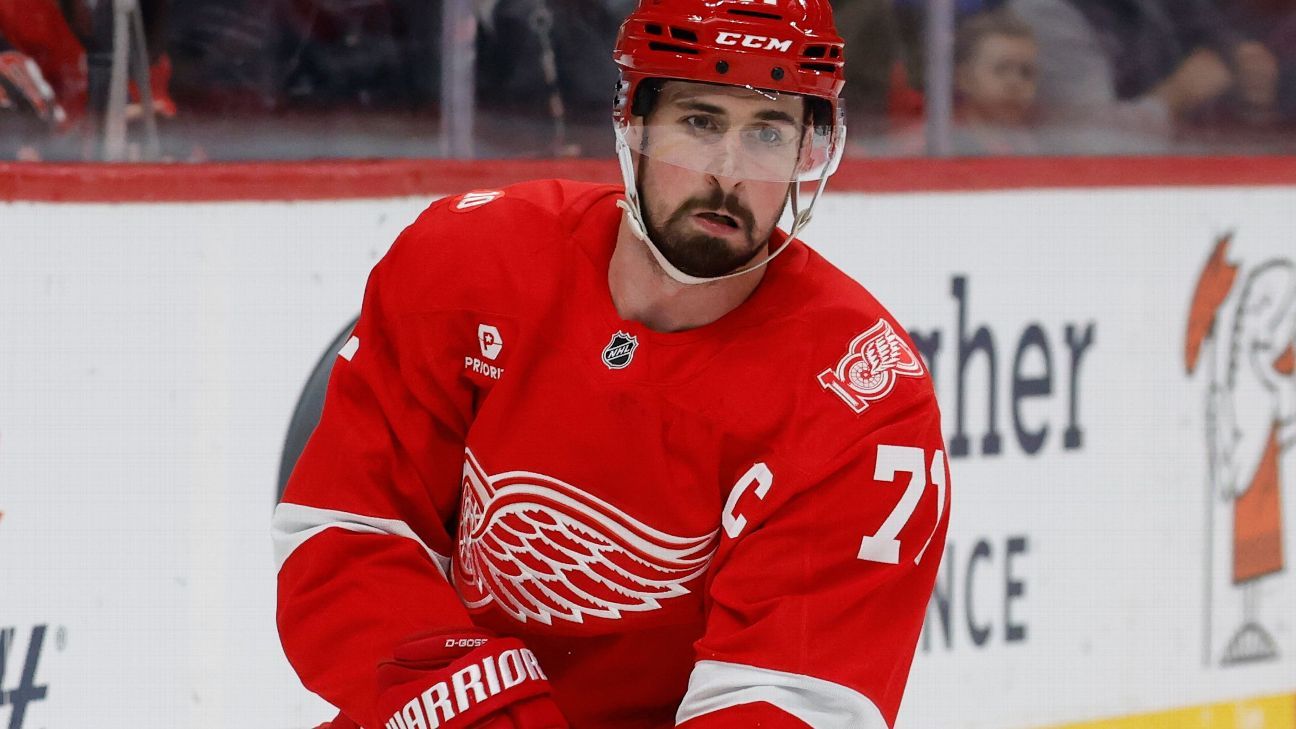
Hours before puck drop against the New York Rangers on Friday night, the Detroit Red Wings moved Dylan Larkin to non-roster injured reserve, a move that underscores the franchise's hardened stance on a trade request that has festered since the offseason. Larkin, 30, reported to training camp last month but missed practice time with an upper-body injury—one that the team now classifies as serious enough to warrant IR placement on opening night. The announcement doubled as a public relations statement: the former captain's name was announced to the crowd at Little Caesars Arena and met with boos, a stark reversal from his status as a franchise pillar.
The mechanics of this standoff reveal a franchise willing to absorb financial and competitive cost rather than negotiate. Larkin carries five seasons remaining on an eight-year, $69.6 million deal signed in 2023, which includes a no-trade clause. He initially requested a move only to Florida, Minnesota, or Vegas—teams the Red Wings appear unwilling to deal with, likely because those markets don't offer sufficient return for a 30-year-old whose leadership has now become liabilities. By parking him on IR, Detroit removes his salary from the active payroll during the placement, though the cap hit remains; simultaneously, the team sends a message that his professional conduct (he represented Team USA at the Winter Olympics in Milan earlier this year, posting two goals and three points en route to gold) does not shield him from consequence. Larkin himself acknowledged the logic, telling reporters at camp: "I asked for a trade from the Detroit Red Wings as a captain and that has consequences."
What makes this IR move particularly telling is its timing and scope. The Red Wings are opening their season without naming a captain—a governance vacuum explicitly tied to Larkin's request—and the organization is signaling that it will weather the distraction rather than cave. Detroit has missed the playoffs for ten consecutive years, a drought that frames this decision. A team in that position might ordinarily accelerate a trade to reset culture; instead, the front office is doubling down, suggesting either that no offer met their floor or that they view Larkin's departure as less critical to rebuild momentum than maintaining organizational boundaries.
For bettors, this creates a secondary uncertainty layer that hasn't been fully priced. Larkin's game-availability status is now ambiguous—the upper-body injury is real, but the IR placement serves dual purposes (roster management + message delivery). If he returns within 2-3 weeks, the injury was genuine short-term. If the placement stretches longer, it becomes a de facto trade freeze, and his offensive contributions (historically 60-70 points per season) are off the board. Detroit's team totals for the next 10-14 days already reflect opening-night lineup decisions, but as the Larkin situation clarifies—whether he's back in 10 days or remains sidelined for a month—line adjustments on Red Wings moneylines and team goal totals will lag. Early-week unders on Detroit's total become more attractive if Larkin's return is delayed; conversely, if he's cleared within two weeks, the line will have over-adjusted for his absence. The uncertainty is the edge here, not the direction.
NHL Intelligence — Hockey intelligence beyond the scoreboard. Open NHL Intelligence →