Larkin's Upper-Body Injury Clouds Red Wings Camp as Trade Limbo Deepens
By Justin Erickson ·
Dylan Larkin won't skate Thursday as Detroit's training camp opens, adding injury uncertainty to an already fractured franchise narrative.
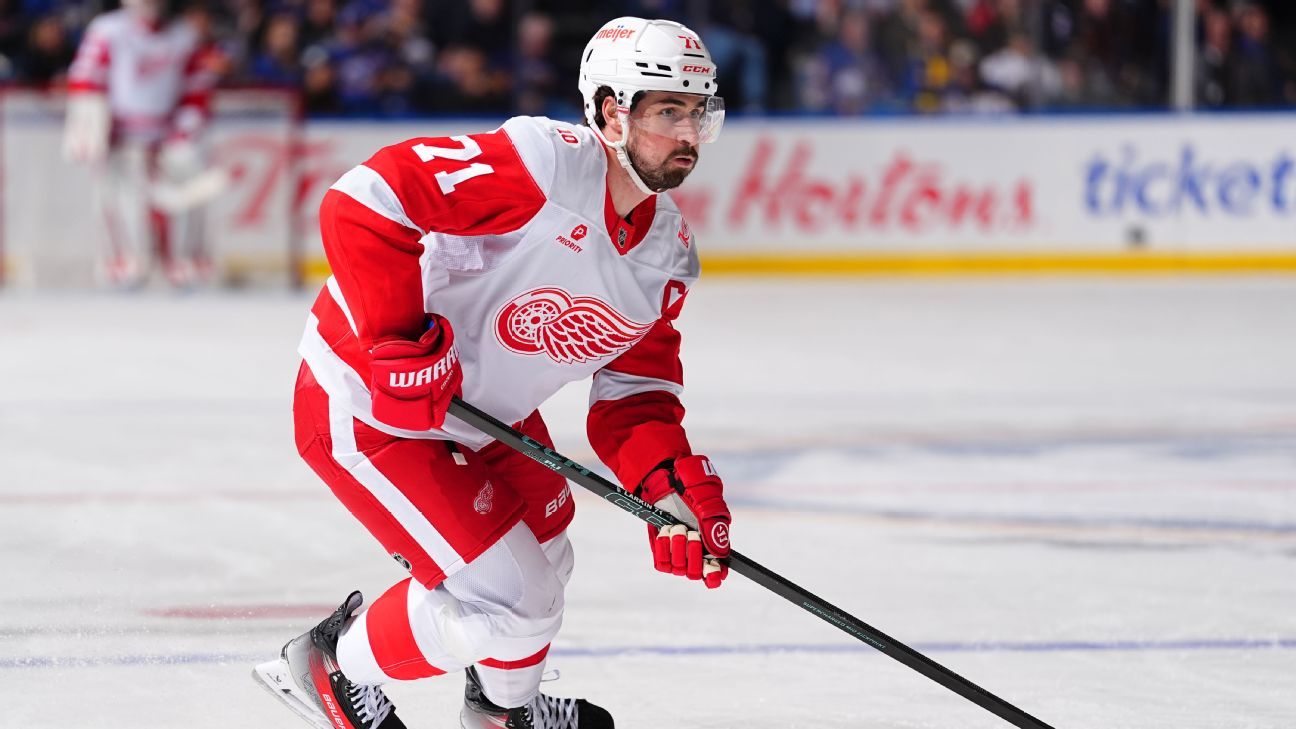
Dylan Larkin will not take the ice when the Detroit Red Wings open training camp on Thursday, September 18th. The 30-year-old center sustained an upper-body injury during off-ice conditioning earlier this week, interim general manager Shawn Horcoff announced Wednesday. The timing compounds an already volatile offseason: Larkin requested a trade, lost the captaincy, and now faces a health setback as the franchise leadership transitions into uncharted territory under Horcoff, who assumed the interim GM role on Tuesday after Steve Yzerman stepped into an advisory position.
Larkin's injury arrives at a critical juncture. The franchise has deliberately held the line on his trade status—publicly announcing he would report to camp while simultaneously stripping him of captain duties—suggesting no deal was imminent. Horcoff's measured rhetoric ("Our focus is getting Dylan healthy") reads as organizational buy-time language, not a sign of urgency to move him. Larkin carries a five-year, $69.6 million commitment with a no-trade clause, originally signed in 2023. He'd signaled Florida, Minnesota, or Las Vegas as destinations. An upper-body injury now freezes that conversation. Teams won't acquire him into recovery; Larkin won't accept a trade while nursing an unknown healing timeline. The immediate market for him has evaporated.
The injury severity matters enormously for Detroit's lineup construction. Larkin is the franchise's No. 1 center—his absence reshuffles offensive touch distribution across the roster. Without him in camp, the team faces 10-14 days of practice and exhibition play where secondary centers carry disproportionate ice time and role expansion. That creates artificial output inflation during the preseason that won't persist once Larkin returns. Any Red Wings skater seeing a bump in assists or points during the exhibition slate will face immediate regression when the lineup resets to its intended pecking order.
From a wagering lens, the injury creates two distinct angles. First, the timeline for Larkin's return is unknowable—upper-body injuries in hockey span a spectrum from three days to three months depending on whether soft tissue, structural damage, or nerve involvement is present. Until imaging results surface, any projection is speculation. This uncertainty suppresses early-season betting interest in Larkin's individual props (points, assists, shots) because the market will price in a discount for missed games. The Red Wings team totals, however, may be slower to adjust. If the line-setting community assumes Larkin returns within one week, it may have overestimated Detroit's offensive output for games 1-5. Second, backup centers seeing elevated usage in Larkin's absence present a variance play: they'll generate statistical noise (inflated assist rates, ice-time records) that won't hold, making fade spots once Larkin returns. The smarter angle is shorting Red Wings team production totals over the first five games while Larkin is sidelined, particularly if Detroit opens against playoff-caliber competition where the absence compounds.
Horcoff's institutional message—patience, not panic—suggests the Red Wings view this as a short-term hurdle, not a season-defining rupture. That posture could change if imaging reveals structural involvement requiring offseason-level recovery. Until then, treat Larkin's status as a one-to-two-week lag, not a franchise emergency. The betting edge lies in catching Detroit's early-season team totals before the market reprices for a depleted top-six center rotation.