Larkin's Limbo Clouds Detroit's Center Floor as Contract Uncertainty Deepens
By Justin Erickson ·
A 30-year-old franchise cornerstone nursing an upper-body injury while his trade status remains unresolved creates measurable volatility in Red Wings offensive prop pricing.
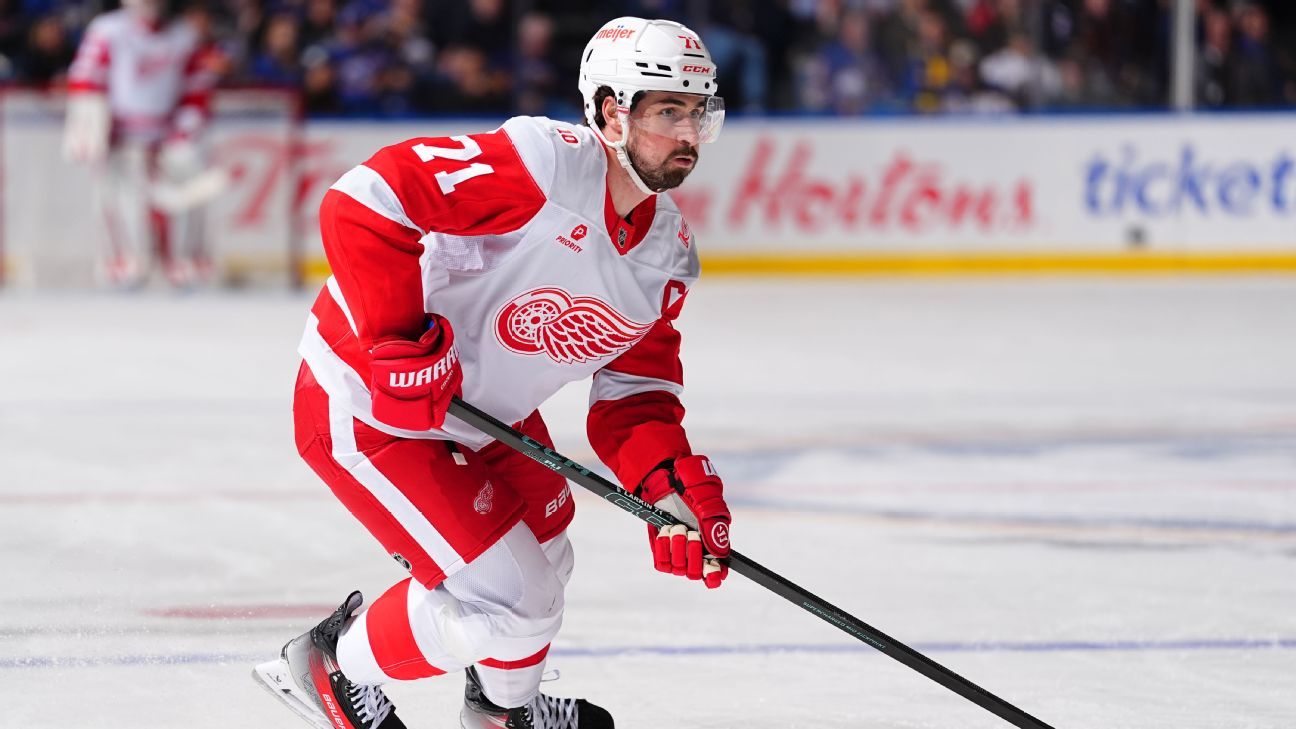
Dylan Larkin addressed his trade request for the first time since the offseason, speaking to teammates and reporters Thursday on the opening day of Detroit training camp. The former captain confirmed he asked out during the summer—initially limiting acceptability to Florida, Minnesota, or Las Vegas—and accepted the consequences of losing his captain designation. What Larkin declined to clarify is whether that demand still stands, or if circumstances have shifted his thinking. That ambiguity matters to a roster that depends on his production.
The timing worsens the organizational fog. Larkin won't skate in the first practice due to an upper-body injury sustained in gym work, an early-camp ailment that adds injury volatility to an already muddled situation. He's 30 with five seasons remaining on an eight-year, $69.6 million deal signed in 2023—a contract carrying a no-trade clause that hands him veto power over any move. Interim GM Shawn Horcoff replaced Steve Yzerman, who shifted to senior advisor, meaning the franchise's central decision-maker changed mid-crisis. That leadership vacuum typically extends negotiation timelines and breeds uncertainty in camp reports and weekly availability.
Larkin's actual ice time and role assignment over the next 10-14 days will be the first proxy for whether the organization is preparing him as an asset to move or rebuilding internal trust. A player managing an upper-body injury in early September often sees reduced minutes and simplified assignment depth through camp and the preseason—standard protocols. But if that cautious ramp accelerates once he clears medical clearance, or if he logs top-line minutes and elevated power-play touches, the betting market should read that as confidence in retention. Conversely, sheltered usage or restricted power-play exposure signals the team is either preserving his tradeable value or testing his comfort level with reduced leverage. Linemate deployment and special-team assignment are the earliest tells.
The prop angle is directional but time-sensitive. Larkin's points, assists, and shots-on-goal totals for September games carry elevated variance until his trade status clarifies and his injury status is fully transparent. Camp reports and preseason performance will reset the market's pricing on his early-season workload. If he returns to full availability and logs heavy minutes, his assists line (typically 0.55–0.65 per game at his usage rate) becomes underpriced relative to his historical per-minute production. If the Red Wings continue to shelter him or if the trade winds accelerate, fades on his prop totals and team-total assist lines hold higher edge through late September. The market will price this within 7-10 days once camp practice splits and medical updates circulate; any early-week trades involving similar-tier centers will provide additional calibration.
For prop players, the edge is early and narrow. Larkin's absence from skates on Thursday means Thursday night exotics are unplayable, but Friday and weekend preseason contests will offer the first real-environment data on workload and role. Watch for power-play ice time and linemate stability. Either one tightens the variance band and kills the angle.