NFL
Walker's Dual-Threat Dominance Reshapes Chiefs' Offensive Math
With 369 all-purpose yards through two weeks, Kenneth Walker III is forcing defenses into structural decisions that are opening up Mahomes' vertical passing game.
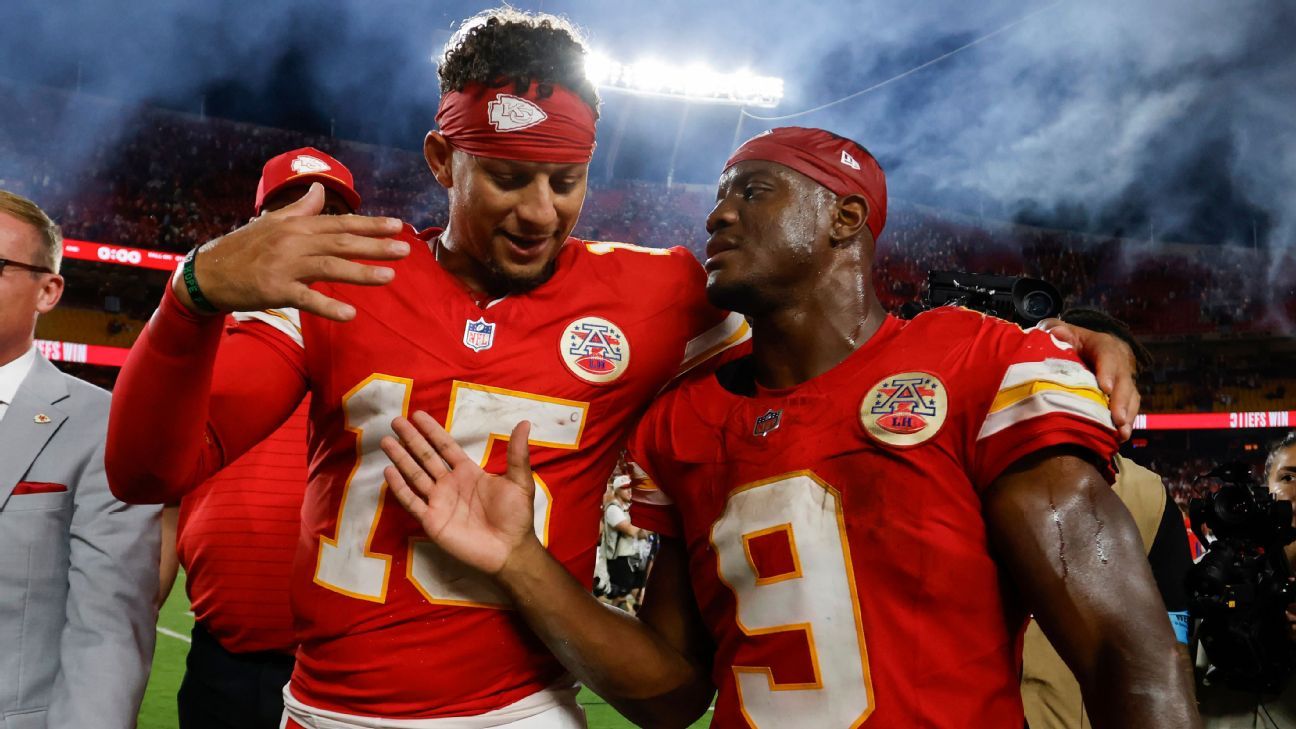
The Kansas City Chiefs' 33-30 overtime victory against Indianapolis on Sunday night was decided by Harrison Butker's 40-yard field goal, but the game's most consequential performance belonged to Kenneth Walker III. The offseason acquisition accumulated 178 all-purpose yards on 30 touches, extending a two-week stretch in which he's logged 369 yards—more than any other skill-position player in the NFL through Kansas City's 2-0 start. This isn't statistical noise. It's a structural shift in how defenses must approach the Chiefs.
Walker's impact operates through a specific mechanism: his combination of contact balance and lateral decisiveness forces opposing fronts to pack the line of scrimmage, which simultaneously creates throwing lanes downfield. Against the Colts, Indianapolis committed five defenders to the line regularly; Kansas City responded with play-action and screen concepts that converted that aggression into gains. Mahomes completed 382 yards in the same game where Walker dominated touches. The two don't compete for attention—they amplify each other. Per Next Gen Stats, Walker generated 15 missed tackles against Indianapolis, exceeding his previous career high of 14 from Week 1 against Denver. These aren't effort metrics; they're data points proving he's sustaining his movements through contact rather than relying on space.
Mahomes himself validated the schematic advantage in his postgame comments, noting that the offensive line's aggressive downfield movement in the run game forces defenses into reactive positioning. When Kansas City can credibly threaten 200-yard rushing performances (they posted 144 yards and 151 yards in weeks one and two respectively), safeties cannot play single-high coverages with impunity. That safety rotation opens intermediate routes and reduces two-high looks that would otherwise compress Mahomes' throwing windows. The Chiefs are no longer a one-dimensional offense anchored entirely to play-action off a patchwork run game—they've built a complementary system where Walker's presence literally alters coverage allocation.
For proposition bettors, this context matters because market sentiment has been slow to price the structural shift. Mahomes' passing-yard lines opened the season in the 270-290 range for single games; through two weeks, he's averaging 382 yards despite defenses knowing exactly what's coming. The surface reading would suggest overs are obvious. But the edge is more subtle: Mahomes' completion percentage and touchdown-to-interception ratio should stabilize at elevated levels because Walker's run game creates definable throwing scenarios rather than improvisation opportunities. When a team can lean on 30 touches of efficient rushing, it controls tempo and eliminates negative-yardage plays that depress passing totals. Over the next 4-6 games, expect Mahomes' passing-yard overs to maintain +EV against lines that will drift upward but won't fully account for the structural compression Walker creates. The specific angle: Mahomes' passing attempts should stay below 38-40 per game, which keeps his yardage totals from ballooning despite his accuracy. Fade the obvious "Mahomes is on fire" overs at inflated numbers; target his completion percentage over 64% instead.
Walker's two-week runway has been short enough that sportsbooks haven't yet shifted his receiving-yard or rushing-yard props to fully reflect his snap count and touch distribution. He's currently in line for 18-22 carries per game and 3-5 receiving targets. At his current efficiency (3.9 yards per carry, 7.2 yards per reception through two games), a rushing-yards line of 65-75 is undervalued, especially against defenses that haven't adjusted their gap assignments to his run style. This is a durable edge—not a single-game spike, but an allocation shift that persists as long as Kansas City commits to the run-first identity they've established.