NFL · injury
Vikings backfield chaos meets Tampa Bay's run defense: opportunity in flux
Aaron Jones limps into Sunday's matchup against a top-five run defense while the Vikings cycle through waiver pickups, creating a leverage window for contrarian prop bettors.
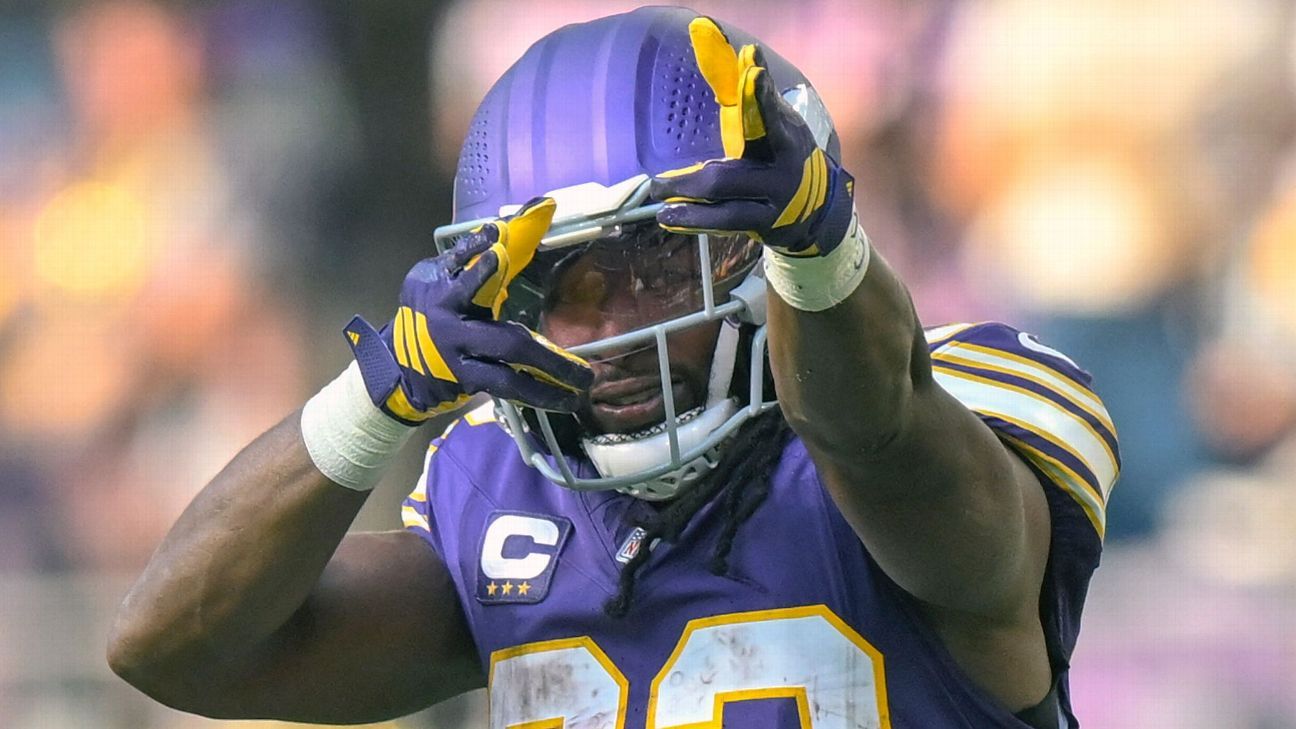
Aaron Jones carried the Vikings' offense to a 9-3 win over Chicago on Sunday with 23 rushing attempts for 105 yards, a workload that left him nursing a knee injury and finishing the game in a brace. Minnesota held him out of Wednesday practice as part of a conservative management plan, leaving his Sunday status against Tampa Bay genuinely uncertain heading into the week. The timing is brutal: backup Jordan Mason remains sidelined from a thumb fracture suffered two weeks prior, and the only other running back on the original roster—rookie Demond Claiborne—remains largely untested, having recorded just two snaps through two games.
The Vikings' immediate response was to audition depth: DeeJay Dallas was promoted to the active roster last week and carried twice for 8 yards against Chicago, while Jerome Ford and Jaret Patterson sit on the practice squad pending deployment. This is a backfield operating on fumes, rotating warm bodies as insurance rather than executing a coherent game plan. Coach Kevin O'Connell stated Jones "feels pretty good" but offered no clarity on his availability, a classic hedge that usually signals 50-50 status heading into game day.
Tampa Bay's run defense ranks among the league's most efficient, allowing 3.8 yards per carry through two weeks. The Buccaneers excel at gap integrity and load-box efficiency—precisely the conditions that punish a backfield without its lead horse. If Jones plays, he'll be managing a knee injury on short rest against a unit designed to clamp down inside the numbers. If he doesn't, the Vikings hand offensive touches to a committee that has proven incapable of moving the ball on the ground, forcing Carson Wentz into volume passing that Tampa Bay's secondary, while not elite, can challenge at reasonable volumes.
For prop bettors, the mechanism is straightforward: Jones' rushing volume sits at 18.5 carries per game over two weeks, but that 23-carry outburst against a Chicago front that lacked edge pressure will not repeat against Tampa's defensive design. A healthy Jones in a limited role likely sees 14-16 carries; if Claiborne or Dallas earn significant snaps, that ceiling drops to 12. More critically, the uncertainty itself creates a line-setting problem: books must account for the injury-status X-factor without knowing the final decision until close to kickoff. Early money that assumes full availability will be exposed if Jones is ruled out Wednesday night.
The play is to fade rushing volume props for any Vikings back, particularly over 14.5 carries. This isn't a regression bet rooted in statistical mean-reversion—it's a structural bet on defensive matchup and offensive necessity. Tampa Bay will stack the box and dare Wentz to pass; Minnesota will oblige, redistributing touches toward Claiborne in space and shortening the game plan. Additionally, lean under on Vikings team rushing yards at any number over 95, since the committee approach guarantees inconsistent pounding and the Buccaneers punish inefficient inside runs. The edge exists because the market will weight Jones' 23-carry game more heavily than the constraint of facing a top-flight run defense without a secondary ball-carrier.