Smith-Njigba and Lamb Emerge; Robinson and Jefferson Hit Reality Check in Week 2
By Erik Schwartz ·
Two receivers validated early draft conviction while two consensus studs posted duds—what the Week 2 splits tell you about which trends persist and which are noise.
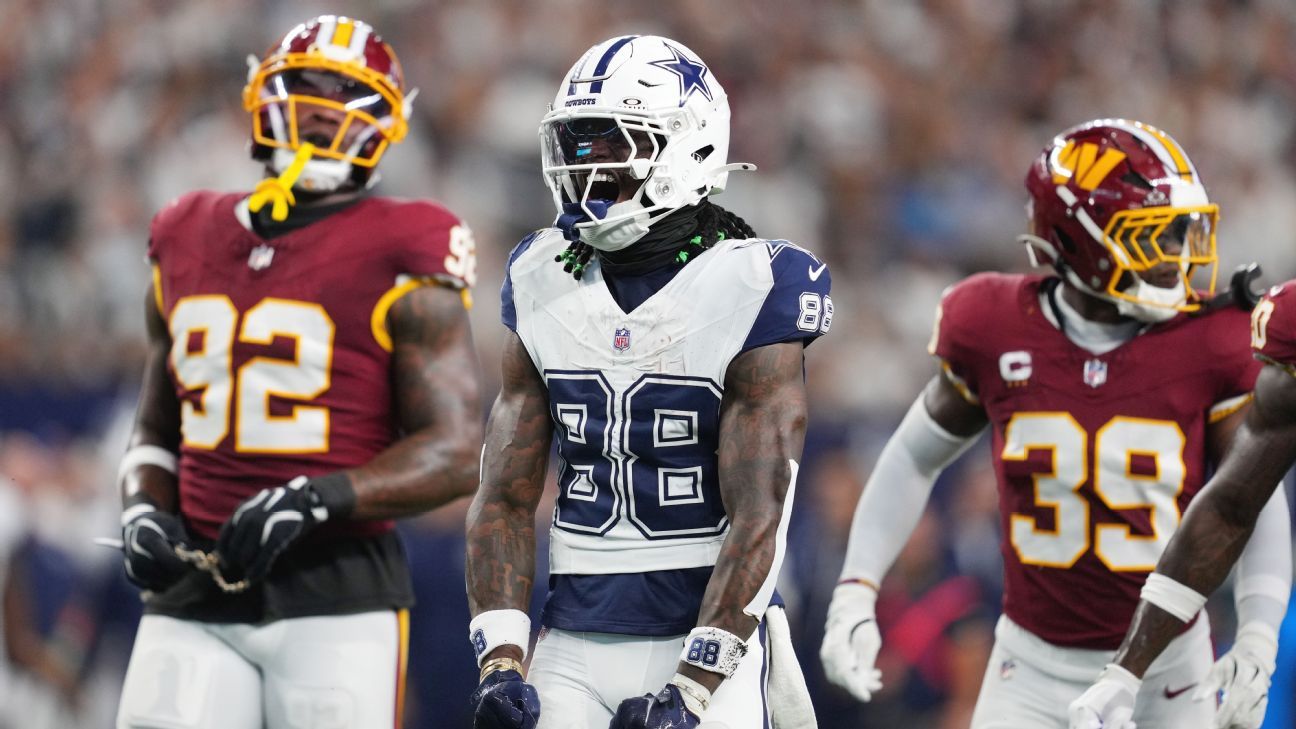
Jaxon Smith-Njigba and CeeDee Lamb posted the kind of Week 2 performances that vindicate draft capital. Smith-Njigba's breakthrough game—the one that follows a full offseason to build timing with his quarterback—signals the Seahawks offense is feeding him the volume he was drafted to command. Lamb's 153 receiving yards and two touchdowns against Washington wasn't a fluke; it was evidence the Cowboys are running the offense through him as designed, even when defenses key on his routes. Both players entered this season with uncertainty pricing in their first few weeks. That uncertainty is evaporating.
Meanwhile, Bijan Robinson and Justin Jefferson posted quiet outings that forced fantasy managers to confront a harder question: are these single-week aberrations, or early signals of a broader shift in role or usage? Robinson's struggles in Week 2 came in a Falcons offense that may be distributing touches differently than preseason projections suggested. Jefferson's quiet day for the Vikings demands scrutiny—not panic, but pattern-watching. One down week from a star receiver often corrects itself; two consecutive weeks of suppressed target share or yards on consistent opportunity would reshape the narrative.
The prop markets haven't fully recalibrated. Smith-Njigba's receiving yards line likely remains sticky at preseason projections despite his Week 2 floor demonstration; bookmakers often lag behind the fantasy community in repricing breakout performances. Robinson's rushing and receiving totals may still carry preseason volume assumptions that don't reflect early-season usage trends. Jefferson's line could be propped up by name value and season-long expectations, not current weekly role. This is where the gap between fantasy narrative and betting-line reality opens widest—the books are slower to move off preseason constructs than fantasy managers are to retract their draft thesis.
For bettors, the angle isn't about riding euphoria on Smith-Njigba or panic-fading Robinson; it's about detecting which performance is durable and which is noise. Smith-Njigba's Week 2 game came in a specific context: Seahawks have no other proven receiving threat at his pedigree, and they drafted him to be their centerpiece. That structural role should support over-target lines as long as he stays healthy. Robinson's quiet week, by contrast, could be a scheduling fluke or a true indicator of reduced carries—a one-game sample isn't enough to prove the Falcons have shifted philosophy, but it should trigger a hold on Robinson totals until Week 3 clarifies whether the dip was situational or systemic.
Jefferson's case is the most dangerous for bettors. Name-brand receivers who post consecutive quiet weeks often see their lines move slower than the underlying opportunity warrants, because sportsbooks price for season-long expectation, not rolling weekly trend. If Jefferson's target share stays depressed in Week 3, his receiving yards line will finally adjust—but by then, the early-week value will be gone. The smart money isn't betting on Jefferson bounce-back yet; it's watching for confirmation that his Week 2 was a one-off before the market moves.