NFL · transaction
Trade Deadline Speculation Heats Up Early: Which Star Names Could Move Before November 10?
With five weeks until the NFL trade deadline, executive chatter already suggests Cardinals stars and underperforming teams may reshape their rosters mid-season.
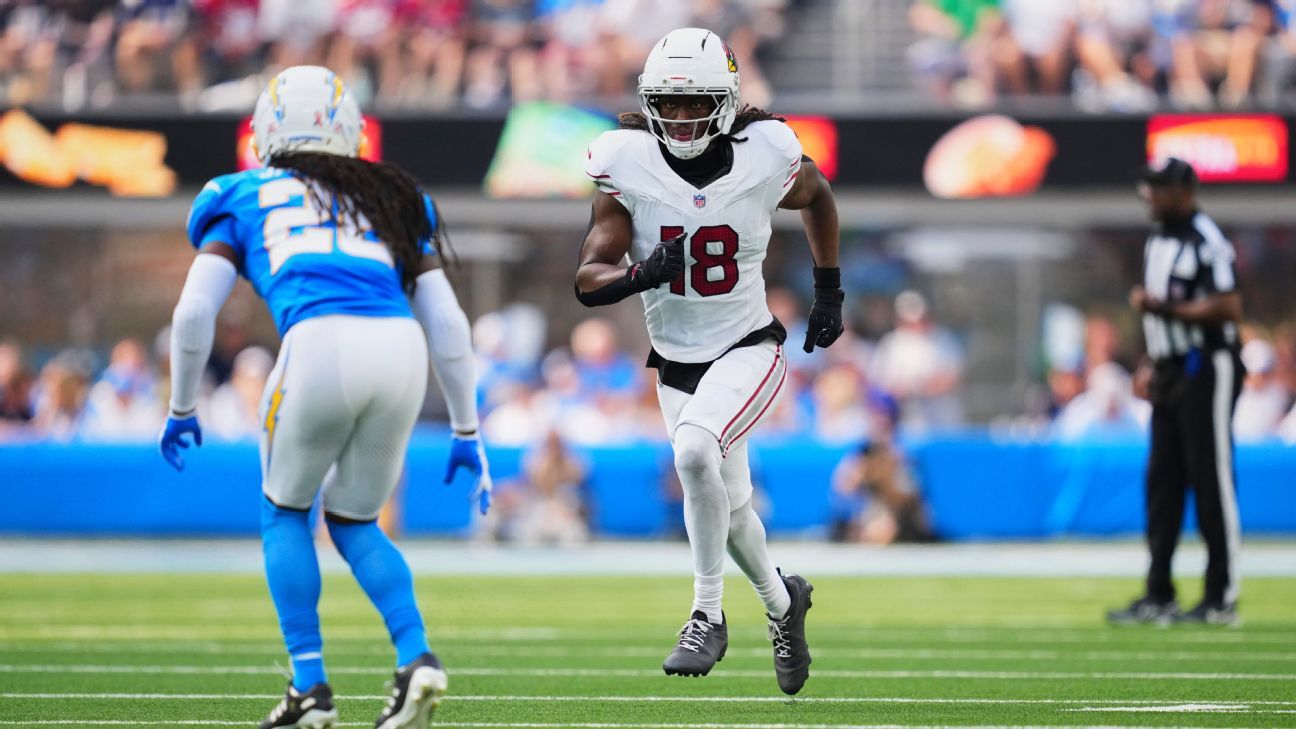
The NFL trade deadline lands November 10, roughly five and a half weeks away, but the rumor mill is already churning at full capacity. Two trades have already moved this week alone—the Vikings, Giants, Steelers and Cowboys have signaled they're willing to be active—which means front offices view the deadline not as a distant planning exercise but as a live negotiating window. ESPN's reporting on early trade deadline conversations reveals a market in motion: teams assessing whether to buy, sell, or stand pat based on their early-season performance and roster construction.
Arizona's situation looms largest in early speculation. The Cardinals possess high-end talent that could be attractive in a trade market, including pass rushers and receiving options, yet remain in a holding pattern as the midseason checkpoint approaches. Teams monitoring upgrades at the deadline will be watching Arizona's record through Week 9 closely—contenders holding cap room or draft capital may come calling if Arizona signals openness. The same calculus applies to underperforming clubs: if the Chargers or Raiders continue to struggle, sell-mode trading becomes more likely; if they stay competitive, they'll hold. The uncertainty itself creates pricing inefficiency in player prop markets.
For bettors, this early-deadline chatter introduces a structural noise factor. When trades materialize mid-season, target volumes shift, offensive schemes adjust, and backup talent suddenly sees expanded playing time. A star player moved from a pass-heavy offense to a run-first scheme, or vice versa, experiences an immediate prop environment shock. Similarly, a borderline starter thrust into starting role duties due to a mid-season acquisition can see target and carry allocation spike 15-20% within one game of the trade. Teams acquiring deadline pieces typically deploy them gradually in Week 1-2 post-trade, then ramp usage to full leverage by Week 3-4 of the new assignment.
The betting angle here is layered. First, avoid heavy exposure to high-volume receiver or pass-catcher props for names rumored to be movable in the next five weeks—volatility is elevated and props tied to offensive system become unreliable midstream. Second, watch for teams acquiring complementary talent: if a contender trading for a second receiver or edge rusher immediately creates volume shifts for existing stars on that roster. A deep threat arriving can increase dump-down targets and screen-pass work for slot receivers, which can lower aDOT but maintain or increase receptions. Third, trades typically trigger 48-72 hours of market repricing before consensus settles. An early mover catching a player's prop line before the deadline news cycle may exploit mispricing on both ends—undershooting for sellers heading out of town, overshooting for new-team entrants before minutes settle.
The fact that multiple clubs are already active reinforces that 2026's deadline will be more fluid than typical midseason windows. Teams aren't waiting for desperation to force movement; front offices are proactive. For prop-betting purposes, this means elevated caution on mid-range prop bets for any name attached to trade speculation between now and November 10. Ownership stakes and snap counts are too unstable. Look instead for plays on established depth players and backup receivers who are unlikely movers—their prop lines remain predictable as the trade churn unfolds around them.
NFL Intelligence — Football intelligence beyond the final score. Open NFL Intelligence →