NFL
Week 4 Matchup Tiers: Warren and McMillan Emerge as Upgrade Targets
ESPN's schedule-adjusted defense rankings expose soft coverage in Week 4, creating clear separation between start-sit decisions at skill positions.
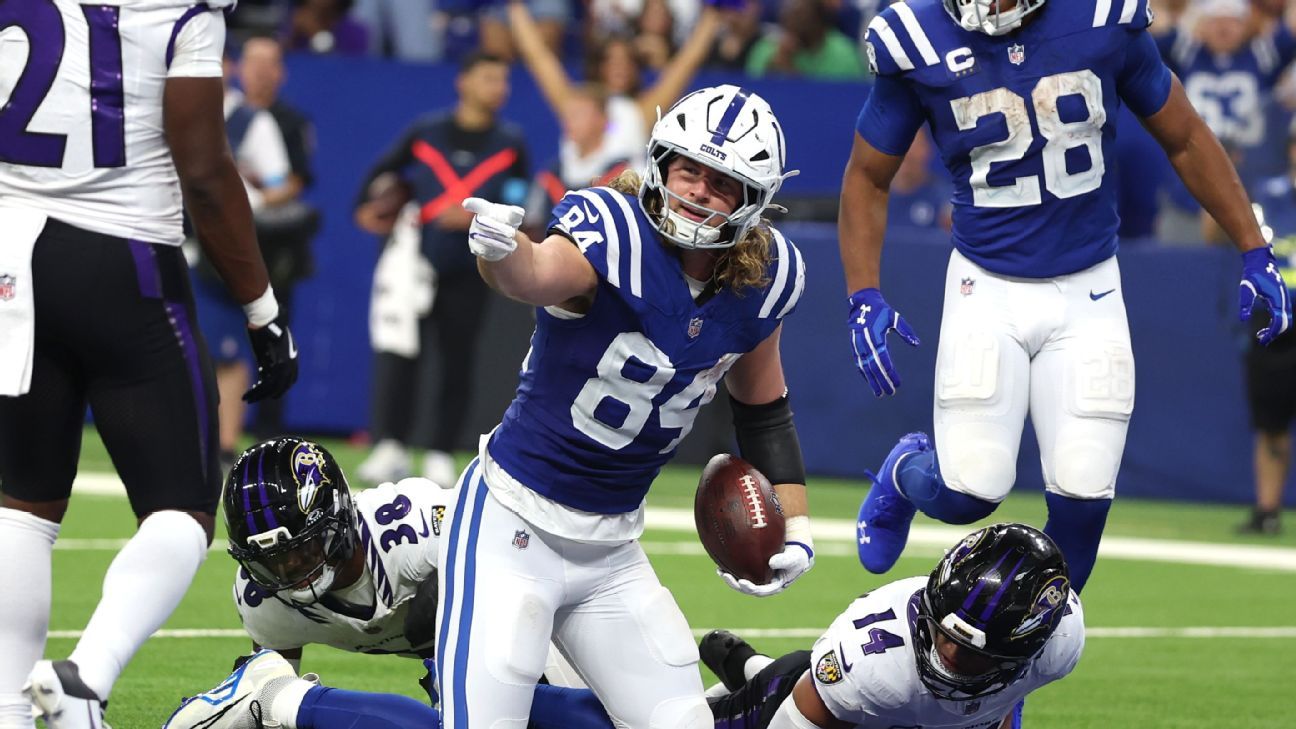
Week 4 fantasy matchups present a crucial test: which players benefit from defensive vulnerability, and which face stiffened coverage despite season-long production? ESPN's matchup rankings methodology ditches raw seasonal totals and instead calibrates points-allowed data against schedule difficulty, isolating defenses that have genuinely underperformed relative to opponent strength. Tyler Warren and Tetairoa McMillan surface as the week's clearest upgrade targets, signaling that their respective defenses present measurable gaps in coverage.
The framework driving these rankings operates on "Adjusted Fantasy Points Allowed" (Adj. FPA), a metric that quantifies how far above or below a defense's weekly opponent average a given unit has allowed points. A positive number signals a favorable matchup; negative indicates unfavorable terrain. Through Week 3, teams can exploit defenses that have faced relatively strong schedules and still surrendered fantasy volume. This schedule-adjusted lens is critical because raw defensive rankings obscure the difference between a unit that's been pounded by elite offenses (and thus appears weak) versus one genuinely incapable of coverage assignment.
Jared Goff exemplifies the opportunity set available to disciplined Week 4 lineups. The Detroit quarterback has produced at least 16 fantasy points in all three contests to date without forcing an interception—a stability profile that separates him from peers. His Panthers matchup represents the intersection of Goff's reliability and Carolina's documented coverage vulnerability. The Panthers defense has yielded consistent fantasy scoring despite facing a schedule that should have compressed their opponent totals, meaning the matchup advantage is durable rather than circumstantial.
For bettors tracking player prop efficiency, the matchup tiers expose where Vegas pricing may lag adjustment. Warren's elevation reflects tight-end coverage struggles by his opposing defense; McMillan's emergence signals receiver availability at the position level. When a defense ranks in the bottom quartile for adjusted points allowed at a specific position over three weeks of relatively normalized schedule difficulty, that's not noise—it's a structural weakness that persists into Week 4. The market prices individual player seasonality, but matchup-adjusted data captures deficiency at the unit level. A player like Goff facing a Panthers secondary that has underperformed its schedule context carries higher ceiling probability than the seasonal variance alone suggests.
The caveat matters: favorable matchups are necessary but not sufficient for fantasy success. Game flow, snap distribution, and in-game script volatility still govern outcomes. But matchup tiers function as a tiebreaker when players are otherwise similar in seasonality and role. Warren and McMillan aren't recommended because of one-week variance; they're elevated because their opposing defenses have systematically failed to cover their position group relative to the strength of the schedules they've faced. That structural signal persists until it's broken.
NFL Intelligence — Football intelligence beyond the final score. Open NFL Intelligence →