NFL · transaction
Tony Pollard Trade Winds: Why Tennessee's Running Back Is on the Block Again
A year after drawing deadline interest, Pollard's expensive contract and middling role make him a logical seller's asset—and a potential rushing prop anchor elsewhere.
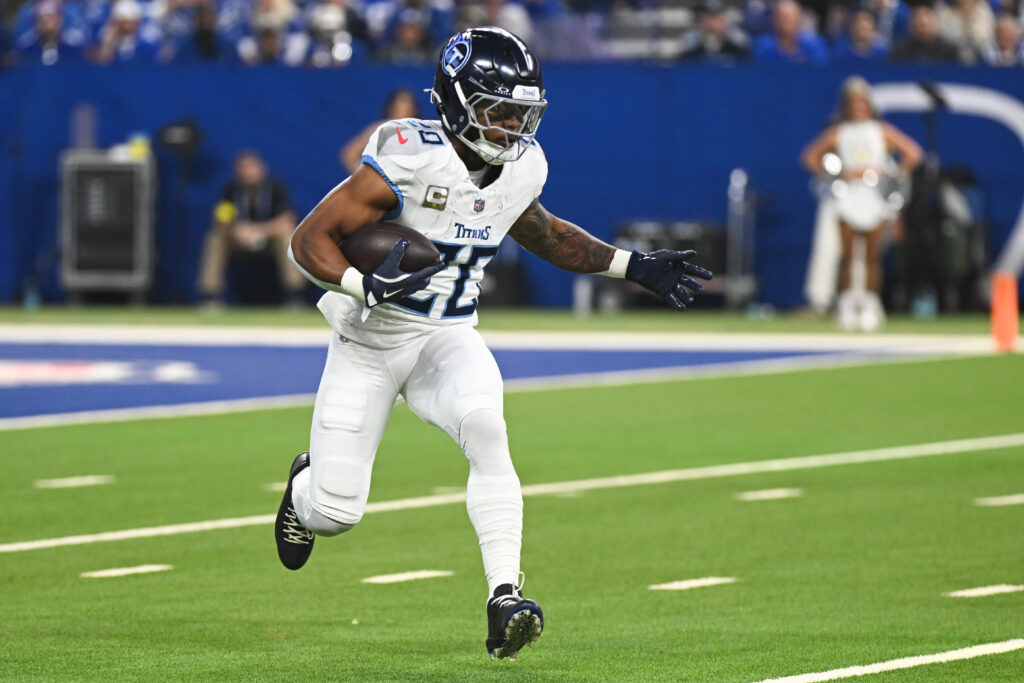
Tony Pollard is back in trade speculation territory. Per ESPN's Dan Graziano, the Titans running back has re-emerged as an in-season trade candidate heading into the 2026 deadline, mirroring the interest that surrounded him last October when Tennessee first entertained offers. That cycle repeating itself—within a calendar year—signals something more systemic than market fluctuation: a mismatch between Pollard's contract economics and his role in Tennessee's offense.
Pollard arrived in Nashville in 2025 as a premium free-agent acquisition, but the Titans have not deployed him as a featured back. His touch volume and pass-game involvement have remained modest relative to the capital the team invested. For a running back north of 30 years old on a deal with guaranteed money, that underutilization becomes a liability fast—especially when the cap sheet reflects a starter's salary. A contender looking to add depth at the position before the deadline could acquire Pollard at a discount, banking on a change of scenery and a higher workload to recapture production.
The betting lens here is straightforward: Pollard's current rushing and receiving prop lines at Tennessee are priced for his existing role—likely conservative touch counts and red-zone touch scarcity. If he moves to a team with a clearer rushing hierarchy or injury depth, his per-game workload could spike immediately. A team like Green Bay, if seeking veteran insurance at running back, would hand Pollard 12-15 touches per contest in a West Coast scheme friendly to underneath passing. His receiving yards prop, in particular, could offer value in the window between a trade announcement and the market's repricing of his new opportunity.
The timing matters. The deadline falls in November; any trade would land mid-season when offensive chemistry is harder to build but when roles are defined by injury or performance. Pollard's first two games with a new team would likely see inflated snap counts as a stopgap. That volatility—high variance per-game outcomes before stabilization—creates mispricing windows on player props that the sportsbooks won't fully adjust until the third or fourth game in his new uniform. Early action on Pollard rushing or receiving totals with a new team should be treated as a short-term angle, not a multi-week hold.
NFL Intelligence — Football intelligence beyond the final score. Open NFL Intelligence →