Cowboys Kicking Tires on White as Backfield Insurance—Signal or Noise?
By Justin Erickson ·
Three months into free agency with no deal, Zamir White's market value has cratered; Dallas's workout suggests either desperation or due diligence on a discount signing.
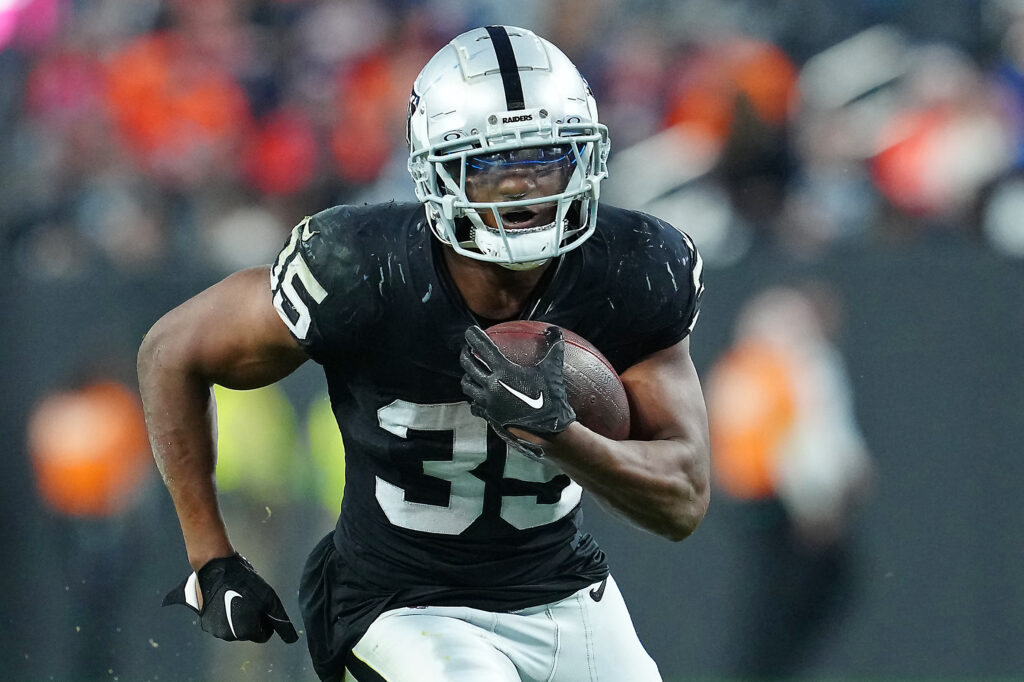
The Cowboys hosted free agent running back Zamir White for a workout this week, per ESPN's reporting, as Dallas explores upgrades at the position. White, cut by the Raiders during the offseason, has now been on the market since March—a fifteen-week void that tells its own story about his standing in the league. The Dolphins already kicked the tires on him in late May; the Cowboys' audition follows the same pattern: low-cost reconnaissance on a once-promising back whose tape no longer commands premium attention.
White entered the league as a fourth-round prospect with Raiders' pedigree and rushing upside. He logged 1,094 yards on 247 carries in 2024, a respectable 4.4-yard average, but failed to lock down the primary back role in Las Vegas. The organization's decision to move on—rather than retain him on a cost-controlled deal—is instructive. Teams don't release productive backs to the free market in March unless they've identified a cheaper or more versatile replacement. White's absence from a deal for three-plus months, even as training camp approaches, suggests the broader market agrees: he's depth material, not a featured weapon.
Dallas's backfield is already crowded with Tony Pollard commanding carries and the organization committed to power-run concepts under their current scheme. A White workout doesn't signal an incoming depth chart reset; it signals Dallas is shopping for league-minimum or near-minimum reserve insurance. If White lands with the Cowboys, he enters as a backup/change-of-pace option with minimal guarantee of early-season volume. The same applies to any team that signs him in the next two weeks.
For prop purposes, White's signing—if it happens—matters primarily for team-total and rushing-yards market context rather than individual player props. A Cowboys signing adds marginal rushing-attempt inflation to Dallas's game totals, but only if injuries force his hand into meaningful snaps. Pollard's workload ceiling remains unchanged. The presence of a White signing on Dallas's depth chart is a ceiling-lowering move for Pollard's rushing-TD upside (additional goal-line vulture potential), though Pollard's touches won't materially contract. Monitor Pollard's TD line in the weeks after any White signing; books may shade it tighter on concern of split opportunities, but the mechanical edge is small—Pollard's outside role and receiving work keep him insulated from a backup's scoring upside.