Pollard's Discipline Edge: Why the Titans Back's Offseason Work Matters for 2026 Rushing Props
By Ty Whitney ·
At 29, Tony Pollard is defying the typical running back decline curve through deliberate maintenance—and a new coach who saw him torch his defense up close.
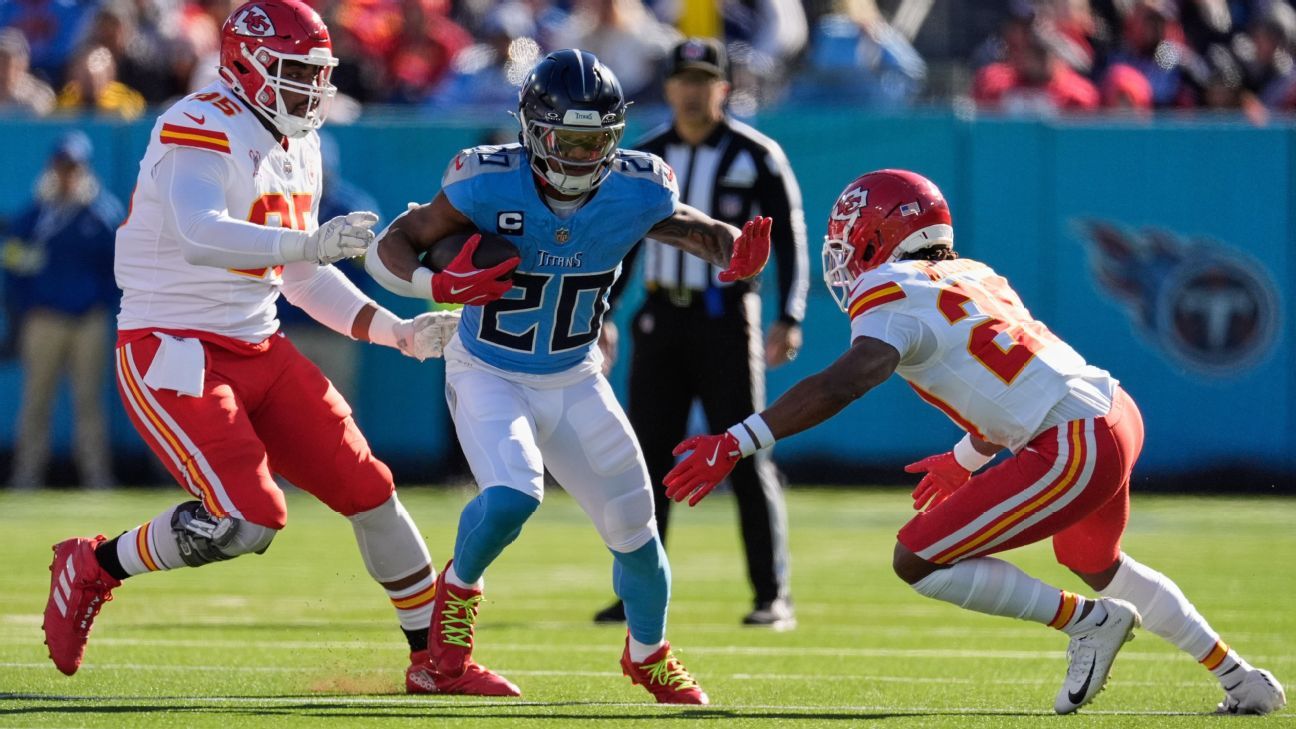
Tony Pollard turned 29 in April 2026, a threshold that typically signals the beginning of the end for NFL running backs. Yet the Tennessee Titans' veteran isn't operating in panic mode. Instead, Pollard has engineered an unusual offseason approach: minimal downtime, sustained conditioning, and elimination of the traditional post-season shedding-and-rebuilding cycle. The message is direct—he's not ceding ground to age, and he's certainly not intimidated by the noise around Jeremiyah Love, the Notre Dame prospect the Cardinals plucked one pick ahead of Tennessee in this year's draft.
What makes Pollard's situation unique is his landing with Robert Saleh, a coach who carries firsthand film study of his running style. Last season, when Saleh was San Francisco's defensive coordinator, Pollard raced for 104 yards on 14 carries in Week 15 against the 49ers. Saleh told him after the game he was a "helluva player"—a compliment that now carries operational weight. Saleh's public assessment isn't nostalgia; it's rooted in biomechanics. "Every single step he takes is deliberate in terms of the pad level, the hand placement, the eyes to make sure that he's executing at a high level," Saleh said this offseason. That precision is why Pollard has now reached 1,000 rushing yards in four consecutive seasons, a club that includes only Baltimore's Derrick Henry. The durability isn't accidental.
From a prop-betting lens, Pollard's aging curve enters an outlier window. Most backs experience measurable regression between ages 29 and 31—declining yards per carry, fewer rushing touchdowns, reduced workload. Pollard's four straight 1,000-yard seasons suggest he's already outpaced the statistical norm. But the mechanism driving that consistency—his deliberate technique and Saleh's system familiarity—is persistent. If Saleh's offense keeps Pollard between 260 and 290 rushing attempts (roughly league-average for a featured back), and Pollard maintains his career 4.1 yards per carry average, he'll land near 1,070-1,190 yards. The market, however, likely prices in age-based discount. Books will shade his 1,000-yard over as a slight underdog despite four straight seasons clearing that threshold, and his season rushing yards total may carry higher juice to the under side than a pure talent evaluation would support.
The leverage point: Pollard's conditioning discipline and Saleh's coaching specificity mitigate the usual age discount. If he receives 270+ attempts, the over on his season rushing yards total sits at fair to plus value. The same logic applies to his game-log props—expect lower lines against weaker run defenses early in the season before market correction. Saleh's play-calling track record suggests heavy rushing volume when the 49ers controlled games, a pattern Tennessee will likely mirror. The edge fades if Tennessee pivots to a pass-heavy system or if injury limits Pollard's availability, but as currently constructed, the Titans' investment in him and Saleh's demonstrated respect create a durable, mechanic-driven angle that survives line movement across the season.