NFL
Henry Returns to Tennessee With a 30-Month Edge: Why the Ravens' Star May Run Wild Against His Former Team
Derrick Henry faces the Titans for the first time since leaving in free agency 2.5 years ago—and the statistical gulf between his Baltimore production and Tennessee's backfield suggests a profitable rushing angle.
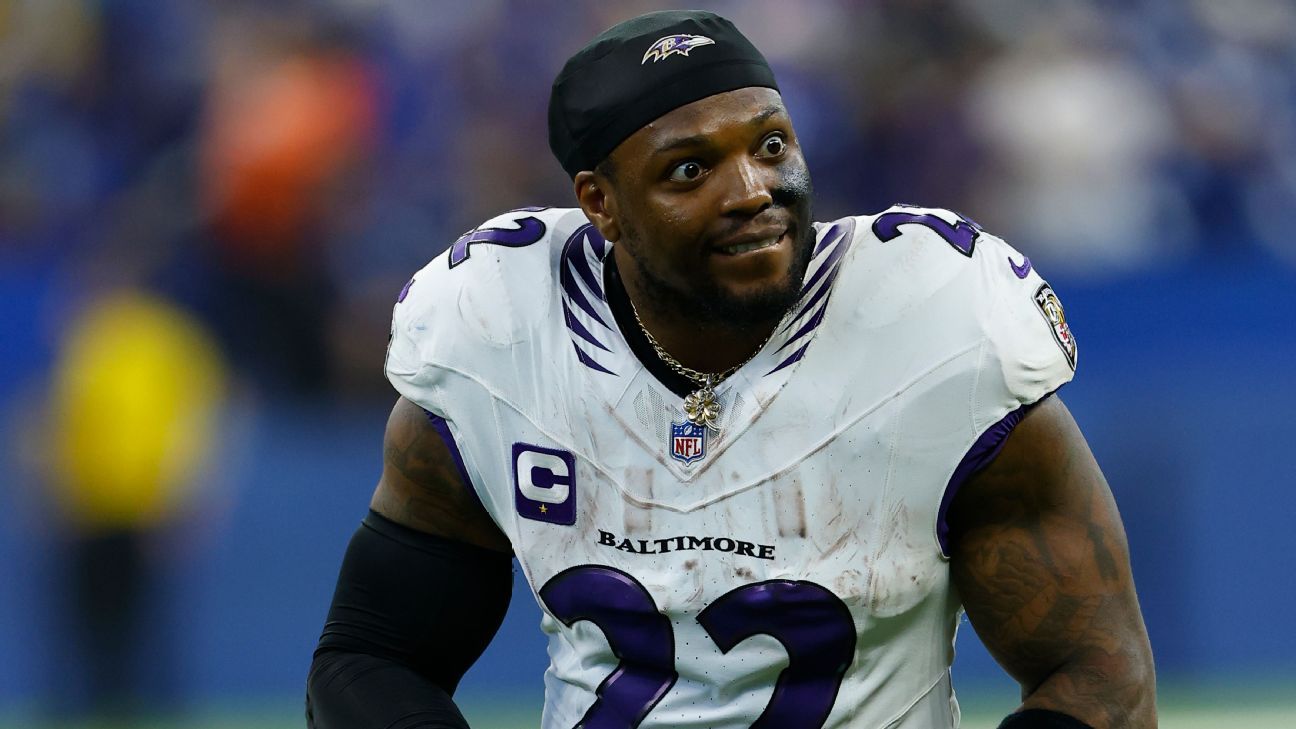
Derrick Henry will suit up against Tennessee on Sunday for the first time since the Titans declined to retain him in free agency before the 2024 season. The Ravens running back has spent the last 30 months establishing himself as the NFL's most efficient ground threat, posting 3,817 rushing yards and 38 touchdowns since joining Baltimore on a two-year, $16 million deal—both league-leading marks over that span. The Titans, by contrast, replaced him with Tony Pollard, who has managed 2,334 yards and 10 touchdowns in the same window. That's not a coincidence; it's an operational referendum on Henry's market value versus what Tennessee chose to pay.
The narrative around this game centers on sentiment and history. Henry won two rushing titles in Tennessee (2019, 2020), claimed Offensive Player of the Year honors in 2020, and departed as the franchise's second all-time leading rusher behind Eddie George alone. He's downplaying the reunion—"always love" for the Titans, he said Wednesday, but "not much love on Sunday"—yet the emotional throughline obscures the structural reality. Tennessee made no attempt to keep him. The Titans' front office saw the economics of the situation and chose youth and cap flexibility over proven production. Henry knew where he wanted to be and found it in Baltimore.
From a defensive standpoint, the Titans' run-stopping has eroded without Henry's presence as a focal point of their identity. Tennessee's defense has had to adjust schemes and personnel around a smaller, more lateral backfield, whereas Baltimore's offense has been built around Henry as a downhill finisher. This Sunday, Henry enters a stadium he dominated for eight years against a team that doesn't have the same defensive anchor or organizational confidence in stopping him. The Titans' defensive tackles, including former teammate Jeffery Simmons, are aware of the threat—Simmons' comment about "hit his ass" reflects resignation more than tactical optimism.
The prop angle threads directly through Henry's 30-month production gradient. He's averaging 5.3 yards per carry since joining Baltimore, a 0.9-yard-per-carry premium over his eight-year Titans average (4.4 YPC), driven by both scheme fit and the Ravens' commitment to heavy run packages that put him in position to accumulate. Tennessee's run defense ranks 22nd in the league this season in yards allowed per attempt. Henry's receiving workload has also expanded in Baltimore—he's caught 117 passes over two seasons versus 65 in his entire Titans tenure, signaling a tactical evolution that keeps him on the field in more offensive situations. The Titans are not built to contain him across multiple vectors.
Lean Henry's rushing yards over 100.5 and his receiving yards over 32.5 combined. The market may price in nostalgia and emotional narrative; the actual metric—a 30-month-old talent gap reinforced by scheme advantage and Tennessee's defensive limitations—does not. This edge persists because it's rooted in stable organizational choices and structural mismatch, not a single outlier performance.
NFL Intelligence — Football intelligence beyond the final score. Open NFL Intelligence →