NFL · discipline
Three Weeks In, the NFL's Best Quarterbacks Are Separating Fast
Brock Purdy's efficiency and the Steelers' offensive revival signal which teams built real depth and which ones got lucky in Week 3.
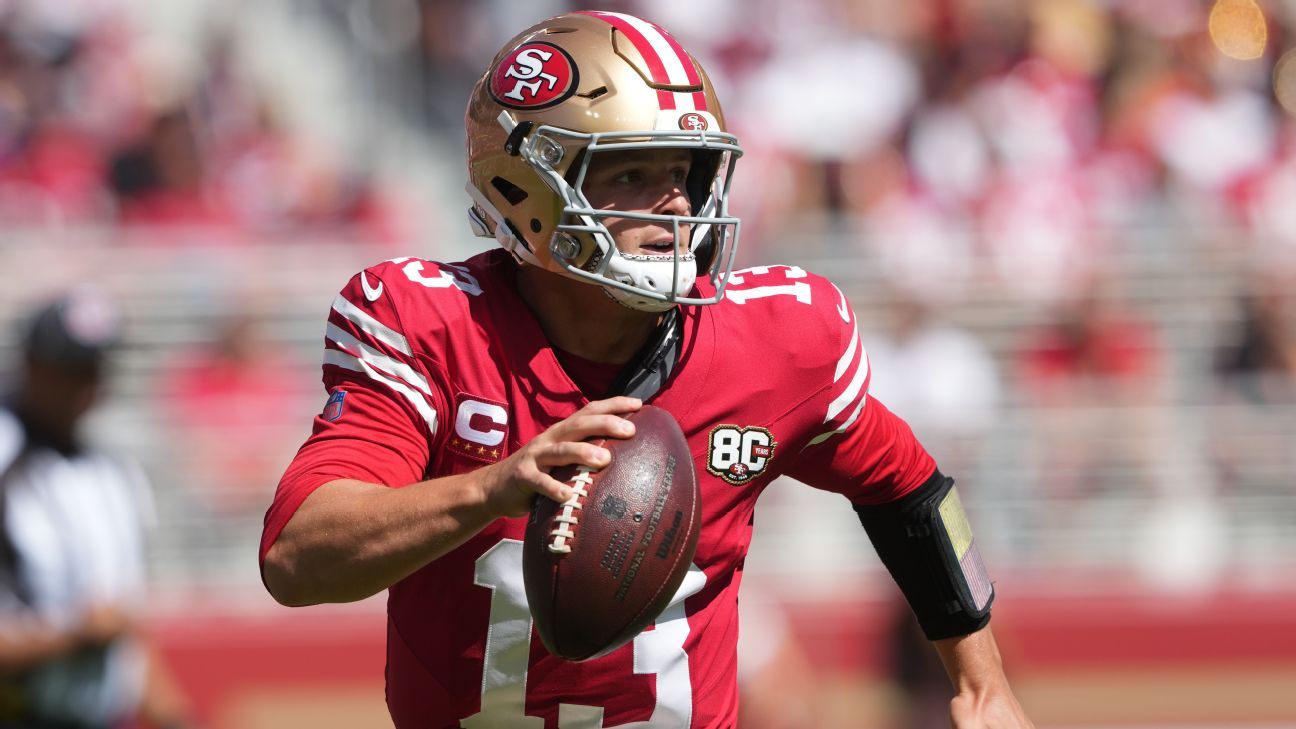
Three weeks into the 2026 season, the NFL's early signal-to-noise ratio is still terrible—and that's fine. The Seahawks lost to Marcus Mariota and the Commanders. The Bills turned it over five times and won anyway. The Steelers ran 411 yards of offense against what looked like the league's most revamped defense. The Browns sit at 2-1. The Chargers and Texans remain winless. In a season this volatile, the only reliable read is quarterback play, and Brock Purdy is making a clear statement.
Purdy has completed 72.3% of his passes for 263 yards per game, with nine touchdowns and one interception through three weeks. He's added 93 rushing yards and a score on 10 carries. The 49ers' receiving corps has been ravaged by injury, yet Purdy is still dicing defenses without hesitation. San Francisco opened 3-0 with division wins, including the Week 1 statement victory in Australia against the Rams. For a player selected dead last in the 2022 draft, this efficiency profile—across both arm and legs, against competitive corners—isn't a hot take. It's a credible MVP case.
The longer angle here traces to offensive architecture. Purdy's success isn't random; it reflects the 49ers' investment in scheme redundancy. When receivers go down, the offense pivots to underneath routes and run-pass options that don't require a Hall of Famer on the perimeter. The Steelers' 411-yard performance against Cincinnati reveals a similar structural advantage—Todd Monken's offensive design is working, and it's built to survive without any single dependent variable. That's the opposite of a team getting lucky. Teams that win games without their best players are teams that built for that scenario. Teams that collapse without one piece were never as good as their record suggested.
For prop bettors, the implication is direct: quarterback efficiency lines and team totals for San Francisco and Pittsburgh should tighten significantly over the next two weeks. The market, operating on three-game samples, is still pricing Week 3 as noise. Purdy's passing-yards total (currently in the low 260s range for upcoming matchups) reflects his season average, not his true capability when the 49ers' complementary weapons return. When Calvin Ridley and other injured receivers come back, those defenses will be forced into tighter coverage, opening intermediate-range passing lanes that have already shown up at 72%+ completion rates. The Steelers' team total sits too low relative to an offense that just proved it can move the ball at will against a top-five defense.
This isn't regression positioning—it's structural arbitrage. The public sees three-week PDFs and assumes regression. Sharp books see sustainable design and price accordingly. The 49ers and Steelers have telegraphed their competitive advantage through execution, not luck. Early-season overreactions cut both ways; the market is underpricing durability when it should be hunting for it.
NFL Intelligence — Football intelligence beyond the final score. Open NFL Intelligence →