The QB Streaming Blueprint: Why Late-Round Pairs Beat Early Josh Allen
By PropBetEdge Editorial Team ·
Wait on quarterback in fantasy drafts, then roster two mid-tier options with complementary schedules to match Josh Allen's floor without burning a premium pick.
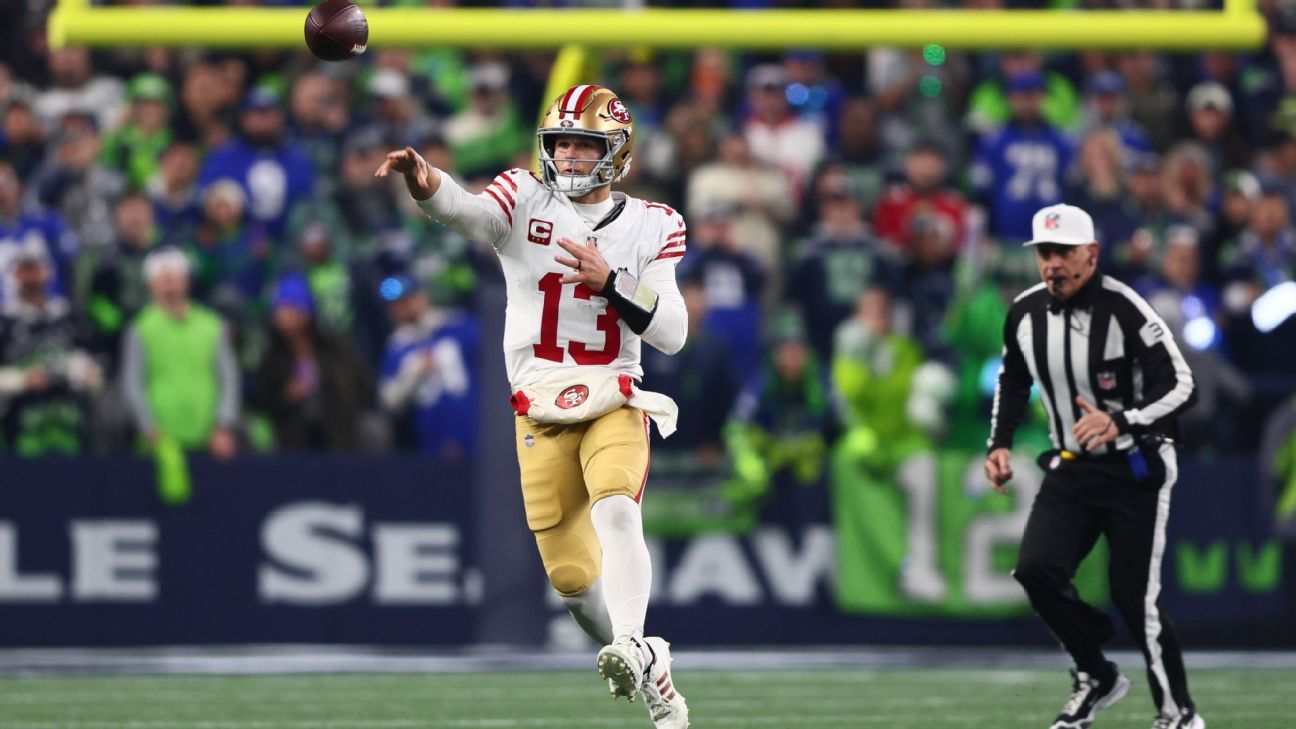
The fantasy football orthodoxy says take your franchise quarterback early. Josh Allen in Round 2 remains the temptation—he's been the safest path to a top-12 finish at the position for years. But as ESPN's draft analysis framework shows, this year's quarterback class is deep enough that the value argument collapses once you account for draft capital and positional scarcity. Allen, Jalen Hurts, Patrick Mahomes, and the next tier of first-round quarterbacks will return solid scoring, but not enough to justify forgoing elite running backs and wide receivers when the position has legitimate productive depth beyond the top seven names.
The mechanic is straightforward: quarterback is the only position where you start just one player per week, yet you can roster multiple. Traditional draft strategy treats this as a luxury (handcuff your guy, grab a backup). The pairing approach inverts that logic—it treats dual-quarterback rosters as a feature, not an accident. Pick two mid-tier options in Rounds 8 and 10 whose schedule breaks favorably at different points in the season, then stream the matchup that gives you better odds each week. A quarterback facing a below-average pass defense in Week 4 gets the start over his league-mate who draws an elite secondary, regardless of tier. The NFL schedule released weeks ago, and complementary pairings exist: one quarterback with front-loaded favorable matchups, the other with strength in mid-to-late season. Brock Purdy has established himself as a consistent value target in this tier—he's produced top-12 QB scoring in two straight seasons despite going undrafted in many leagues, and the 49ers' NFC West schedule provides matchups the streaming approach can exploit.
What the market hasn't fully repriced is the compounding effect of this strategy against early-round QB picks. Allen owners break even or lose value when he faces elite defenses early; they're locked in by draft commitment. A dual-stream roster, by contrast, has no bad weeks—you simply bench the inferior matchup. Over 17 games, the gap between Allen's floor (top-5 QB in a bad week) and a streamed replacement (QB10 against a porous defense) is often 2-4 points. Over a full season, that flexibility compounds to 10-15 points of edge value. Karabell's actual draft data—where he consistently became the last drafter to secure a starting QB, then the first to add a second—suggests the market doesn't recognize that the second-pick-on-QB strategy has structural information advantage. Most league-mates don't plan dual streams; they panic and grab whoever's left when their turn comes. By planning the pairing in advance, you're solving a problem your league doesn't know exists yet.
For prop purposes, this reshapes quarterback projections. Purdy's passing yards and touchdown totals shift from "late-round lottery ticket" to "strategic core asset with favorable weeks identified." A Purdy passing yards over in Week 3 (when San Francisco faces a team allowing 265+ yards to the position) becomes actionable at different odds than the market prices him generally. The streaming logic doesn't change Purdy's season total, but it creates weekly variance bets where you know in advance which weeks he'll be deployed. The pairing strategy essentially manufactures a form of quarterback injury mitigation without the injury—you get the upside of a top-tier QB most weeks while retaining optionality. For DFS and weekly prop bettors, this single-week matchup lens is the real edge: identify which of your paired QBs gets the favorable matchup that week, then target his passing volume props aggressively. The league sees Josh Allen as the only answer; smart rosters see two different answers to two different schedule problems.