NFL
Deebo's 82-Yard Conversion: How Shanahan's Hook-and-Ladder Uncovers a Receiver Usage Edge
San Francisco's trick-play touchdown in Week 3 against Arizona reveals why Deebo Samuel's receiving volume is about to spike.
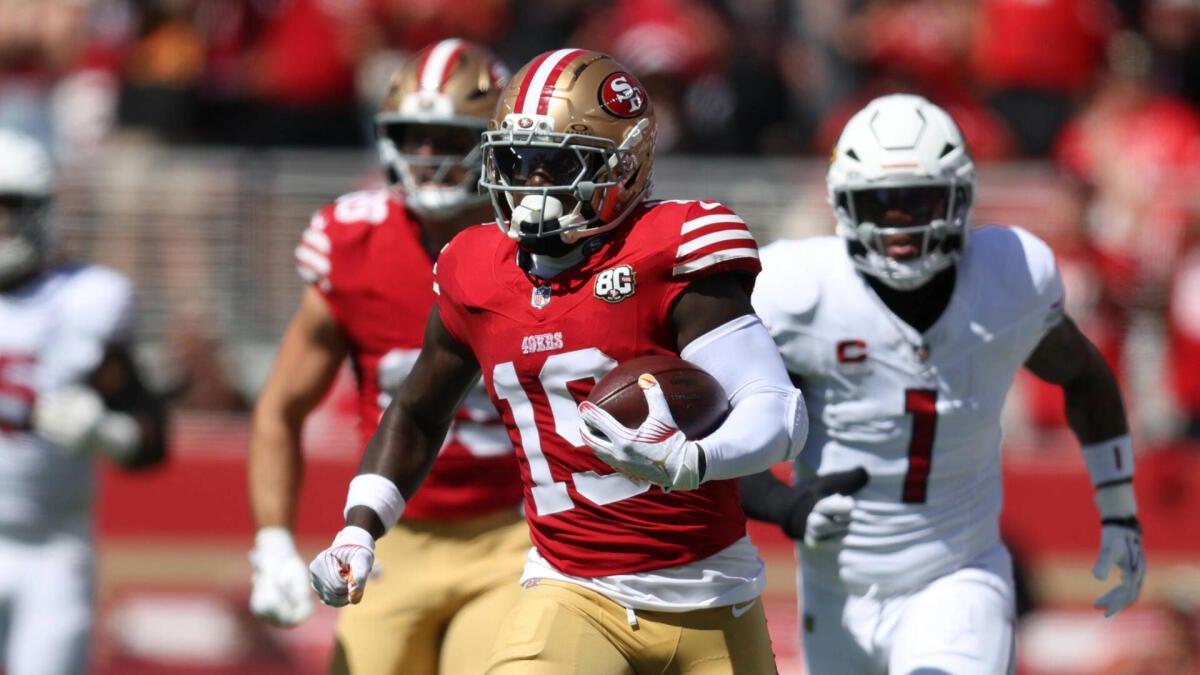
The San Francisco 49ers broke the seal against Arizona in Week 3 with an 82-yard hook-and-ladder touchdown featuring Deebo Samuel and Mike Evans. Operating from their own 18-yard line on third-and-12, Kyle Shanahan dialed up a quick slant to Evans, who lateraled to Samuel before hitting the turf. Samuel then accelerated past three Cardinals defenders and walked into the end zone untouched. The play worked because of precision timing and execution—but also because it exposed a design principle Shanahan has been building toward all season.
Samuel entered Week 3 with nine catches for 79 yards across the first two games, a pace that ranked him in the bottom third of 49ers receiver touches. That median output masked his actual role in the offense: Shanahan has been running him on motion plays and space-creation routes designed to generate leverage, not volume. The hook-and-ladder wasn't a one-off creativity—it was Shanahan's counter to defenses that have been stacking the box or pressing receivers at the line. When Samuel hits a crossing route against a defense in man coverage (Arizona's base tendency), his ability to separate at the catch point and accelerate downfield becomes the primary variable. The 82-yard bomb was the inevitable outcome of that spacing principle finally connecting against a secondary that couldn't adjust fast enough.
Evans, in his first season with San Francisco, has already absorbed nine targets through two games. His role as the first read on this play—the outlet that forces the defense to react—tells you how central Shanahan views him as an entry point into the playbook. But the flip to Samuel is the throughline. Samuel's yards-per-reception average (8.8 YPR through Week 2) sits comfortably above his career average, and that's before accounting for the explosive-play potential that the hook-and-ladder just weaponized. The Cardinals couldn't cover two receivers operating on the same side of the field simultaneously; against Cover 2 or Cover 4 looks, Samuel's next few weeks could feature more space-creation opportunities.
From a betting standpoint, this play accelerates the timeline on Samuel's receiving volume. Brock Purdy's target distribution has leaned heavily on Evans and Jauan Jennings early in the season, but the 82-yard TD is a signal that Shanahan is comfortable using Samuel as a decoy who converts into a ball-carrier. Over the next two weeks—before defenses add counters—expect Samuel's target share to climb. His 8.5-reception over for the season is no longer viable at current odds if Shanahan is targeting him in space-creation scenarios where one catch can flip into explosive gain. The hook-and-ladder works because defenses have to respect the lateral, which means coverage integrity fractures on the perimeter. Samuel's next three games offer a variance window where target-volume overs and reception overs represent genuine value before the line adjusts to Shanahan's new usage pattern.
NFL Intelligence — Football intelligence beyond the final score. Open NFL Intelligence →