NFL · injury
Jets' First-Round Gamble: Omar Cooper's Ankle Injury Reshapes Early-Season WR Depth
A Week 1 ankle sprain sidelines New York's prized receiver just as the offensive scheme was meant to feature him.
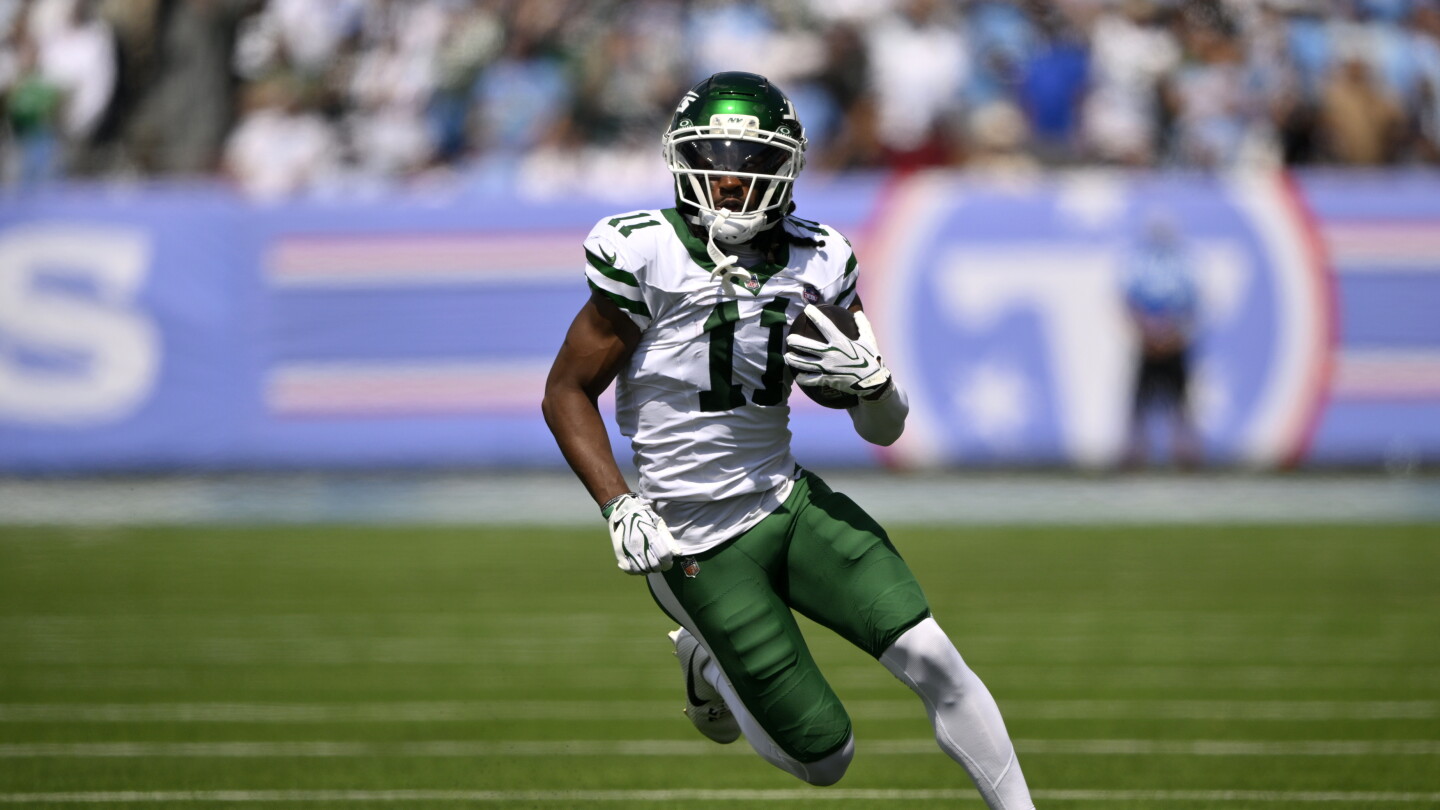
Omar Cooper, the Jets' first-round receiver selection, suffered an ankle sprain during New York's Week 1 victory over Tennessee and is now week-to-week, per NBC Sports. The injury timing is particularly costly: Cooper was drafted to function as a primary vertical threat in the offense, and his absence forces the Jets to recalibrate receiving targets and route distributions across the rest of the depth chart. With Week 2 now active (current date: September 15), Cooper faces an uncertain timeline for return in what should have been his runway to build chemistry with the quarterback.
The Jets' offensive design hinged on spreading defensive attention across multiple receiving levels, with Cooper's size and athleticism—attributes that justified first-round capital—meant to occupy defenses on the perimeter and in intermediate routes. That architectural advantage evaporates when the player isn't on the field. The team will lean more heavily on secondary receivers and tight ends to absorb target share, a dependency that typically depresses efficiency for role players asked to exceed their baseline responsibilities. Cooper was on pace for high snap counts and target volume; that workload now redistributes to unproven or less refined weapons.
From a prop perspective, this injury has immediate consequences for Jets team totals and passing-yard lines. The total offensive output should contract in Cooper's absence—not because the Jets are fundamentally weaker than their opening-week performance, but because their primary receiving talent is unavailable. This is distinct from a directional bet on the offense being poor; it's a structural reduction in capacity. Any line that hasn't yet adjusted for a full-roster understanding of Cooper's severity will offer value on the unders side of Jets totals, particularly in games within the next 2-3 weeks when backup receivers are forced into prominent roles. The passing-yards line for the starting quarterback should also see downward pressure once the market fully digests the depth-chart reality.
The durability of this angle depends on Cooper's actual return timeline. If he misses only Week 2 and returns for Week 3, the edge is narrow and single-event focused—take unders on the most immediate fixture, then fade the angle as reversion kicks in. If the ankle sprain is more severe and Cooper misses 3-4 weeks, the edge persists across multiple games, allowing for position-group targets (other receiving yards, anytime touchdown props) to shift value as well. The market will initially overshoot in one direction—either panicking on the injury or dismissing it as minor—before settling. Early action (48 hours post-news, before sharps fully price the depth-chart cascade) is where this angle pays.
Monitor Cooper's practice participation closely. Full participation in drills without limitation typically signals a Week 3 or later return window; limited or no participation suggests the team is playing it cautious, extending his absence. That single data point will determine whether this is a one-game fade or a multi-week thesis.