NFL · injury
Cooper's Ankle Fractures Jets' First-Round WR Investment in Week 2
The Jets' prized rookie receiver exits Week 1 with a sprain that could sideline him through mid-October, forcing New York to pivot its passing attack just as the offense was beginning to gel.
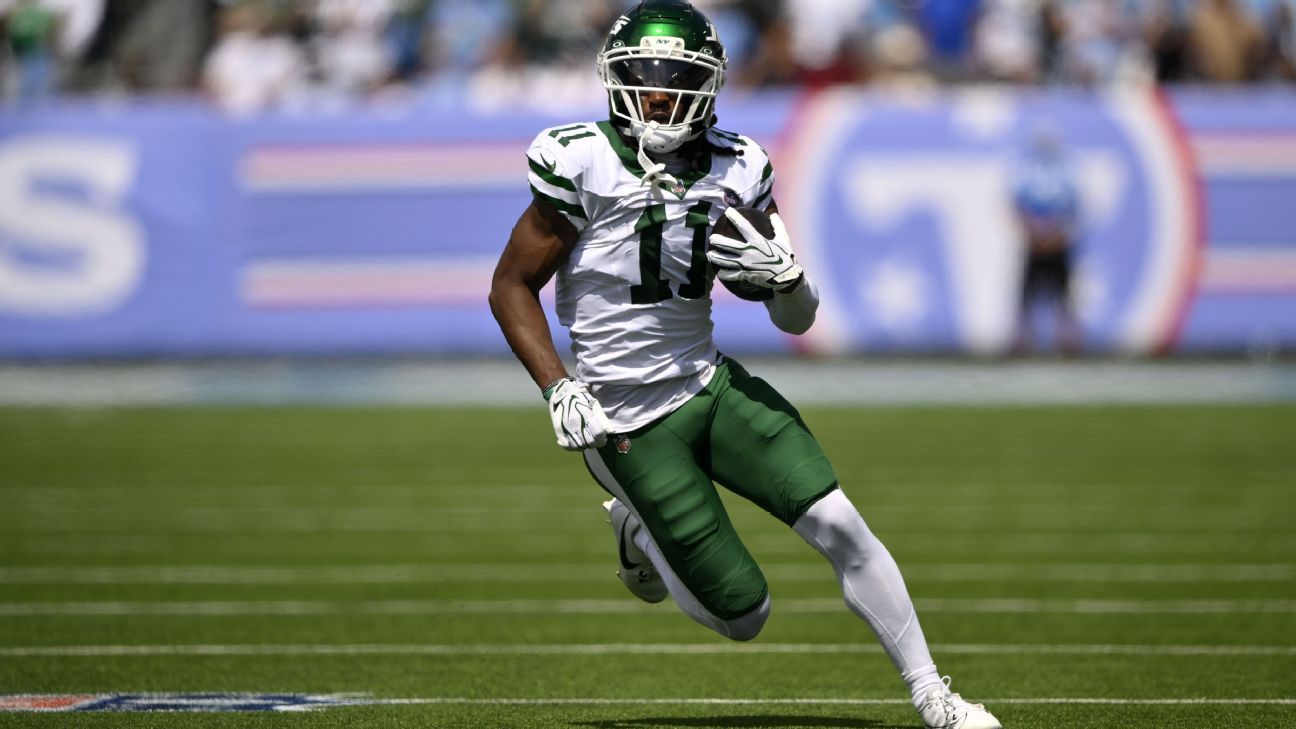
Omar Cooper Jr., the Jets' first-round wide receiver, suffered an ankle sprain in the first quarter of Sunday's 23-10 victory over Tennessee and is now week-to-week, sources told NFL Network. The MRI delivered some encouragement—no structural damage—but the timeline remains uncertain: the organization is hoping for his return within four weeks, placing a realistic return window sometime in early October. Cooper's injury is particularly costly because he was already making an impact before leaving the field; his 30-yard catch-and-run on the opening drive set up a touchdown for fellow 2026 first-rounder Kenyon Sadiq, evidence that the rookie was functioning as advertised in game speed.
What makes this setback especially acute is the Jets' existing depth crisis at the position. Veteran Tim Patrick is already on injured reserve, leaving the receiving corps dangerously thin for Week 2 onward. Coach Aaron Glenn offered no timeline updates on either Cooper or safety Minkah Fitzpatrick, who also exited Sunday's win with a groin injury, suggesting the team is still assessing damage across multiple positions. The Jets are now operating with their third or fourth receiving option as the primary target tree, a massive step backward from the offensive vision that included pairing two consecutive first-round selections.
The passing volume calculus shifts materially here. Jets quarterback Aaron Rodgers faced a Tennessee defense ranked in the bottom half of pass rush efficiency; the offense moved the ball with relative ease before Cooper's injury. Over the next 2–4 weeks, depending on Cooper's actual return timeline, Rodgers' target distribution will compress. The secondary receivers—whoever assumes slot and outside-X roles—will see elevated opportunity, but that volume comes at a quality cost: a rookie or replacement-level option is fundamentally less efficient at creating separation or winning contested balls than a first-round talent.
For bettors, the edge lies in fading the Jets' passing volume projections for the next two weeks. The market may not yet have fully repriced New York's offensive ceiling without Cooper in the lineup; books often set totals before Monday-morning injury reports fully propagate through adjusted player and team props. Rodgers' passing yards line at 265+ should face downward pressure, and the team total on games in the Cooper-absent window (Weeks 2-3, possibly 4) represents fade territory. This isn't a single-outlier spike—it's a structural constraint lasting multiple weeks. The Jets will be forced to run heavier personnel and work underneath, reducing both volume and explosive play probability.