NFL
Harbaugh's Public Rebuke of Herbert Signals Scheme Mismatch, Not Player Decline
The Chargers coach's rare criticism of Justin Herbert masks a deeper problem: an offensive system mismatch that's turned a star quarterback into a liability in the red zone and on decision-making under pressure.
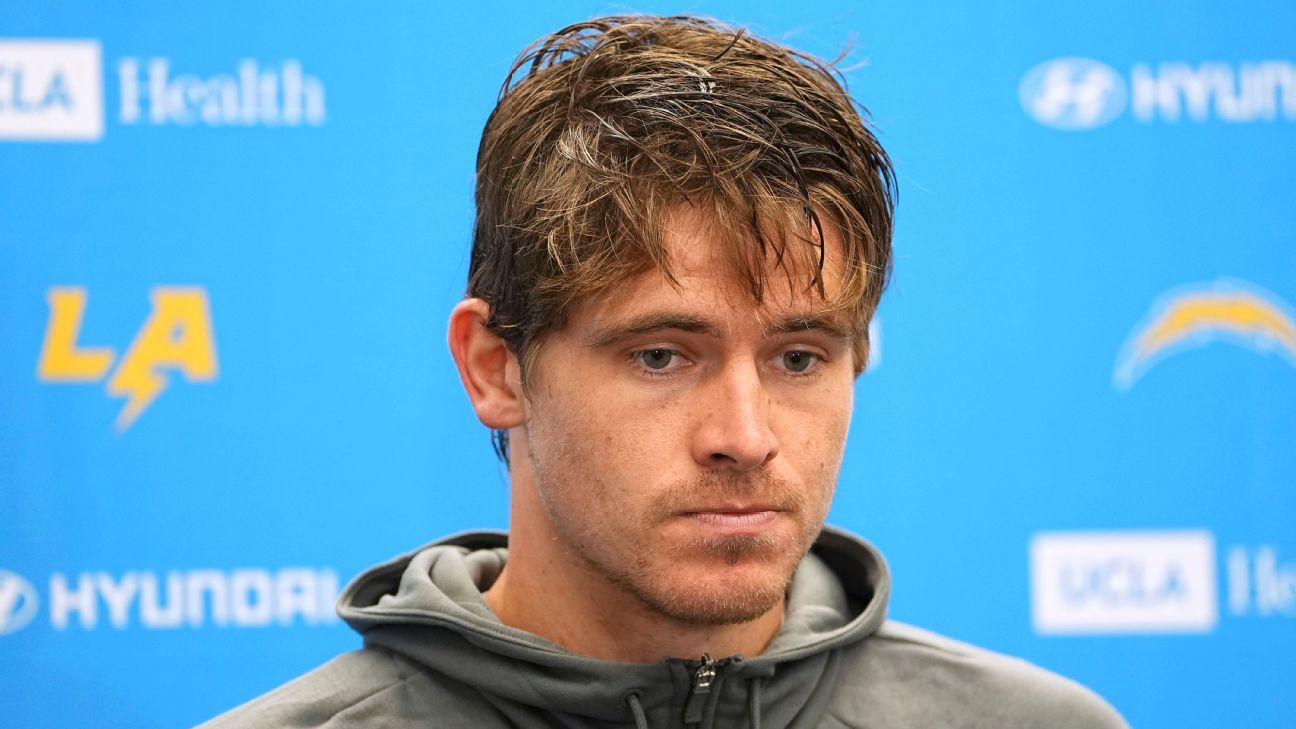
Jim Harbaugh broke four seasons of public deference Monday, offering a pointed critique of Justin Herbert's decision-making in the wake of the Chargers' 24-16 loss to Buffalo. The rebuke—"Be better. Be better."—arrived after Herbert threw a ball directly into the waiting chest of Bills safety C.J. Gardner-Johnson, a read so poor that broadcast analyst Tom Brady called it "poor awareness" and "a meatball sub." For a coach who has spent his tenure blaming receivers and linemen for Herbert's mistakes and once claimed he wished he could "trade genes" with the quarterback, the shift is unmistakable.
But the real story isn't Herbert's sudden incompetence. It's the architectural failure of the offense itself. Offensive coordinator Mike McDaniel arrived to rebuild the unit around anticipatory throwing and wide zone concepts—a system predicated on pre-snap reads and rhythm. Herbert has never looked comfortable in it, despite McDaniel's assertion in training camp that Herbert was "significantly ahead" of any QB he'd worked with in their first year. Three weeks in, the mismatch is undeniable. The offense has scored touchdowns on only two of five possessions where the defense handed them five turnovers; against Buffalo, the unit mustered 14 points with a gift-wrapped turnover advantage. Drops, penalties, missed assignments—and yes, poor throws—are symptoms of a system that doesn't align with how Herbert processes the field.
The Chargers are 0-3, and the offensive dysfunction is no longer deniable even to Harbaugh. What matters for prop bettors is that this isn't a mechanical issue Herbert can correct in a week or two. McDaniel's scheme requires trust and timing that Herbert hasn't built yet. His interception rate will likely remain elevated, his yards-per-attempt compressed, and his efficiency in two-minute drills and red-zone situations suppressed as long as the offensive philosophy stays intact. Gardner-Johnson's pick wasn't a one-off mental lapse; it was the predictable outcome of a quarterback trying to operate a system designed for someone else's decision-making speed.
The prop implications cut two directions. On volume, Herbert's passing attempts may tick up slightly—the team is desperate to win and will stay in rhythm—but his efficiency metrics (yards per attempt, completion percentage over expected) should stay depressed. His interception line deserves respect, not because he's suddenly a careless thrower, but because the scheme is forcing him into windows that look open but aren't, especially against defenses that understand how McDaniel's concepts develop. Any under on his passing yards or total TDs benefits from a structural problem that won't resolve this season without a fundamental offensive redesign. The real edge is watching for single-game relief when the Chargers face a passive, bend-don't-break defense that allows Herbert to operate with cleaner sight lines—those games are outliers in a season-long trend of constraint.
Harbaugh's public frustration is a tell that the front office understands the damage. But blame-shifting won't fix scheme misalignment. Until McDaniel or the coaching staff significantly simplifies Herbert's pre-snap responsibility or adjusts the system to match his strengths, expect him to remain a below-expectation asset for fantasy and prop purposes. The Chargers will likely keep running the same offensive calls—sunk cost and pride are powerful forces—which means Herbert's struggles are now embedded into the team's baseline expectation. That's a ceiling issue, not a variance issue. Plan accordingly.
NFL Intelligence — Football intelligence beyond the final score. Open NFL Intelligence →