NFL · injury
Week 3 Giants Face QB Uncertainty as Jaxson Dart Exits; Herbert, Murray Return on Tap
Jaxson Dart's season-ending injury reshuffles the Giants' Week 3 outlook while veteran QB returns create volatility across the slate.
The Giants' season took a sharp left turn this week when second-year QB Jaxson Dart underwent surgery that will sideline him for the remainder of 2026. The timing—mid-September, just three weeks into the season—forces New York into emergency quarterback decisions heading into a Week 3 matchup against Tennessee that was supposed to be a measuring stick for Dart's development. Instead, the Giants are now scrambling for depth-chart answers and game-plan adjustments that will ripple through both their passing attack and rushing metrics over the next several weeks.
Across the slate, the narrative is far different. Justin Herbert and the Chargers face Buffalo with playoff-contention pressure mounting after a rough start. More notably, Kyler Murray and Sam Darnold are both expected to return to action after injury absences, introducing a layer of rust and adjustment that typically suppresses volume and efficiency in the games immediately following a comeback. Darnold's timeline in particular matters—his arm strength and decision-making velocity often drop in Week 1 back, and his matchup has Vegas implications that sharp books are already pricing. Aaron Glenn's return to Ford Field as Jets head coach against Detroit carries narrative weight, but from a prop standpoint, the secondary focus belongs on the offensive personnel shifts both teams have made in the interim.
The Ravens-Cowboys matchup stands out as the week's highest projected total, with both teams showing early-season pass aggression and limited run commitment. Lamar Jackson has already posted 300+ passing yards in two of three 2026 games, and Dallas' secondary has surrendered an average of 275 yards per game through Week 2. The under-the-radar detail: Dallas has also surrendered 1.8 explosive passes (20+ yards) per game, suggesting the Ravens' deep-shot frequency will remain elevated. Conversely, Dak Prescott's volume and TD opportunities hinge on Dallas' ability to sustain drives in the red zone—a 45% conversion rate through two weeks that ranks in the bottom third of the league. If the Ravens control time of possession (their current offensive pace ranks 28th), Prescott's total attempts could compress despite the game environment.
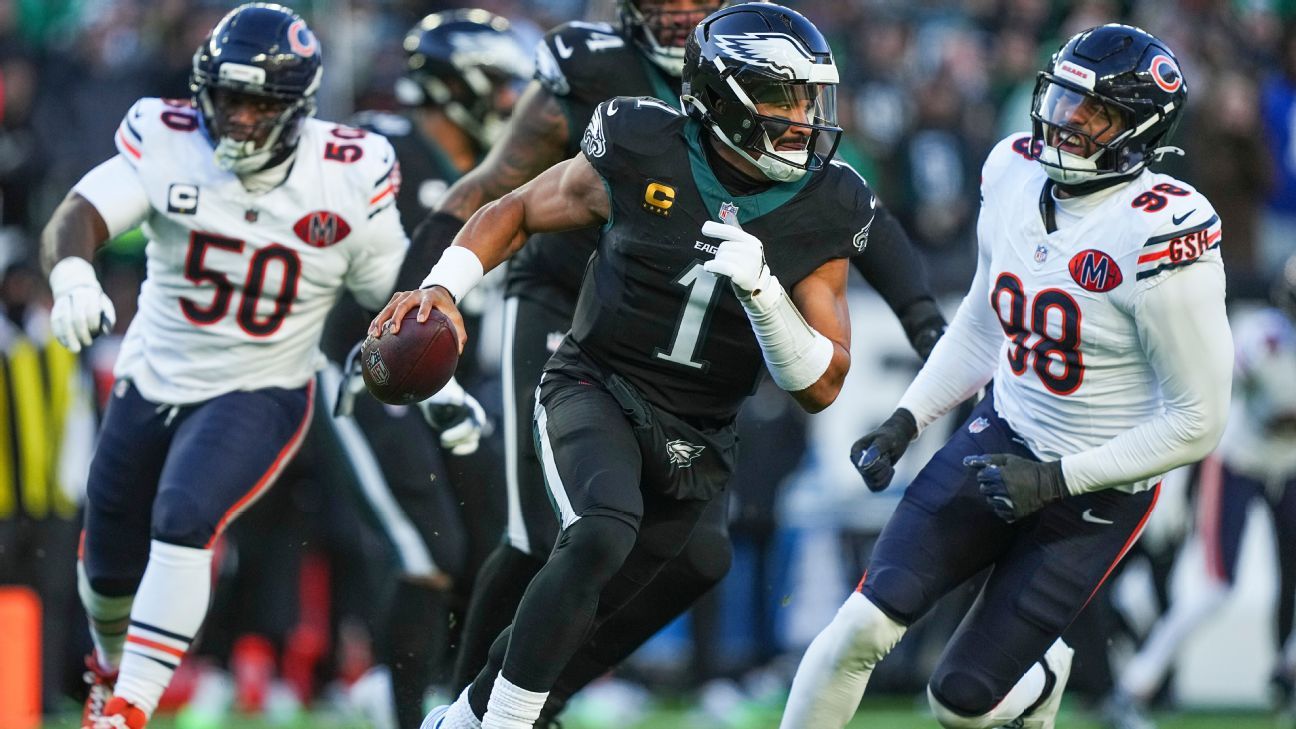
The Eagles-Bears Monday night finale provides the cleanest prop angle of the week. Chicago's pass rush has generated pressure on 38% of drop-backs, second-best in the NFL, and they've held opposing QBs to 6.8 yards per attempt. Philadelphia's Jalen Hurts has thrown interceptions in both games to date, but his passing yards total has stayed elevated because the Eagles' run game remains volatile—they've committed to the pass 57% of the time when ahead, but only 34% of the time when trailing. Chicago ranks 22nd in run defense DVOA; if the Eagles establish the ground game early and build lead equity, Hurts' pass volume could dip materially from his 285 YDS per-game average. The under on Hurts passing yards (currently market-dependent) becomes attractive if the Eagles control line of scrimmage and win the time-of-possession battle.
Jaxson Dart's absence creates secondary ramifications: the Giants' passing efficiency will decline under replacement-level QB play, depressing totals for both teams in that contest and making under-bets on the game total the primary edge. For sharp money, the key is identifying which returning QBs (Murray, Darnold, Herbert) face defensive schemes that exploit early-game timing gaps, and which contests have environmental edges (weather, pace, run-defense ranks) that compress volume for established starters like Hurts and Jackson despite high projected totals.