NFL · injury
Chargers Lose Both Starting TEs to IR; Rushing Offense Now Structurally Compromised
With Njoku and Kolar sidelined for at least four weeks, Los Angeles loses the blocking anchors Jim Harbaugh's run-first attack depends on—and bets on ground-game volume face sudden headwind.
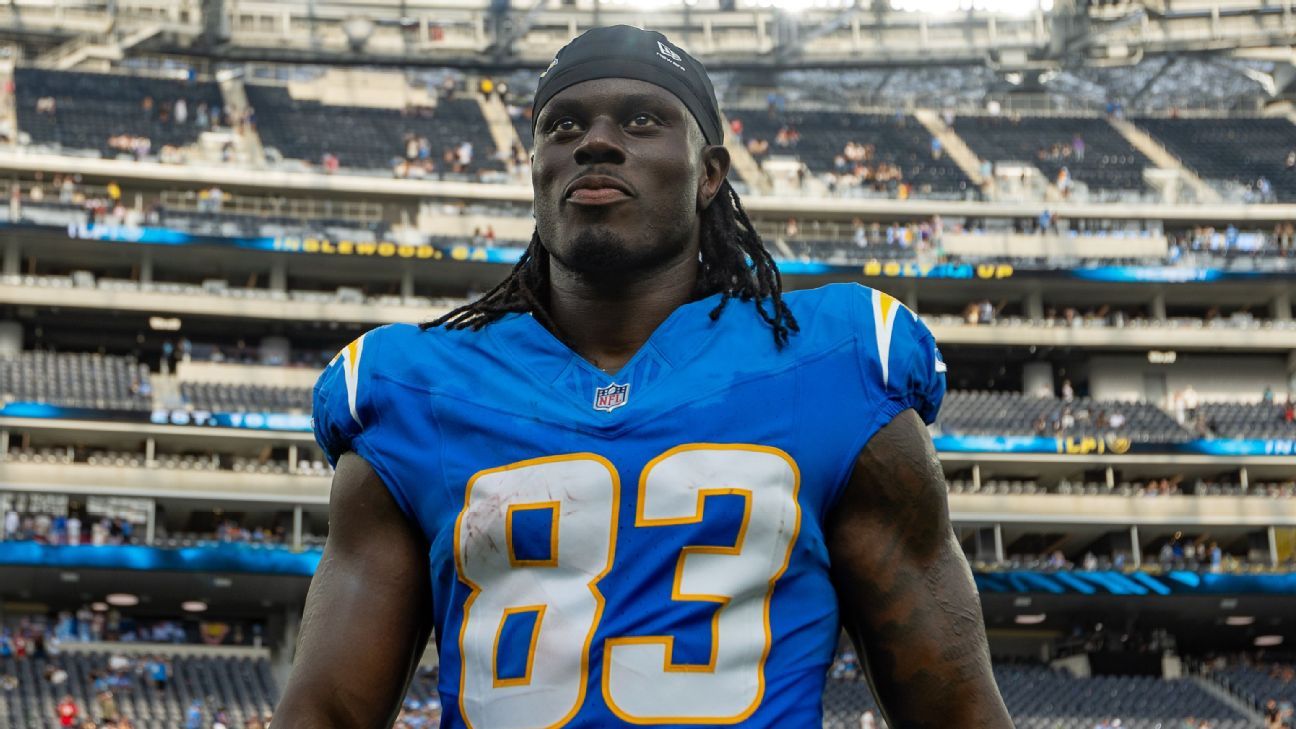
The Los Angeles Chargers placed tight ends David Njoku and Charlie Kolar on injured reserve Monday, removing two of the three foundational pieces of an offense already spiraling at 0-2. Njoku exited Sunday's 26-14 loss to Las Vegas with a fibula injury; Kolar has a forearm problem. Both will miss at least four games. The Chargers now have one healthy tight end on the active roster: Oronde Gadsden, a receiver-first talent who cannot replicate the blocking ceiling Njoku and Kolar provided.
The timing compounds an organizational crisis. Kolar (68 snaps through Week 2) and Njoku (40 snaps) were logging heavy volume despite early exits in Sunday's loss—a signal of their role criticality. General manager Joe Hortiz invested more free-agent money into the tight end room than any other position group this offseason, an explicit valuation statement that this unit would anchor the running game. That strategy has now fractured. The Chargers signed Kolar to a three-year, $24.3 million deal in March; Njoku came in on a one-year contract in May after nine seasons in Cleveland. Both were paid to be difference-makers. Now they're unavailable, and their loss exposes how dependent this offense is on tight-end blocking rather than scheme or skill.
This isn't an isolated blow. Five of the Chargers' eight major free-agent signings are now injured: Njoku, Kolar, center Tyler Biadasz (season-ending ACL injury), left guard Kayode Awosika (fibula), and defensive tackle Dalvin Tomlinson (hamstring). The offensive line is fracturing faster than the depth chart can stabilize. Trevor Penning is expected to start at left guard if Trey Pipkins cannot play Sunday—a downgrade in execution at a critical position.
From a betting standpoint, the Chargers' rushing attack becomes less reliable immediately. Harbaugh's system depends on lead blocking and tight-end pull schemes to function; Gadsden, while dangerous in space and a red-zone threat (he scored Sunday), struggles in pass protection and will not deliver the road-grading Njoku and Kolar provided. Omarion Hampton, the team's lead back, will see defenses stack the box with higher confidence that relief is no longer available on the edge. Running back yardage totals and team rushing yardage totals face structural headwind—not because Hampton lost ability, but because the blocking matrix collapsed. The market will initially price this as a volume play (fewer rushing attempts due to game script), but the real margin is blocking efficiency. When a run-first team loses both starting blockers at a single position, yardage per carry drops sharply. Fade Chargers rushing totals for the next four weeks; this is not a passing injury, it's an architectural one.