Njoku to LA, Jennings to Minnesota: How Two Tight End and Receiver Moves Reshape Fantasy Depth Charts and Betting Value
By Ty Whitney ·
The Chargers' acquisition of David Njoku and Vikings' signing of Jauan Jennings create winners and losers in tight end and receiver markets—with immediate implications for red zone target distribution and weekly consistency.
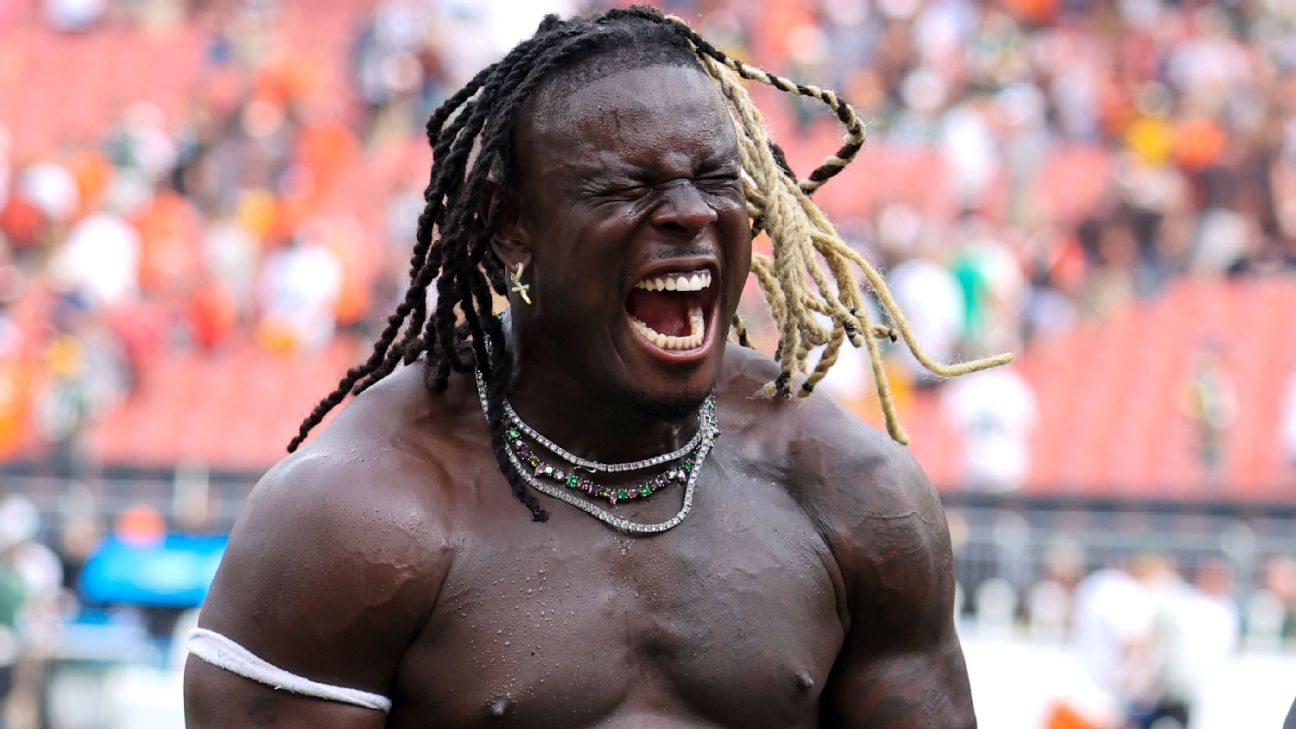
David Njoku is heading to Los Angeles on a one-year deal, and the NFL offseason is already reordering tight end hierarchies. Njoku arrives as an experienced red zone weapon—he's scored at least four touchdowns in each of the past five seasons—but the veteran comes with significant durability baggage: 11 missed games over the past two years and a sharp decline in route participation and receiving volume during the 2025 season. Last year, Njoku hauled in just 33 catches for 293 yards and four touchdowns in 12 games with Cleveland, a far cry from his 2023 breakout when he posted 81 receptions for 882 yards and six scores.
For Los Angeles, Njoku functions as a complementary red zone target alongside Justin Herbert's proven ability to distribute in the end zone. But fantasy managers should properly calibrate expectations: Njoku is a TE2 rotation play, not a weekly starter. The real winner in this move is Harold Fannin Jr., the Cleveland rookie who overtook Njoku midway through 2025 and finished his inaugural season as the TE6 overall with a 72-731-6 line. With Njoku now gone, Fannin enters 2026 as a legitimate TE1 conversation piece with authentic top-five upside. The loser by proxy is Oronde Gadsden, the Chargers' promising second-year tight end who impressed as a rookie with 49 catches for 664 yards and three scores. Gadsden's path to consistent targets just narrowed.
Meanwhile, Minnesota's addition of Jauan Jennings to pair with Justin Jefferson and Jordan Addison creates a tighter and more competitive receiving pecking order. Jennings, coming off a 55-643-9 season with San Francisco while averaging 11.6 fantasy points per game, brings slot flexibility and a physical outside presence. For Jefferson, the signing lowers his ceiling slightly—his target tree is no longer as concentrated—but shouldn't dismantle his WR1 status. Jefferson already experienced production decline in 2025 despite a career-high 30.1% target share, hampered by inconsistent quarterback play. Jennings' arrival could paradoxically help Jefferson by forcing defenses to deploy resources elsewhere, reducing double teams, but it also means fewer guaranteed looks on an offense that now has multiple appetites.
From a prop-betting perspective, these moves compress upside for several players while creating openings for others. Njoku's receiving totals on the Chargers should be capped—expect him in the 30-40 catch range, not 50+, which means unders on his season receiving yards totals carry less risk. Conversely, Fannin's elevation to Cleveland's primary tight end target in a vacuum creates a ceiling spike; his over-under on receptions and yards should be re-priced higher than consensus preseason estimates. For Minnesota receivers, the concentration risk now affects both Jefferson and Addison's volume ceilings. Jefferson's receiving yards line should reflect the reality that Jennings eats slot reps; Addison, listed as a potential beneficiary before the signing was completed, likely faces reduced snap share in three-receiver sets. When betting weekly receiver totals this season, Minnesota's receiving trio will require deeper lineup study than a traditional "big-name receiver" assumption.